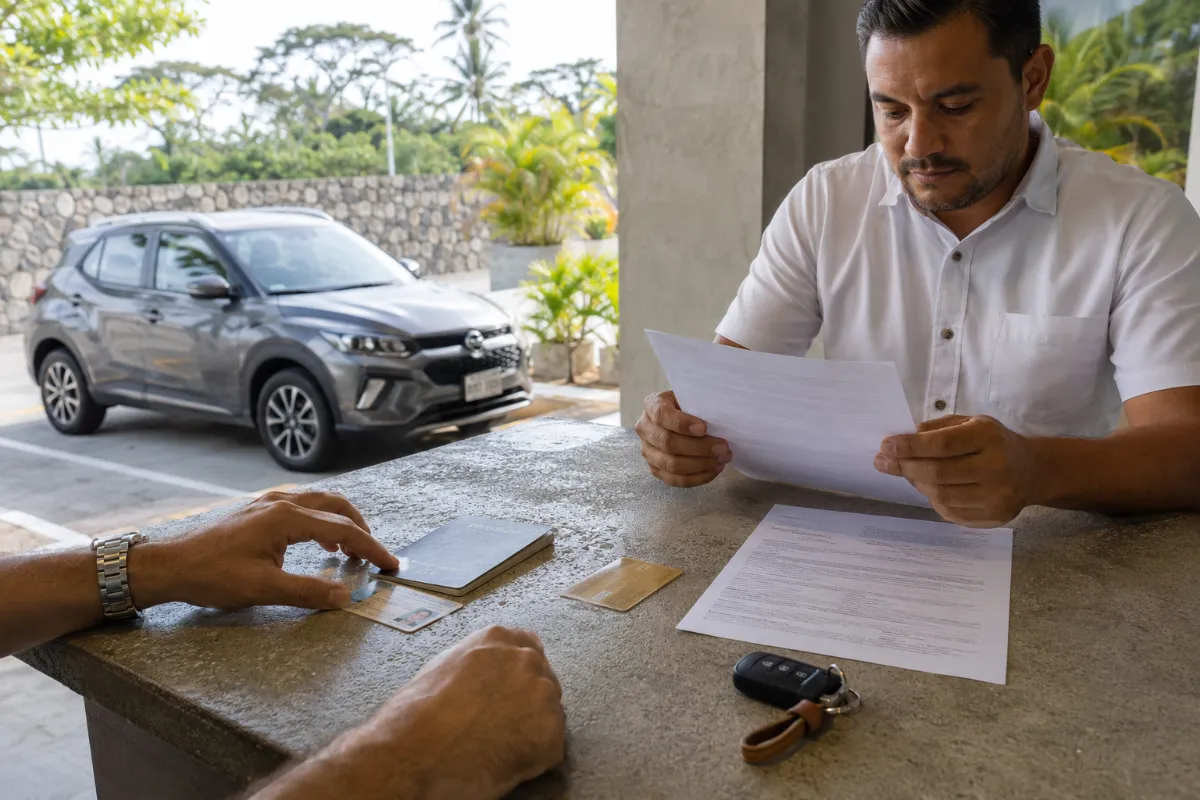

Third-Party Liability — TPL — in Costa Rica
Official Alamo, National & Enterprise Partner. Zero risk, no credit card required online.


Third-Party Liability — TPL — in Costa Rica
Third-Party Liability, commonly called TPL, is one of the most important protections to understand when renting a car in Costa Rica. It relates to covered damage or injuries involving other people or their property, rather than damage to the rental vehicle itself.
For the current Alamo, National and Enterprise Costa Rica terms reviewed in August 2026, TPL must be satisfied for the rental. The renter can generally do this by purchasing the rental company's TPL, presenting acceptable written proof of current liability coverage specifically valid in Costa Rica, or selecting the brand's protection package that already includes TPL.
TPL should not be confused with Collision Damage Waiver–Theft Protection, credit-card rental coverage or Costa Rica's statutory vehicle insurance. Each addresses a different type of risk.
Quick Answer
For the Alamo, National and Enterprise Costa Rica rental terms reviewed, Third-Party Liability must be satisfied.
The available paths are generally:
Purchase TPL through the rental company.
Present valid written proof of current liability insurance specifically covering Costa Rica, subject to acceptance by the rental location.
Purchase the applicable Alamo, National or Enterprise protection package, which includes TPL.
The current standalone TPL terms reviewed show a deductible ranging from US$250 to US$5,000, depending on the applicable protection and rental terms.
The current Alamo Protection Package, National Protection Package and Enterprise Protection Package include Deductible Protection and state that no deductible applies to covered events while the protection remains valid.
[CAR RENTAL BOOKING WIDGET]
Search current vehicle availability first, then review the TPL, deductible and protection-package terms attached to the exact brand, pickup location, vehicle and rate.
What Is Third-Party Liability?
Third-Party Liability is designed to address qualifying financial liability when an incident involving the rental vehicle causes covered injury or property damage to another person.
A "third party" can include someone other than the renter or rental company whose person or property is affected by an accident.
Depending on the circumstances and applicable policy limits, this can involve matters such as:
Injury to another person.
Damage to another person's vehicle.
Damage to qualifying third-party property.
Other liability covered under the rental company's applicable insurance and rental agreement.
TPL does not primarily protect the rental car itself.
Damage to, loss of or theft of the rented vehicle is addressed separately through products such as Collision Damage Waiver–Theft Protection.
For a complete overview of both types of protection, review our Costa Rica Car Rental Insurance Guide.
Is TPL Mandatory When Renting a Car in Costa Rica?
This question requires an important distinction.
It is inaccurate to simply say that Costa Rican law forces every tourist to purchase a particular TPL product from a rental counter.
Costa Rica has a statutory Seguro Obligatorio Automotor, or mandatory motor vehicle insurance, associated with vehicles legally circulating in the country. That statutory protection and a rental company's Third-Party Liability product are not identical.
For the Alamo, National and Enterprise Costa Rica rental terms reviewed, however, the rental location requires Third-Party Liability to be satisfied.
Under those terms, you generally have three possibilities:
Purchase the rental company's TPL.
Provide acceptable written proof of current liability insurance that specifically applies in Costa Rica.
Select the applicable protection package that includes TPL.
Therefore, travelers should think of TPL as a rental requirement under the reviewed rental terms, rather than describing it simply as an insurance policy that Costa Rican law requires every renter to purchase from the rental company.
Costa Rica's Mandatory Vehicle Insurance vs Rental-Car TPL
Costa Rica's mandatory vehicle insurance and rental-car TPL should not be treated as interchangeable.
Costa Rica's statutory mandatory motor vehicle insurance provides protection relating to injury or death suffered by victims of traffic accidents under the conditions established by Costa Rican law.
Rental-car Third-Party Liability addresses liability toward third parties under the applicable rental company's insurance and rental agreement, including qualifying damages and injuries up to applicable policy limits.
The distinction matters because seeing that a Costa Rican vehicle already carries mandatory insurance does not mean a renter can ignore the liability requirements in the rental contract.
Always review the protection terms attached to the actual reservation.
What Does TPL Cover?
Under the current Alamo, National and Enterprise Costa Rica descriptions reviewed, purchasing TPL gives the renter access to the local rental company's coverage for qualifying damages and injuries to third parties during the rental period in Costa Rica.
The protection remains subject to:
Policy limits.
The rental agreement.
Applicable deductibles.
Exclusions.
Driver eligibility.
Permitted use of the vehicle.
Actions that may invalidate the protection.
TPL should therefore never be interpreted as unlimited liability protection.
The signed rental agreement determines how the protection applies to a particular rental.
What Does TPL Not Cover?
TPL and protection for the rental vehicle are different.
Do not automatically expect standalone TPL to cover:
Collision damage to the rented vehicle.
Theft of the rental vehicle.
Loss of the rental vehicle.
Personal belongings inside the vehicle.
Tire or windshield damage.
Roadside assistance.
Every possible accident or prohibited use.
Losses exceeding applicable policy limits.
Incidents occurring after protection has been invalidated under the rental agreement.
Protection for damage to or theft of the rental vehicle is handled separately.
Read our CDW, LDW and Theft Protection Guide to understand that part of the rental agreement.
TPL vs CDW-TP
One of the most common rental-car mistakes is assuming TPL and CDW are different names for the same protection.
They address different risks.
Third-Party Liability — TPL
TPL concerns qualifying liability involving other people or their property.
Collision Damage Waiver–Theft Protection — CDW-TP
CDW-TP concerns the renter's financial responsibility for qualifying damage to, loss of or theft of the rental vehicle.
Under the Alamo, National and Enterprise Costa Rica terms reviewed, CDW-TP is described as a contractual waiver rather than insurance.
Having CDW-TP therefore does not automatically mean that your Third-Party Liability requirement has been satisfied.
Likewise, purchasing TPL does not automatically protect you from financial responsibility for damage to the rental car.
What Is the TPL Deductible?
A deductible is the amount of financial responsibility that can remain with the renter when a covered incident occurs.
The current Alamo, National and Enterprise Costa Rica TPL terms reviewed state that:
The minimum TPL deductible is US$250.
The maximum TPL deductible is US$5,000.
This does not mean every renter will automatically have a US$5,000 deductible.
The actual amount depends on the protection selected and the terms attached to the reservation.
TPL can also have a different deductible from collision damage or theft protection. Never assume that one deductible applies to every type of claim.
Our Costa Rica Rental Car Deductibles Guide explains these differences in more detail.
Can the TPL Deductible Be Reduced to Zero?
Yes, depending on the protection package selected.
The current protection packages reviewed for the three brands are:
Alamo Protection Package — APP
National Protection Package — NPP
Enterprise Protection Package — EPP
The current descriptions for these packages combine:
Collision Damage Waiver–Theft Protection — CDW-TP.
Tire and Windshield Protection — TWP.
Deductible Protection — DP.
Third-Party Liability — TPL.
The reviewed package descriptions state that no deductible applies.
However, zero deductible does not mean unlimited protection or zero responsibility under every circumstance. The rental agreement still contains exclusions and actions that can invalidate protection.
See our complete Alamo, National and Enterprise Protection Packages Guide before deciding which structure is appropriate for your rental.
Can Credit Card Insurance Replace TPL?
Do not assume that it can.
Credit-card rental benefits commonly focus on damage to or theft of the rental vehicle. That is different from liability for injury or property damage involving other people.
The current Alamo, National and Enterprise Costa Rica policies reviewed specifically state that liability insurance accompanying U.S. credit or debit cards is not accepted as a substitute for their TPL requirement.
This is one of the most important distinctions for international travelers.
A credit card may potentially help you satisfy requirements related to vehicle damage coverage if the benefit applies in Costa Rica and the rental location accepts the documentation, but that does not mean the same card provides acceptable Third-Party Liability coverage.
Before relying on a card benefit, read our guide to Credit Card Rental Car Insurance in Costa Rica.
Does Travel Insurance Replace TPL?
Do not assume that travel insurance or an insurance product sold by an online booking website will be accepted.
The current Alamo, National and Enterprise Costa Rica terms reviewed state that liability insurance purchased through third-party travel websites is not accepted as the required liability coverage.
A travel insurance policy may still provide other useful benefits, but the existence of that policy alone does not establish that the rental location will accept it instead of TPL.
Always check directly against the rental requirements for the specific reservation.
Can Your Personal Auto Insurance Cover TPL in Costa Rica?
Possibly, but documentation and territorial coverage matter.
The reviewed rental terms allow the renter to avoid purchasing the rental company's standalone TPL when the renter presents valid written proof of current liability insurance specifying coverage in Costa Rica, subject to acceptance by the rental location.
A policy covering you at home does not automatically mean you are covered while renting a vehicle internationally.
The current brand terms also warn that most automobile insurance policies from outside Costa Rica do not provide coverage in Costa Rica.
If you believe you already have qualifying liability coverage, contact your insurer before traveling and request clear written confirmation.
The documentation should make it possible for the rental location to determine that the liability coverage is current and specifically valid in Costa Rica.
Do not arrive with only a generic insurance card and assume it will be sufficient.
What Happens If Your Outside Liability Coverage Is Not Accepted?
If the documentation does not satisfy the rental location's requirements, you should expect to satisfy the liability requirement through an accepted rental-company option.
That could mean purchasing standalone TPL or selecting the applicable protection package containing TPL.
For this reason, travelers planning to use outside insurance should verify the documentation before pickup whenever possible.
The final reservation terms and signed rental agreement govern the rental.
Does TPL Cover Damage to the Rental Car?
No. Not by itself.
If you cause an accident that damages both another vehicle and your rented vehicle, different protections may apply to each side of the incident.
TPL relates to qualifying third-party liability.
CDW-TP relates to damage to, loss of or theft of the rental vehicle.
This is why comparing a rental solely by whether it says "insurance included" can be misleading. You need to understand which risks are addressed and what deductible applies to each.
Does TPL Cover Injuries to Other People?
TPL is intended to address qualifying damages and injuries involving third parties, subject to the applicable policy limits and rental agreement.
Costa Rica also has its statutory mandatory motor vehicle insurance system for traffic-accident victims.
Because different layers of insurance or liability protection can interact after an accident, renters should not attempt to determine claim responsibility themselves at the roadside.
Report an accident immediately according to the rental company's instructions and follow the required local procedures.
What Can Invalidate TPL Protection?
The specific rental agreement controls, so renters should read it carefully.
Current brand descriptions explicitly state that TPL is subject to actions listed in the rental agreement that can invalidate the protection.
Examples of circumstances that rental agreements may restrict include unauthorized drivers, prohibited vehicle use, driving under the influence or other violations of the contract.
Do not assume that paying for a protection package makes every use of the vehicle covered.
The safest approach is to follow both Costa Rican traffic laws and all conditions in the rental agreement.
For road and driving information, see our Costa Rica Driving Rules, Roads and Safety Guide.
What Should You Check Before Booking?
Before confirming a rental car in Costa Rica, verify:
How Third-Party Liability will be satisfied.
Whether standalone TPL is included in the quoted price or selected separately.
The applicable TPL deductible.
Whether a protection package reduces the deductible.
The limits and exclusions of the protection.
Whether your outside liability policy is acceptable.
Whether Costa Rica is specifically named in your outside coverage.
What protection applies to the rental vehicle itself.
The security deposit or credit-card authorization required at pickup.
Which actions can invalidate protection.
Do not compare rentals only by the headline daily rate.
The protection structure can materially change both the final rental price and your potential financial exposure.
Choosing Between Standalone TPL and a Protection Package
Travelers with accepted outside coverage for the rental vehicle may prefer to satisfy TPL separately.
Other renters may prefer a protection package combining several products under one rental agreement.
The current Alamo, National and Enterprise packages reviewed combine TPL with CDW-TP, Tire and Windshield Protection and Deductible Protection.
There is no universal choice that is best for every traveler.
Compare:
Total rental cost.
Deductibles.
Existing insurance.
Credit-card benefits.
Vehicle category.
Trip length.
Planned driving conditions.
The convenience of dealing directly with the rental company if a claim occurs.
Use the Costa Rica Rental Car Insurance Guide to compare the complete protection structure rather than reviewing TPL in isolation.
Renting at Costa Rica's Main Airports
The same liability questions should be reviewed whether you begin your trip at San José or Guanacaste.
For international arrivals through Juan Santamaría International Airport, see our San José Airport Car Rental Guide.
For travelers arriving in Guanacaste, see our Liberia Airport Car Rental Guide.
Airport, downtown and regional rental locations can have location-specific requirements, so always use the terms attached to your actual reservation.
Frequently Asked Questions
What does TPL mean when renting a car in Costa Rica?
TPL means Third-Party Liability. It relates to qualifying liability for damage or injury involving other people or their property during the rental period, subject to policy limits and the rental agreement.
Is Third-Party Liability required for a Costa Rica rental car?
For the Alamo, National and Enterprise Costa Rica terms reviewed in August 2026, TPL must be satisfied. This can generally be done by purchasing TPL, providing acceptable written liability coverage specifically valid in Costa Rica, or selecting the applicable protection package that includes TPL.
Is TPL the same as Costa Rica's mandatory vehicle insurance?
No. Costa Rica has statutory mandatory motor vehicle insurance, but that should not be confused with the Third-Party Liability requirement and protection structure used in the rental agreement.
Is TPL the same as CDW?
No. TPL concerns qualifying liability involving third parties. CDW-TP concerns damage to, loss of or theft of the rented vehicle.
How much is the TPL deductible?
The current Alamo, National and Enterprise Costa Rica terms reviewed show a TPL deductible ranging from US$250 to US$5,000. The exact deductible for your rental depends on the selected protection and agreement.
Can I get a zero TPL deductible?
The current APP, NPP and EPP package descriptions reviewed include Deductible Protection and state that no deductible applies. Exclusions and conditions in the rental agreement still apply.
Will my Visa, Mastercard or American Express cover TPL?
Do not assume so. Credit-card rental benefits normally need to be evaluated separately from liability protection. The current terms reviewed specifically state that liability coverage accompanying U.S. credit or debit cards is not accepted as a substitute for TPL.
Can my personal auto insurance replace TPL?
Potentially, if you provide valid written proof of current liability coverage specifically applicable in Costa Rica and the rental location accepts it. Confirm this with your insurer and the rental company before pickup.
Does travel insurance count as TPL?
Do not assume so. The current rental terms reviewed state that liability protection purchased through third-party travel websites is not accepted as a substitute for the rental company's TPL requirement.
Does TPL cover damage to my rental vehicle?
No. TPL addresses qualifying liability involving third parties. Protection for damage to, loss of or theft of the rental vehicle is handled separately through products such as CDW-TP.
Does TPL mean I have no financial responsibility after an accident?
No. Deductibles, policy limits, exclusions and actions that invalidate protection can still apply. The signed rental agreement determines your responsibility.
Before You Rent
Third-Party Liability is only one part of the complete rental-car protection decision.
Before reserving, review the TPL requirement together with:
CDW and theft protection.
Deductibles.
Tire and windshield protection.
Security deposit requirements.
Credit-card benefits.
Outside insurance documentation.
Protection-package options.
Rental-agreement exclusions.
Then compare available Costa Rica rental car types and select a vehicle appropriate for your passengers, luggage and planned driving conditions.
For additional planning information, explore our Costa Rica Car Rental Guides.
Review current vehicle availability and protection terms for your exact dates, pickup location and vehicle category before confirming the reservation.
Last reviewed: August 30, 2026.
Protection products, deductibles, policy limits, acceptance of outside insurance and rental requirements can change by brand, location, vehicle category and rate. The protection terms displayed for the reservation and the signed rental agreement govern the transaction.