
Driving in Costa Rica: Rules, Roads & Safety Guide
Official Alamo, National & Enterprise Partner. Zero risk, no credit card required online.



Driving in Costa Rica: Rules, Roads and Safety Guide
Driving in Costa Rica can be a practical way to explore several regions on one trip, but road conditions vary considerably between major highways, mountain roads, beach towns and rural areas.
Tourists may drive with a valid foreign driver's license during the period of legal stay authorized by Costa Rica's immigration authorities, provided the license covers the type of vehicle being driven.
Costa Rica drives on the right. Speed limits and distances use kilometers. Travelers should allow more driving time than distance alone may suggest, plan unfamiliar or difficult routes for daylight when possible, and choose a rental vehicle based on the actual roads leading to their destinations.
Check current rental vehicle availability for your travel dates after reviewing the roads, accommodation access and driving conditions on your itinerary.
Can Tourists Drive in Costa Rica?
Yes. Tourists and travelers in transit can use a valid foreign driver's license for the same type of vehicle authorized by that license during their period of legal stay in Costa Rica.
Keep your valid driver's license, identification and applicable rental documents accessible while traveling.
An International Driving Permit is not normally necessary when your valid home-country license is accepted, but you should confirm the documentation requirements of the rental company before collecting the vehicle.
Before leaving the rental location, verify:
Vehicle controls.
Correct fuel type.
Emergency equipment.
Roadside-assistance contact details.
Rental documents.
Existing vehicle condition.
Travelers should also review the applicable Costa Rica car rental requirements before booking.
What Is Driving in Costa Rica Like?
Costa Rica drives on the right side of the road. Road signs are generally in Spanish, while speed limits and distances are expressed in kilometers.
The biggest difference for many visitors is the variation in road conditions.
A single journey can include a divided highway, a two-lane mountain road, a narrow bridge, a congested town center and an unpaved final access road.
Travel time can also increase because of:
Curves and mountain terrain.
Trucks and slow-moving traffic.
Road construction.
Rain and fog.
Narrow roads and bridges.
Urban congestion.
Pedestrians, bicycles and motorcycles.
Drive defensively, maintain sufficient following distance and avoid assuming that a relatively short distance will always mean a short driving time.
Important Road Rules for Visitors
Always follow posted road signs and speed limits.
Speed limits can change according to the road, town or specific traffic zone. Temporary limits may also apply because of construction or other road operations.
Use seat belts and appropriate child restraints.
Do not handle a mobile phone while driving. Use a properly mounted navigation device or hands-free system when necessary.
Common Costa Rican road signs include:
Alto: Stop.
Ceda el paso: Yield.
Velocidad máxima: Maximum speed.
No estacionar: No parking.
Desvío: Detour.
Puente angosto: Narrow bridge.
If road conditions or traffic behavior are unclear, choose the safer maneuver rather than simply following surrounding vehicles.
Do You Need a 4x4 in Costa Rica?
No. A 4x4 is not required for every Costa Rica itinerary.
Many major tourism routes and established destinations are connected by paved roads that can be driven with a conventional rental vehicle.
A 4x4 or vehicle with higher ground clearance becomes more useful when your itinerary includes:
Rough secondary roads.
Steep unpaved access roads.
Remote accommodations.
Rural properties.
Poor road surfaces.
Roads that become more difficult after sustained rain.
The most important question is often not the highway between destinations but the final road leading to the hotel, villa or attraction.
Ask your accommodation about the latest access conditions before choosing a vehicle.
Four-wheel drive does not make flooded roads or river crossings safe. If water covers the roadway or you cannot determine its depth or surface condition, do not enter it. Turn around and use a safer alternative.
You can compare available categories on the Costa Rica rental car vehicles page.
Driving in Costa Rica During the Rainy Season
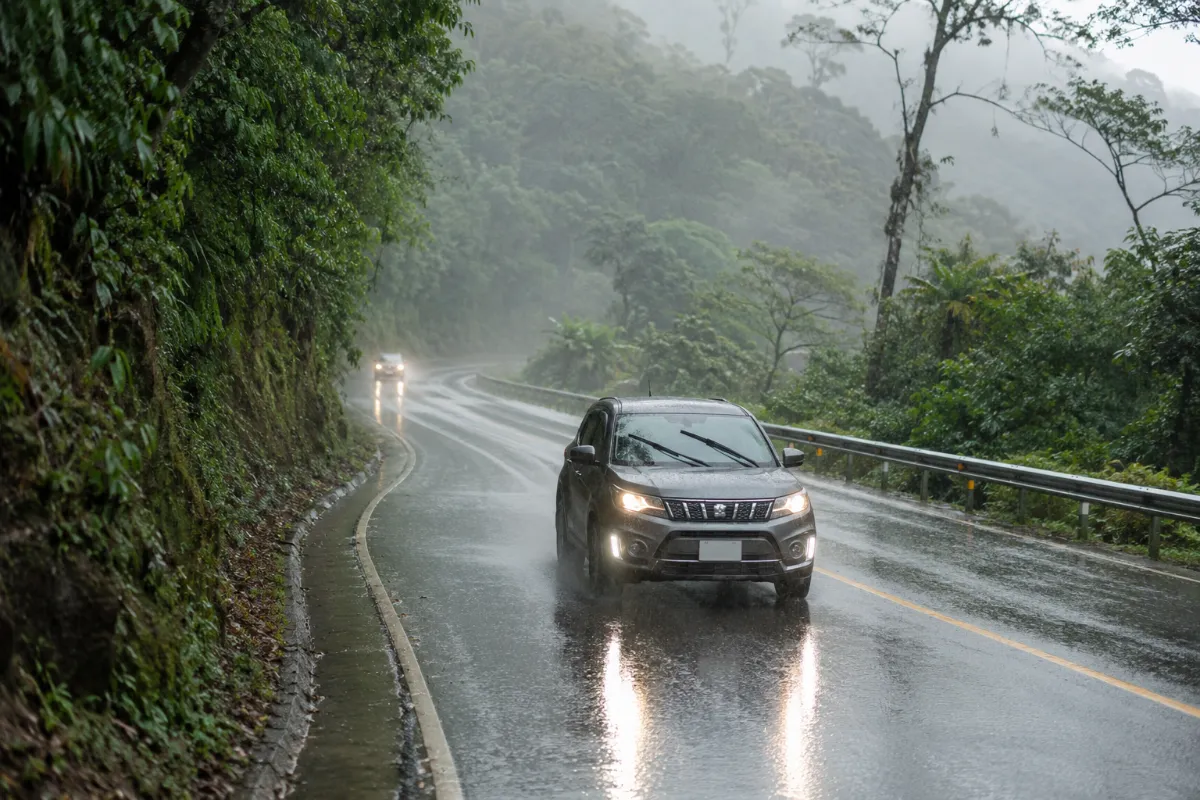
Rain does not automatically prevent a Costa Rica road trip, but it can make driving slower and more demanding.
Heavy rain can reduce visibility and create:
Standing water.
Debris.
Mud.
Localized flooding.
Fog in mountain areas.
Temporary road restrictions.
Reduced traction.
During wetter conditions:
Leave additional time between destinations.
Check your route before departure.
Reduce speed when conditions require it.
Increase following distance.
Avoid entering water when its depth or the road surface is uncertain.
Complete difficult or unfamiliar road sections during daylight whenever possible.
Travelers should never assume that a navigation application's estimated arrival time accounts for every local weather or road condition.
Should You Drive at Night in Costa Rica?
Long-distance night driving is generally less comfortable for travelers who are unfamiliar with Costa Rican roads.
Outside major urban areas, some roads may have limited lighting. Drivers can also encounter curves, pedestrians, bicycles, animals, heavy rain or fog.
If your flight arrives late, staying near the airport or arranging transportation and beginning your rental the following morning can be a practical alternative.
For longer trips, try to complete unfamiliar mountain, rural or secondary-road sections before dark.
Navigation in Costa Rica
Navigation apps are useful for driving in Costa Rica, but always verify the exact destination before leaving.
This is particularly important for:
Hotels with similar names.
Villas and vacation rentals.
Rural accommodations.
Beaches with multiple access roads.
Attractions outside town centers.
A navigation app may occasionally suggest a smaller road because it appears shorter.
If you are uncertain about road conditions, favor the route recommended by your rental provider, accommodation or another reliable local source rather than automatically choosing the shortest route displayed by the application.
Tolls in Costa Rica
Some national highways have toll stations.
The National Road Council, CONAVI, administers toll collection on sections of Routes 2 and 32, while Route 27 operates under a separate concession arrangement.
Keep some Costa Rican colones available when traveling on toll roads and watch for lanes designated for electronic payment systems such as QuickPass.
Toll locations, amounts and payment arrangements can change, so follow current signs and instructions along the route.
Fuel and Gas Stations
Confirm the correct fuel type when you receive the rental vehicle.
For longer journeys or travel through less-developed areas, avoid allowing the fuel level to become excessively low before looking for a service station.
Before beginning a remote or long rural section:
Check the fuel gauge.
Confirm the vehicle's fuel type.
Review the distance to the next major town.
Refuel earlier when necessary.
Do not assume that fuel stations will be equally frequent on every route.
Parking and Vehicle Security
Use established parking areas whenever they are available.
Do not leave passports, cash, electronics, luggage, bags or other valuables visible inside the vehicle.
Costa Rica's tourism authorities recommend using supervised parking where possible and avoiding leaving valuables unattended in vehicles.
Whenever you leave the rental car:
Close all windows.
Lock the vehicle.
Remove visible valuables.
Take essential personal documents with you according to the rental company's guidance.
Ask your hotel or accommodation about recommended parking arrangements when visiting unfamiliar destinations.
What Should You Do If the Rental Car Breaks Down?
For a mechanical problem, contact the rental company or roadside-assistance service using the telephone number provided with the vehicle.
Costa Rica's tourism authorities advise travelers experiencing a breakdown or flat tire to avoid accepting unsolicited assistance in isolated locations and instead contact the rental provider or emergency services when necessary.
Follow the rental company's instructions before arranging repairs, towing or recovery independently.
What Should You Do After an Accident?
Follow the accident procedure supplied by the rental company.
For collisions involving injury, substantial damage or another emergency, contact the appropriate authorities and inform the rental company as soon as possible.
Costa Rica's national emergency number is:
9-1-1
Do not make assumptions about accident reporting, repairs or vehicle recovery. Follow the instructions associated with your rental agreement and the relevant authorities.
Is Driving in Costa Rica Right for Your Trip?
Driving works particularly well for travelers who want flexibility and plan to explore multiple destinations, beaches, national parks, rural areas or attractions outside town centers.
A rental car may be less important when:
Your trip is primarily based at one resort.
Most activities include organized transportation.
You do not plan to explore independently.
Your itinerary requires a long unfamiliar drive immediately after a late flight.
A hybrid itinerary can also work well.
For example, travelers can use private or shared transportation for a long airport or inter-destination transfer and rent a vehicle later in the trip when independent exploration becomes more useful.
Explore car rental in Costa Rica or compare transportation alternatives if you prefer not to drive between destinations.
Before Starting a Costa Rica Road Trip
Before collecting your rental vehicle, confirm:
Your driver's license is valid.
The rental company's document requirements.
Your route and destination pin.
The road to your accommodation.
Whether higher ground clearance or 4x4 is advisable.
The correct fuel type.
Roadside-assistance contact details.
Applicable insurance and protection terms.
Expected toll roads.
Estimated daylight available for longer drives.
You should also understand the applicable Costa Rica car rental insurance before accepting the vehicle.
Frequently Asked Questions
Is it safe to drive in Costa Rica?
Driving can be practical for alert and experienced visitors who allow realistic travel time and adapt to changing road, traffic and weather conditions.
Rain, limited lighting, motorcycles, pedestrians, narrow roads and rural sections can require additional attention.
Can I drive in Costa Rica with a U.S. driver's license?
Yes, provided the driver's license is valid, authorizes the applicable vehicle type and you remain within the legal stay authorized by Costa Rican immigration authorities.
Confirm any additional rental-company documentation requirements before pickup.
Can I drive in Costa Rica with a Canadian driver's license?
Yes. A valid Canadian license can be used during the period of legal stay authorized by Costa Rica's immigration authorities, provided it covers the vehicle type being driven.
Do I need an International Driving Permit in Costa Rica?
Not normally when your valid home-country driver's license is accepted.
However, rental-company documentation requirements can vary, so confirm what is required before collecting the vehicle.
Which side of the road does Costa Rica drive on?
Costa Rica drives on the right-hand side of the road.
Are Costa Rican speed limits in miles or kilometers?
Speed limits and road distances are expressed in kilometers, not miles.
Is a 4x4 required in Costa Rica?
No. Many common tourism routes are paved and can be driven with a standard rental vehicle.
A 4x4 or higher-clearance vehicle can be more appropriate for rough, steep, unpaved or remote access roads and for some routes during wetter conditions.
Is it better to drive during the day?
For unfamiliar long-distance journeys, daylight generally makes curves, road edges, pedestrians, construction zones and changing road surfaces easier to see.
Daylight is particularly useful on mountain and rural roads.
Is it safe to drive through rivers in Costa Rica?
Do not attempt a river crossing or flooded section when water depth, current or road conditions are uncertain.
Four-wheel drive does not make deep or moving water safe. Turn around and use another route.
Can I use Google Maps or Waze in Costa Rica?
Navigation apps are useful, but verify the destination and route before driving.
A navigation system may occasionally suggest a smaller secondary road because it appears shorter, so check questionable routes with your accommodation, rental provider or another reliable local source.
What number do I call for an emergency in Costa Rica?
Costa Rica's national emergency number is 9-1-1.
For rental vehicle problems that are not emergencies, contact the rental company or roadside-assistance number supplied with the vehicle.
Plan Your Costa Rica Rental Car
A rental car can provide significant flexibility for travelers who want to explore Costa Rica independently.
Choose the vehicle according to your actual itinerary rather than assuming that every trip requires the same type of car. Check the final access road to each accommodation, consider weather and daylight, and allow realistic driving times between regions.
Review current rental terms and vehicle availability before booking.
If you prefer not to drive immediately after arriving in Costa Rica, you can also combine airport or inter-destination transportation with a rental car later in your itinerary.