
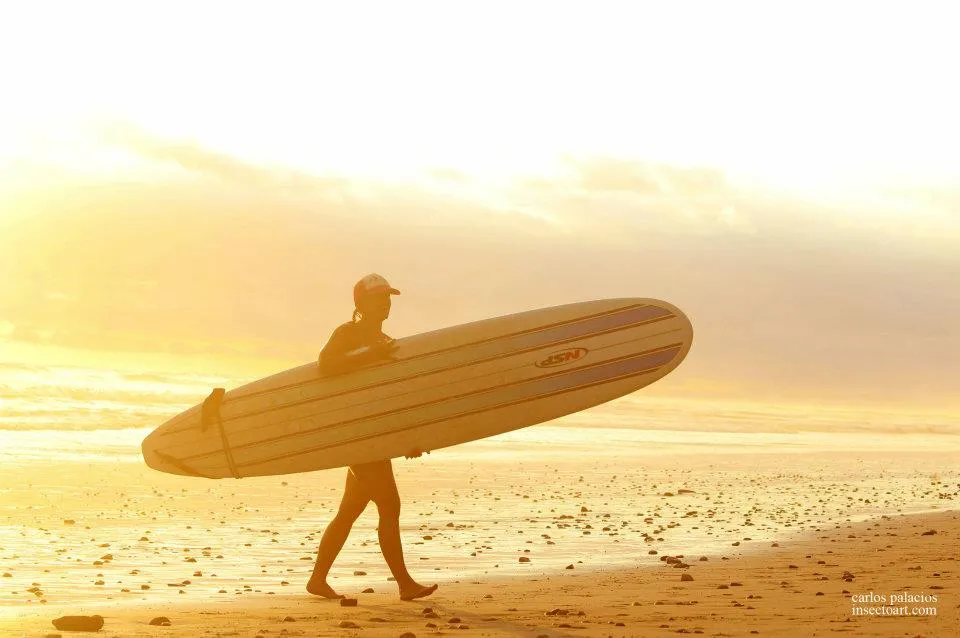
Santa Teresa Beach Travel Guide
A beach-focused Santa Teresa guide covering Playa Carmen, Santa Teresa Beach, Playa Hermosa, Mal País, surfing, where to stay, getting around and trip planning.
Santa Teresa Beach Travel Guide
Santa Teresa is a Pacific beach destination on Costa Rica’s southern Nicoya Peninsula known for surfing, long stretches of coastline, sunsets, wellness-oriented stays, restaurants, boutique hotels, villas and vacation rentals.
The most important thing to understand before choosing where to stay is that Santa Teresa is not one compact resort town. The coastal area extends through several communities and accommodation zones, including Playa Carmen, Santa Teresa, Playa Hermosa and nearby Mal País.
That layout influences almost every part of a visit: which beach is closest, whether restaurants are walkable, how easily you can reach surf breaks, and whether you will need local transportation.
For a broader overview of the destination beyond the beach areas, use the Santa Teresa Costa Rica Travel Guide.
Quick Answer
Santa Teresa works particularly well for travelers who want a beach-centered stay with surfing, sunsets, wellness activities, smaller hotels, villas and an independent coastal atmosphere.
Where you stay matters.
Playa Carmen can work for travelers who want easier access to services and the southern part of the coastal corridor.
Central Santa Teresa can fit visitors who want to stay within the main beach and restaurant area.
Playa Hermosa can appeal to travelers looking farther north along the coast.
Mal País lies south of Playa Carmen and has its own accommodation and coastal areas.
Choose the accommodation according to the exact beach, restaurants and activities you expect to use most often rather than booking only because the listing says “Santa Teresa.”
Where Is Santa Teresa Beach?
Santa Teresa is on the Pacific coast of the southern Nicoya Peninsula in Puntarenas Province.
The broader visitor area extends along the coast and includes several neighboring communities.
Cóbano is the principal inland service town and an important transportation point for the region, but it is not the same destination as Santa Teresa Beach.
The coastal layout is important because two properties both marketed as being “in Santa Teresa” may be separated by enough distance, hills or local roads to create very different experiences.
Before booking accommodation, check:
Exact map location.
Distance from the beach.
Distance from restaurants.
Which beach area is closest.
Whether the road is flat or hillside.
Parking arrangements.
Whether walking is realistic after dark.
Whether local transportation will be needed.
Why Travelers Choose Santa Teresa
Santa Teresa attracts travelers who want the beach to be a central part of the trip rather than simply one sightseeing stop.
Common reasons to stay include:
Surfing.
Beach time.
Pacific sunsets.
Yoga and wellness.
Boutique hotels and private villas.
Restaurants and casual coastal dining.
Longer, slower stays.
Easy access to other parts of southern Nicoya.
Santa Teresa is less centralized than a conventional resort destination.
That can be part of its appeal, but it also means that accommodation location deserves more attention than it might in a compact beach town.
Playa Carmen
Playa Carmen lies toward the southern side of the wider Santa Teresa coastal area and connects the Santa Teresa and Mal País zones.
It can be practical for travelers who value access to restaurants, businesses, surf services and transportation connections.
Accommodation options can include hotels, hostels, villas and vacation rentals.
Playa Carmen may suit travelers who want:
Access to services.
A location between Santa Teresa and Mal País.
Surf-oriented travel.
Restaurants within the surrounding area.
A base for exploring both north and south along the coast.
Do not assume that accommodation marketed as “Santa Teresa” is actually in central Santa Teresa. A Playa Carmen property should be identified as Playa Carmen when arranging transportation.
Central Santa Teresa
Central Santa Teresa extends north from the Playa Carmen area along the main coastal corridor.
Hotels, villas, rentals, restaurants, shops and beach access points are distributed rather than concentrated in one downtown block.
This area may suit visitors who want:
A beach-focused stay.
Access to surf services.
Restaurants and shops in the wider coastal corridor.
A more active Santa Teresa atmosphere.
Accommodation close to the areas they plan to use daily.
Even within central Santa Teresa, check the exact map position. A property on a hill or side road can create a very different experience from one close to the beach road.
Playa Hermosa Near Santa Teresa
Playa Hermosa is north of the central Santa Teresa area.
This is Playa Hermosa on the southern Nicoya Peninsula, not Playa Hermosa in Guanacaste and not Playa Hermosa near Jacó.
That distinction is important when booking accommodation or transportation.
Playa Hermosa can appeal to travelers who prefer to stay farther from the central Santa Teresa corridor while remaining within the broader beach destination.
Before choosing a property there, confirm:
Distance from central Santa Teresa.
Walking access.
Restaurant options nearby.
Road conditions to the accommodation.
Whether regular transportation will be needed.
Mal País
Mal País lies south of Playa Carmen and forms part of the wider Santa Teresa travel area.
Its accommodation, beaches and coastal roads are distinct enough that travelers should use “Mal País” as the actual destination when that is where they are staying.
Mal País can suit visitors who want a more spread-out coastal setting and who do not need to remain in central Santa Teresa throughout the stay.
As elsewhere in the area, the exact property location can significantly influence transportation needs.
Surfing in Santa Teresa
Surfing is one of the principal reasons travelers choose Santa Teresa.
Conditions vary according to beach, swell, tide, weather and experience level.
Beginners should arrange instruction with a qualified local provider that can choose an appropriate location according to current conditions.
More experienced surfers should also ask locally about the conditions before entering unfamiliar water.
If you are traveling with your own surfboards, consider transportation before arrival.
Surfboards can affect:
Airport baggage.
Domestic-flight eligibility.
Shared-shuttle luggage space.
Private vehicle requirements.
Local transportation.
Accommodation storage.
Declare boards before booking transportation rather than assuming every vehicle can carry them.
For a broader look at surfing, horseback riding, waterfalls, boat activities, nature outings and day trips, see Santa Teresa Tours and Adventures.
Swimming and Beach Conditions
Santa Teresa is a surf-oriented Pacific coastline, so visitors should not assume that every section of beach offers the same swimming conditions.
Waves, currents, rocks, tide and weather can change.
Travelers should:
Observe local conditions.
Follow local safety guidance.
Ask where swimming is appropriate.
Supervise children closely.
Avoid entering unfamiliar water solely because it appears calm from shore.
A beach that works well for surfing is not automatically a protected swimming beach.
Beach Walks and Sunsets
Beach walks and sunsets are among the simplest ways to enjoy Santa Teresa.
The Pacific-facing coastline can provide long evening views, but visitors should still plan how they will return to their accommodation after sunset.
A property that is an easy daytime walk from the beach may feel less convenient after dark depending on distance, road layout and lighting.
When choosing where to stay, consider evening plans as well as daytime beach access.
Where to Stay in Santa Teresa
The right area depends on how you want to spend most of your time.
For Restaurants and Everyday Services
Consider accommodation near the main coastal road or a more active section of Playa Carmen or Santa Teresa.
This can reduce the need to arrange transportation several times per day.
For Surf-Focused Travel
Choose according to the beach or surf area you expect to use most often.
Confirm the actual walking distance rather than relying only on an accommodation description.
For Privacy and Hillside Views
Villas and hillside properties can offer more separation from the main coastal corridor.
They may also require more transportation planning.
Ask the property about:
Road access.
Parking.
Walking practicality.
Hill gradient.
Seasonal access considerations.
Vehicle recommendations for the final road.
For Families or Groups
Vacation rentals can provide additional space, but location becomes especially important when several travelers need to reach restaurants, beaches and activities together.
A property with more bedrooms but difficult access may create more daily transportation requirements than a smaller accommodation near the main area.
Can You Visit Santa Teresa Without a Rental Car?
Yes, depending on where you stay and what you plan to do.
Travelers based close to the beach, restaurants and services may be able to complete much of the stay on foot and arrange transportation only when needed.
A vehicle becomes more relevant when:
The accommodation is on a hill or secondary road.
Travelers expect to move between several beach areas.
The itinerary includes frequent day trips.
Young children or mobility considerations make longer walks difficult.
Surfboards or other equipment need to be transported.
Do not decide whether you need a rental vehicle until you know the exact accommodation location.
Getting Around Santa Teresa
Local movement should be planned around the actual property rather than the destination name.
Options can include:
Walking where distances and road conditions permit.
Locally arranged taxis.
Hotel transportation.
Pre-arranged private transportation.
Rental vehicles for travelers who want independent mobility.
Road conditions and practicality can vary with weather and location.
Travelers staying close to the main coastal road may have very different transportation needs from guests in hillside villas or properties outside the central area.
How to Get to Santa Teresa
Getting to Santa Teresa is a separate planning decision from choosing which beach area to stay in.
International travelers commonly arrive through SJO or LIR, while Cóbano Airport provides domestic air access much closer to the southern Nicoya Peninsula.
Ground routes, ferry use, domestic flights, shared transportation and private transfers vary according to the origin.
Rather than duplicating those route details here, use the dedicated guide on how to get to Santa Teresa when choosing an airport or transportation method.
After selecting the route, return to the accommodation map and provide the exact hotel, villa or vacation rental for the final drop-off.
When to Visit Santa Teresa
Santa Teresa can be visited throughout the year, but the experience changes between drier and wetter periods.
Drier Periods
Drier weather can make beach days and road conditions more predictable, but popular travel periods may also bring greater demand for accommodation, activities and transportation.
Dust can be noticeable on unpaved or beach-area roads.
Greener Periods
Wetter periods bring greener landscapes and more variable weather.
Rain can affect:
Roads.
Beach conditions.
Outdoor activities.
Boat outings.
Long-distance transportation.
Travelers visiting during wetter months should preserve some flexibility rather than building every day around tight outdoor schedules.
Surf conditions depend on more than season alone and should be assessed according to current swell, tide and experience level.
How Long Should You Stay?
Santa Teresa is generally better suited to a multi-night stay than a brief stop.
Reaching the area requires enough planning that spending only one night may result in a disproportionate amount of the itinerary being devoted to transportation.
A longer stay allows time to:
Experience different beach areas.
Schedule surf activities.
Adjust plans around weather.
Enjoy slower beach days.
Visit nearby destinations.
Avoid overloading arrival and departure days.
The appropriate number of nights depends on the rest of the Costa Rica itinerary.
Nearby Places to Combine With Santa Teresa
Montezuma
Montezuma is one of the most relevant nearby destinations for travelers interested in waterfalls, a different beach environment and other parts of southern Nicoya.
It can be visited as a day trip or separate overnight stop depending on the itinerary.
Cabuya and Cabo Blanco
Cabuya and the Cabo Blanco area can appeal to travelers interested in nature and quieter parts of the southern peninsula.
Confirm access, opening arrangements and transportation before building the day around these destinations.
Cóbano
Cóbano is the principal inland service and transportation center for the area.
Travelers may pass through Cóbano when arriving by road, using Cóbano Airport or traveling between different parts of the southern peninsula.
Longer-Distance Destinations
Nosara, Sámara, Tamarindo, Monteverde and La Fortuna can all be combined with Santa Teresa as part of a longer Costa Rica itinerary.
They should normally be treated as separate travel stages rather than casual local outings because the transfers can use a significant part of the day.
Planning a Multi-Stop Itinerary
Santa Teresa works best when the route order is considered before hotels and flights are finalized.
Travelers should think about:
Arrival airport.
Destination before Santa Teresa.
Destination after Santa Teresa.
Number of hotel changes.
Luggage and surfboards.
Whether the trip includes a rental car.
International departure airport.
A logical route can reduce unnecessary backtracking.
For example, travelers already moving through the Nicoya Peninsula may approach Santa Teresa differently from visitors arriving directly from the Central Valley.
Santa Teresa Travel Tips
Confirm the exact accommodation on a map before booking.
Do not treat Playa Carmen, Santa Teresa, Playa Hermosa and Mal País as identical locations.
Check walking distance to the beach and restaurants.
Ask hillside properties about final road access.
Declare surfboards and oversized luggage before arranging transportation.
Avoid scheduling an important activity immediately after a long arrival transfer.
Plan the international-airport return as carefully as the arrival.
Leave flexibility for weather and road conditions.
Confirm transportation for early departures before the travel day.
Frequently Asked Questions
Where is Santa Teresa Beach?
Santa Teresa is on the Pacific coast of Costa Rica’s southern Nicoya Peninsula in Puntarenas Province.
Is Playa Carmen part of Santa Teresa?
Playa Carmen is immediately associated with the wider Santa Teresa–Mal País coastal area but should still be identified specifically when it is the actual accommodation or transportation destination.
Is Playa Hermosa the same as Santa Teresa?
Playa Hermosa is north of central Santa Teresa and is a distinct local destination. Travelers should specify Playa Hermosa when that is where they are staying.
Is Mal País the same as Santa Teresa?
Mal País is south of Playa Carmen and forms part of the wider destination area, but it should not automatically be treated as central Santa Teresa for transportation or accommodation planning.
Is Santa Teresa good for surfing?
Surfing is one of the main reasons visitors choose Santa Teresa. Conditions vary, and beginners should use instruction appropriate to their ability and current ocean conditions.
Is Santa Teresa suitable for beginner surfers?
Beginner instruction may be available, but the appropriate beach and conditions should be selected according to the traveler’s ability and current ocean conditions.
Can I stay in Santa Teresa without renting a car?
Yes. Whether a car is useful depends primarily on the location of the accommodation and the traveler’s planned activities.
Which part of Santa Teresa should I stay in?
Choose according to the beach, restaurants, activities and atmosphere you want to access most often. Check the exact map location rather than relying only on the property’s destination label.
How do I get to Santa Teresa?
International travelers commonly arrive through SJO or LIR, while Cóbano Airport provides closer domestic access. Use the dedicated transportation guide to compare the complete routes and services.
Can I visit Montezuma from Santa Teresa?
Yes. Montezuma can form part of a day trip or a separate overnight stay. Transportation should be planned according to the desired visit length.
When is the best time to visit Santa Teresa?
The right period depends on preferences for rainfall, scenery, demand and activities. Drier and greener periods provide different experiences, and surf conditions depend on current ocean factors rather than the season alone.
Plan Your Santa Teresa Beach Stay
Start with the accommodation map.
Decide whether you prefer Playa Carmen, central Santa Teresa, Playa Hermosa, Mal País or another nearby location based on the beach, restaurants and activities you expect to use most often.
Then plan arrival transportation according to the actual property rather than only the destination name.
For activities and day trips, use the dedicated tours guide. For airports, ferry routes and transportation to the peninsula, use the dedicated How to Get to Santa Teresa guide.
Keeping these decisions separate makes it easier to choose the right accommodation, transportation and daily schedule without trying to solve the entire trip from one generic destination description.