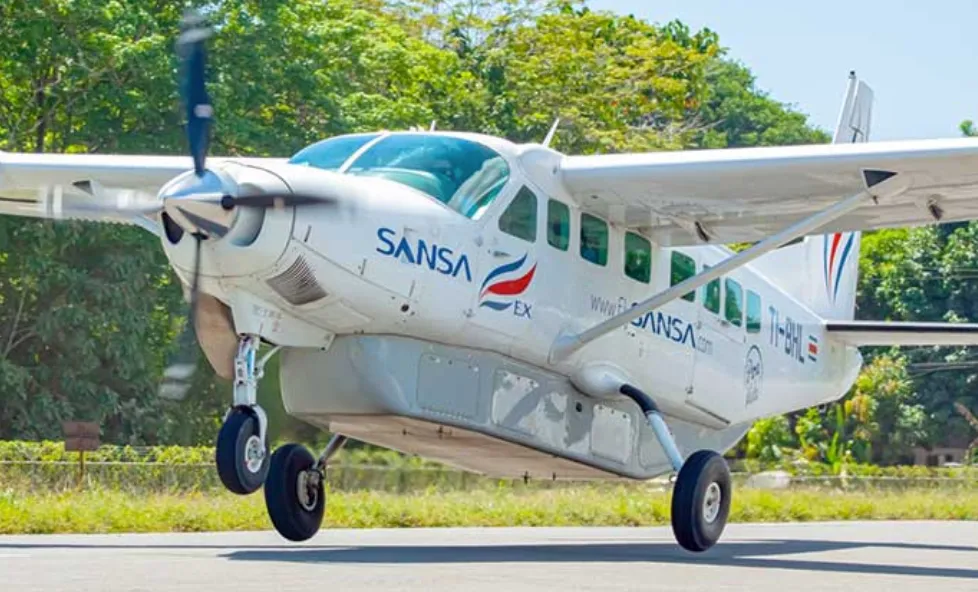

Costa Rica Cobano Airport Expansion Strengthens Access to Nicoya Peninsula Tourism Growth
Cóbano Airport Development and Tourism Growth in Southern Nicoya
Cóbano Airport is changing the way travelers can structure a visit to Costa Rica’s southern Nicoya Peninsula.
The airport provides regional air access closer to destinations such as Santa Teresa, Montezuma, Mal País and surrounding communities, giving travelers an alternative to completing the entire journey from one of Costa Rica’s international gateways by road.
Its importance therefore extends beyond aviation. A regional airport affects how visitors plan accommodation, transportation, multi-destination itineraries and the final connection between a flight and the exact hotel, villa or vacation rental.
Travelers looking for practical information about the airport itself should use the Cóbano Airport ACO guide.
Quick Answer
The strategic value of Cóbano Airport comes from placing domestic air access closer to the southern Nicoya Peninsula.
That can reduce the amount of long-distance ground travel required for visitors heading toward Santa Teresa, Montezuma, Mal País and other regional destinations.
However, the airport does not eliminate transportation planning. Passengers still need to coordinate:
The domestic flight.
Baggage.
The final ground transfer.
The exact accommodation.
Return transportation.
Any following destination in the itinerary.
Cóbano Airport should therefore be understood as one component of a larger regional transportation network.
Why Cóbano Airport Matters
Southern Nicoya combines internationally known beach destinations with a geography that requires more transportation planning than many airport-adjacent tourism areas.
Visitors arriving from outside the region traditionally need to account for a substantial overland journey before reaching the final coastal accommodation.
Regional air access changes that travel pattern.
Instead of completing every stage by road, a traveler may be able to fly closer to the destination and use ground transportation for the final segment.
That can influence how Santa Teresa and other southern Nicoya destinations fit into:
Shorter vacations.
Multi-stop Costa Rica itineraries.
Family trips.
Surf travel.
Boutique-hotel stays.
Villa and vacation-rental stays.
Trips combining the peninsula with the Central Valley or other regions.
Airport Development Is More Than an Aviation Issue
Changes to airport infrastructure are often discussed in terms of aircraft operations, but the visitor impact reaches much farther.
A regional airport can influence:
How travelers choose between road and air connections.
When hotel check-in can realistically occur.
How accommodation operators coordinate arrivals.
Demand for airport transportation.
Luggage and surfboard planning.
The feasibility of including southern Nicoya in a shorter itinerary.
How visitors connect Santa Teresa with other Costa Rica destinations.
For this reason, airport development should be viewed together with the region’s roads, accommodations and local transportation network.
Cóbano Airport Does Not Replace SJO or LIR
Cóbano Airport serves a different function from Costa Rica’s principal international gateways.
International travelers still need to enter Costa Rica according to the flights available for their trip.
Cóbano can then function as a regional connection when domestic air travel fits the itinerary.
This distinction matters because choosing an international airport and choosing whether to use Cóbano are two separate decisions.
A traveler should compare:
International flight schedule.
Connection possibilities.
Baggage requirements.
Domestic-flight timing.
Final ground transportation.
Accommodation location.
Destination after southern Nicoya.
Travelers comparing the practical ways to reach ACO can use the guide on how to get to Cóbano Airport.
A Regional Gateway for More Than Santa Teresa
Santa Teresa is one of the destinations most closely associated with Cóbano Airport, but the airport’s regional role extends beyond one beach town.
Southern Nicoya includes communities such as:
Santa Teresa.
Playa Carmen.
Mal País.
Montezuma.
Cabuya.
Tambor.
Cóbano and surrounding areas.
These locations have different accommodation patterns and road connections.
For that reason, an airport arrival should always be planned according to the final property rather than only the general destination region.
How Cóbano Changes Santa Teresa Access
Santa Teresa is spread along a coastal corridor rather than concentrated around one resort center or transportation terminal.
A passenger landing at Cóbano Airport still needs to reach a specific:
Hotel.
Villa.
Surf camp.
Hostel.
Vacation rental.
Private residence.
That final road segment remains an important part of the arrival.
Travelers ready to arrange that connection can review Cóbano Airport to Santa Teresa private transportation.
The airport therefore reduces the long-distance portion of the journey without eliminating the need for local transportation.
Why the Exact Accommodation Matters
A regional airport can be close to a tourism destination while individual accommodations remain spread across a wide area.
This is especially relevant in southern Nicoya.
Travelers should provide:
Exact property name.
Final community.
Map location when needed.
Number of passengers.
Luggage details.
Surfboards or oversized equipment.
Domestic flight information.
A reservation that says only “Santa Teresa” or “Montezuma” may not provide enough information to coordinate the final transfer correctly.
Ground Transportation Remains Essential
Airport development does not remove the role of road transportation.
Instead, air and ground transportation become complementary.
The domestic flight brings the passenger into the region. Ground transportation completes the journey to the property.
This relationship becomes particularly important when:
The flight arrives with several passengers.
The group carries multiple suitcases.
Surfboards are involved.
The accommodation is outside a central area.
The traveler is unfamiliar with local roads.
Arrival must be coordinated with hotel check-in.
The itinerary continues to another destination.
The effectiveness of regional air access therefore depends partly on how smoothly the final ground connection is planned.
Impact on Hotels, Villas and Vacation Rentals
Improved regional accessibility can affect accommodation planning in several ways.
Properties can potentially receive guests who prefer domestic air travel rather than a full overland journey.
That can make it easier for some travelers to consider:
Shorter Santa Teresa stays.
A peninsula stay after several nights in another Costa Rica region.
Boutique hotels.
Remote villas.
Multi-generational family trips.
Surf trips with a defined arrival schedule.
However, accommodation operators still need precise arrival information.
A domestic flight arriving at Cóbano does not tell a hotel when the guest will reach the property unless the ground transfer is also coordinated.
Impact on Multi-Destination Costa Rica Itineraries
Cóbano Airport can change the logic of a Costa Rica itinerary.
Without regional air access, travelers may decide against southern Nicoya because of the amount of road travel required.
A domestic-air connection can make it easier to evaluate combinations such as:
Central Valley + Santa Teresa.
Santa Teresa + another peninsula destination.
Shorter beach stays after inland travel.
Southern Nicoya as the final portion of a Costa Rica trip.
This does not mean that flying is automatically the right choice.
Baggage, schedule, cost, connections and the complete trip still need to be considered.
Regional Tourism Beyond the Main Beach Towns
Better access can also distribute visitor activity beyond Santa Teresa.
Travelers landing at Cóbano may continue toward Montezuma, Mal País, Cabuya, Tambor or another part of the southern peninsula.
That can support a wider tourism network involving:
Hotels.
Vacation rentals.
Restaurants.
Tour operators.
Transportation providers.
Local services.
Multi-destination stays.
The airport’s regional importance therefore comes partly from connecting several communities rather than serving one destination in isolation.
Why Arrival Planning Still Matters
Shortening one transportation segment does not automatically make the entire itinerary simple.
Travelers still need to coordinate:
International arrival when applicable.
Domestic departure.
Baggage.
Flight schedule.
Cóbano Airport arrival.
Local ground transportation.
Hotel or villa check-in.
A poorly coordinated connection can offset some of the convenience created by flying closer to the destination.
The complete door-to-property itinerary matters more than the flight segment alone.
Luggage and Surf Travel
Southern Nicoya attracts many travelers carrying surfboards and additional equipment.
This creates an important connection between aviation and ground transportation.
Passengers should separately confirm:
Airline baggage requirements.
Surfboard acceptance.
Number and dimensions of board bags.
Ground-vehicle luggage space.
Accommodation storage.
Acceptance on one segment does not automatically guarantee acceptance on another.
Travelers should therefore plan luggage across the complete itinerary rather than treating the flight and airport transfer as unrelated reservations.
Return Transportation Is Part of the Airport Strategy
The usefulness of a regional airport depends on the departure journey as much as the arrival.
Travelers should plan the return transfer before the final travel day, particularly when leaving from a villa or accommodation outside a central area.
Passengers departing from Santa Teresa can review Santa Teresa to Cóbano Airport private transportation.
The request should include the domestic departure information, exact pickup property, passengers and luggage so the ground segment can be coordinated with the flight.
What Cóbano Airport Does Not Change
Cóbano Airport does not eliminate the geography of southern Nicoya.
Travelers still need to account for:
Local road access.
Accommodation location.
Weather.
Luggage.
Surfboards.
Travel between communities.
Transportation after landing.
Transportation back to the airport.
It also does not mean that every traveler should fly.
For some itineraries, traveling entirely by road may still fit better.
The airport adds another access option rather than replacing every existing route.
A More Connected Southern Nicoya Peninsula
The broader significance of Cóbano Airport is the possibility of integrating southern Nicoya more closely into multi-destination Costa Rica travel.
Improved regional access can make destinations that once required a large portion of a travel day easier to evaluate within shorter or more complex itineraries.
The strongest tourism benefit comes when several parts of the journey work together:
Appropriate international flight.
Practical domestic connection.
Clear baggage planning.
Confirmed airport transfer.
Accurate accommodation location.
Realistic departure planning.
Airport infrastructure alone does not create a seamless visitor experience. Connectivity depends on aviation, transportation and accommodation planning functioning as one system.
Frequently Asked Questions
What is Cóbano Airport’s role in southern Nicoya tourism?
Cóbano Airport provides regional domestic air access closer to Santa Teresa, Montezuma, Mal País and other southern Nicoya communities, reducing the amount of long-distance ground transportation required for travelers who choose to fly.
Does Cóbano Airport replace San José or Liberia Airport?
No. Cóbano is a regional airport. International travelers still need to structure their trip around the international flights available to them and then determine whether a domestic connection to Cóbano fits the itinerary.
Do travelers still need transportation after landing?
Yes. Passengers must continue from the airport to the exact hotel, villa, vacation rental or other destination by road.
Is Cóbano Airport only useful for Santa Teresa?
No. Its regional role also includes access toward Montezuma, Mal País, Cabuya, Tambor and other communities on the southern Nicoya Peninsula.
Can Cóbano Airport make shorter Santa Teresa stays more practical?
It can. Reducing the long-distance road segment may make southern Nicoya easier to include in some shorter or multi-destination itineraries, although the complete flight and ground connection still needs to work.
Does flying to Cóbano eliminate luggage planning?
No. Travelers need to consider airline baggage requirements and ground-vehicle capacity separately, particularly when carrying surfboards or oversized equipment.
Should return transportation be arranged in advance?
Yes. Travelers departing on a domestic flight should coordinate the pickup property, departure information, passenger count and luggage before the final travel day.
Planning Travel Through Cóbano Airport
Use the airport according to the complete itinerary rather than treating the flight as an isolated segment.
First confirm the domestic flight.
Then identify the exact final accommodation and arrange the corresponding ground transfer.
For general airport information, use the Cóbano Airport ACO guide. For the different ways to reach the airport, use the dedicated How to Get to Cóbano Airport guide.
Travelers continuing to Santa Teresa can use the route-specific private transportation page, while travelers returning from Santa Teresa should arrange the departure transfer before their flight date.
The regional value of Cóbano Airport is strongest when aviation, accommodation and local transportation are planned together.