
Mal Pais Travel Guide
Explore Mal País, Costa Rica, including beaches, surfing, tide pools, Cabo Blanco, wildlife, Cóbano Airport, ferry access, road conditions, car rental, and travel tips.
Mal Pais Costa Rica Travel Guide
Overview
Mal País, Costa Rica is a relaxed Pacific coastal destination on the southern Nicoya Peninsula, immediately south of Playa Carmen and Santa Teresa.
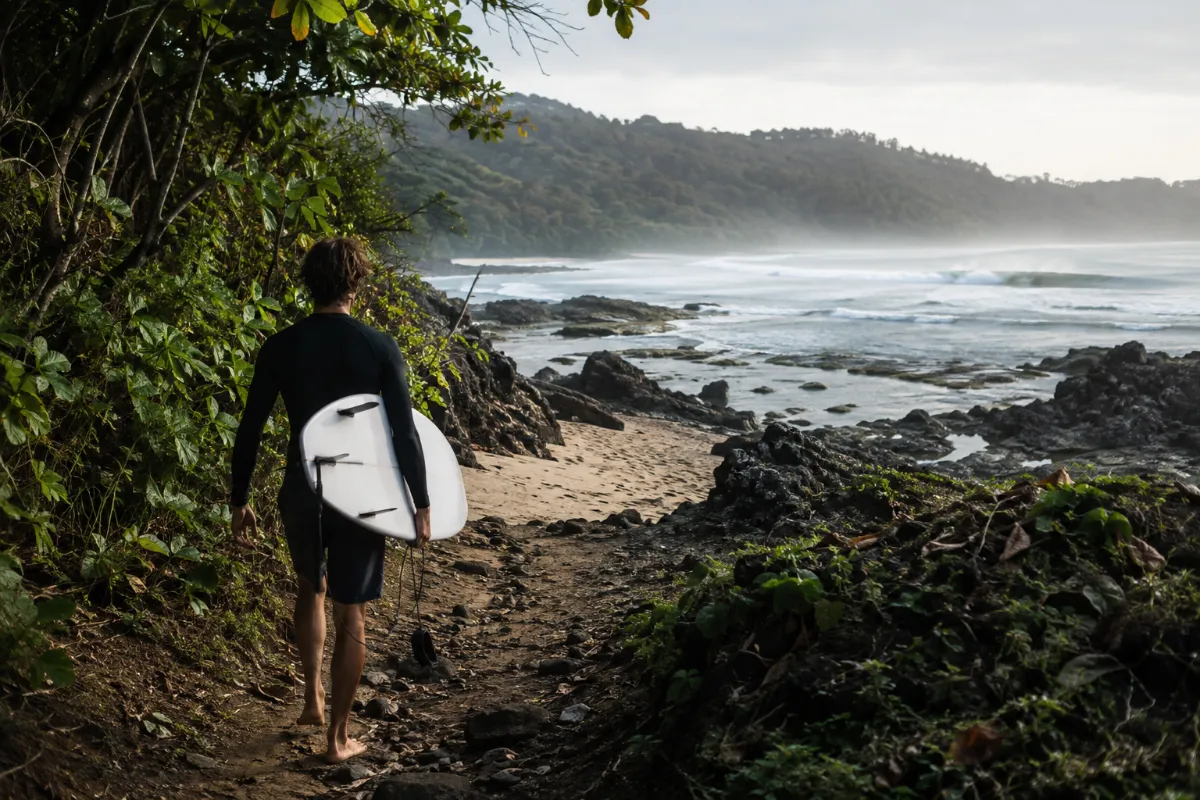
The area is known for a rugged coastline, forested hills, rocky points, natural tide pools, surfing, fishing, ocean sunsets, and a quieter atmosphere than neighboring Santa Teresa.
Mal País is not completely undeveloped, but tourism is more spread out and low-key. Travelers can find hotels, villas, restaurants, surf-related activities, and private accommodations while still enjoying a stronger sense of space and nature.
It works especially well for couples, surfers, families seeking quieter accommodations, nature travelers, and visitors who want easy access to Santa Teresa without staying directly in its busiest area.
Quick Answer
Mal País is best known for:
Rocky Pacific coastline
Natural tide pools
Surfing
Fishing
Ocean sunsets
Tropical vegetation
Quieter accommodations
Proximity to Santa Teresa
Access to the Cabo Blanco region
Costa Rica's tourism authority describes Mal País as having an irregular rocky shoreline with coastal vegetation and forest, especially around Punta Barrigona and Punta Cuevas.
Where Is Mal Pais?
Mal País is located in Puntarenas Province on the southwestern side of the Nicoya Peninsula.
The coastal areas are arranged roughly as:
Mal País → Playa Carmen → Santa Teresa
Playa Carmen forms an important transition between Mal País and Santa Teresa. Because hotels and vacation rentals are spread along coastal and hillside roads, travelers should always provide the exact property name when arranging transportation.
For nearby restaurants, beaches, surfing, and activities farther north, see the Santa Teresa Costa Rica Travel Guide.
Beaches and Coastline
Mal País does not have one uniform beach.
Its coastline includes:
Sandy sections
Rocky shoreline
Small coves
Reef formations
Natural tide pools
Forested coastal areas
This makes Mal País visually different from the long sandy beaches farther north around Santa Teresa.
Punta Barrigona is known for coastal scenery, while Punta Cuevas lies toward the southern end near the protected Cabo Blanco landscape.
Can You Swim in Mal Pais?
Swimming is possible in selected areas when ocean conditions are appropriate, but Mal País should not be described as a consistently calm swimming destination.
Conditions vary according to:
Waves
Tides
Rocks
Reef formations
Currents
Seasonal weather
Visitors should evaluate the ocean before entering and avoid unfamiliar rocky areas during stronger surf.
Travelers prioritizing long sandy beaches may prefer spending part of the day around Playa Carmen or Santa Teresa.
Natural Tide Pools
Low tide can reveal natural pools among Mal País' rocky coastal formations.
These areas can be interesting for:
Photography
Exploring marine life
Relaxing during suitable conditions
Watching small fish and crabs
Always check the tide and waves before entering a pool. Strong sets can reach rocky areas even when the immediate water appears calm.
Avoid removing marine animals, shells, or other natural material.
Surfing
Surfing is one of the main activities in the wider Mal País–Playa Carmen–Santa Teresa region.
Mal País has surf opportunities, but neighboring Playa Carmen and Santa Teresa generally provide a larger concentration of surf schools, board rentals, and established beach breaks.
Beginners should choose a lesson and beach according to current conditions rather than selecting a surf spot only because it is famous.
More experienced surfers can find different breaks throughout the coastal area depending on swell direction, tide, and season.
Cabo Blanco Absolute Natural Reserve
Mal País borders the wider Cabo Blanco Absolute Natural Reserve landscape toward its southern end.
However, an important logistical detail is often missed:
The regular visitor entrance to Cabo Blanco is reached from the Cabuya side, not directly through Mal País.
Travelers wanting to hike inside the reserve should therefore plan a separate road trip toward Cabuya.
Cabo Blanco is important for:
Tropical forest
Wildlife
Hiking
Birdwatching
Conservation history
Coastal ecosystems
The reserve makes an excellent nature-focused day trip when combined with Cabuya.
Wildlife
Forest, coastline, and nearby protected areas support a variety of wildlife.
Possible sightings include:
Howler monkeys
White-faced capuchin monkeys
Iguanas
Coatis
Tropical birds
Butterflies
Other reptiles and small mammals
Marine excursions may also provide opportunities to encounter dolphins or other marine wildlife, but sightings should never be guaranteed.
Early mornings are often particularly useful for birdwatching and wildlife observation.
Things to Do in Mal Pais
Sport Fishing
Fishing is one of Mal País' long-established ocean activities.
Local tours may target offshore or coastal waters depending on the season, weather, sea conditions, and operator.
Kayaking
Kayaking may be available when ocean conditions allow.
This is highly weather-dependent and should be arranged with local operators familiar with currents and coastal conditions.
Horseback Riding
Horseback tours can combine rural roads, forest scenery, hills, and beach areas.
Diving and Snorkeling
Marine tours may include snorkeling or diving around suitable offshore areas.
Visibility varies with waves, rain, currents, and sediment, so conditions should be checked on the day of the tour.
Yoga and Wellness
The wider Santa Teresa–Mal País area has a strong wellness scene with yoga, retreats, massage, and other activities available at selected hotels and studios.
Best Time to Visit
December to April
The dry season generally provides:
More sunshine
Less rainfall
Easier road conditions
More predictable beach days
This is also one of the busiest periods for the southern Nicoya Peninsula.
May to November
The green season brings:
Greener hills and forest
More frequent rain
Fewer visitors during some periods
Stronger surf during portions of the season
More variable road conditions
Heavy rainfall can make smaller roads, steep property entrances, and unpaved access more difficult.
Surf conditions vary throughout the year, so travelers coming primarily to surf should evaluate swell patterns rather than choosing dates only according to dry and rainy seasons.
How to Get to Mal Pais
Travel planning is important because Mal País is relatively remote from Costa Rica's principal international airports.
For a complete comparison, see How to Get to Mal País.
From San Jose Airport
The standard ground route is:
SJO → Route 27 → Puntarenas → Paquera Ferry → Cóbano → Playa Carmen → Mal País
Ground transportation normally takes approximately 5.5 to 7 hours, depending on traffic, ferry timing, weather, and the exact accommodation.
Travelers should plan the entire journey around the ferry rather than only road driving time.
For current crossing information, review the Costa Rica Puntarenas–Paquera Ferry Guide.
From Guanacaste Airport
Travelers arriving through Guanacaste Airport (LIR) remain on the Nicoya Peninsula and normally do not require a ferry.
The road journey generally takes approximately 4.5 to 5.5 hours, depending on traffic, weather, roadwork, and final hotel access.
From Cóbano Airport
Cóbano Airport (ACO) is now the closest and most relevant regional airport for Mal País.
Older travel guides may still refer to Tambor Airport, but current scheduled domestic services use Cóbano as the air gateway for Santa Teresa and Mal País. SANSA specifically markets ACO for the Santa Teresa–Mal País area.
The ground transfer from Cóbano Airport to Mal País generally takes approximately 35 to 55 minutes.
No ferry is required.
Do You Need a Rental Car?
Not necessarily.
Travelers who plan to spend most of their time at one property and around nearby beaches may use private transportation, taxis, organized tours, or other local services.
A rental car becomes more useful for independent trips to:
Santa Teresa
Montezuma
Cabuya
Cabo Blanco
Cóbano
Other beaches and rural areas
There is currently a rental-car location serving Mal País and Playa Carmen, so travelers can also arrive without a vehicle and rent locally only when they need one.
Do You Need a 4x4?
A 4x4 is not automatically necessary for every Mal País itinerary.
The correct vehicle depends on:
Final hotel or villa access
Hillside roads
Unpaved roads
Rainfall
Planned day trips
Parking access
A regular vehicle or 2WD SUV may work for straightforward routes, while a true 4x4 is more useful for steep, loose, rough, or rain-affected access roads.
Ask your accommodation about its final access road before reserving a vehicle.
How Long Should You Stay?
Three to five nights works well for most travelers.
A shorter stay can include:
Beach time
Surfing
Sunset
Fishing or another ocean activity
A longer stay allows time for:
Santa Teresa
Montezuma
Cabuya
Cabo Blanco
Wellness activities
Multiple surf days
Mal País is particularly suited to slower itineraries rather than schedules filled with several long excursions every day.
Visitor Tips
For a smoother stay:
Provide the exact hotel or villa location
Reserve airport transportation in advance
Check ferry schedules before leaving SJO
Use Cóbano Airport rather than outdated Tambor Airport information
Ask your hotel about road access
Check tides before exploring tide pools
Evaluate ocean conditions before swimming
Carry insect repellent and sun protection
Avoid leaving valuables visible in vehicles
Keep some flexibility during heavy rain
Frequently Asked Questions
What is Mal Pais known for?
Mal País is known for its rugged coastline, natural tide pools, surfing, fishing, tropical vegetation, sunsets, and quieter atmosphere beside Santa Teresa.
Is Mal Pais the same as Santa Teresa?
No. Mal País lies south of Playa Carmen, while Santa Teresa extends north from the Playa Carmen area.
Can you swim in Mal Pais?
Yes in suitable locations and conditions, but rocky shoreline, waves, currents, and tides mean visitors should evaluate the ocean carefully before entering.
What is the closest airport to Mal Pais?
Cóbano Airport (ACO) is the closest regional airport. Ground transportation usually takes approximately 35 to 55 minutes.
Is Tambor Airport still the airport for Mal Pais?
Older guides may still reference Tambor Airport, but current regional flight planning should use Cóbano Airport (ACO).
Do you need a ferry from San Jose?
The normal ground route from SJO uses the Puntarenas–Paquera ferry.
Travelers arriving from LIR or Cóbano Airport normally do not need a ferry.
Do you need a 4x4?
Not for every stay. Choose the vehicle according to your accommodation's final access road and the most difficult route in your itinerary.
Is Cabo Blanco accessible directly from Mal Pais?
The reserve borders the Mal País area, but the regular visitor entrance is reached from Cabuya, so a road trip around to the Cabuya side is required.
Conclusion
Mal País, Costa Rica combines rugged Pacific scenery, surfing, tide pools, fishing, tropical vegetation, and a quieter atmosphere immediately beside Santa Teresa.
It works especially well for travelers who want access to the southern Nicoya Peninsula's restaurants and activities without staying directly in its busiest beach area.
Transportation planning is important. Travelers coming by road from SJO normally use the Puntarenas–Paquera ferry, travelers arriving from LIR remain on the peninsula, and those prioritizing the shortest journey can use Cóbano Airport (ACO) followed by a local ground transfer.
With Santa Teresa, Montezuma, Cabuya, and Cabo Blanco all within the wider region, Mal País can serve as a peaceful base for exploring one of Costa Rica's most distinctive Pacific coastal areas.