Costa Rica Ferry Guide: Puntarenas to Paquera and Playa Naranjo
Understand the Puntarenas ferry system, compare Paquera and Playa Naranjo, and plan transportation toward Santa Teresa, Montezuma and the Nicoya Peninsula.
Costa Rica Ferry Guide: Puntarenas to Paquera and Playa Naranjo
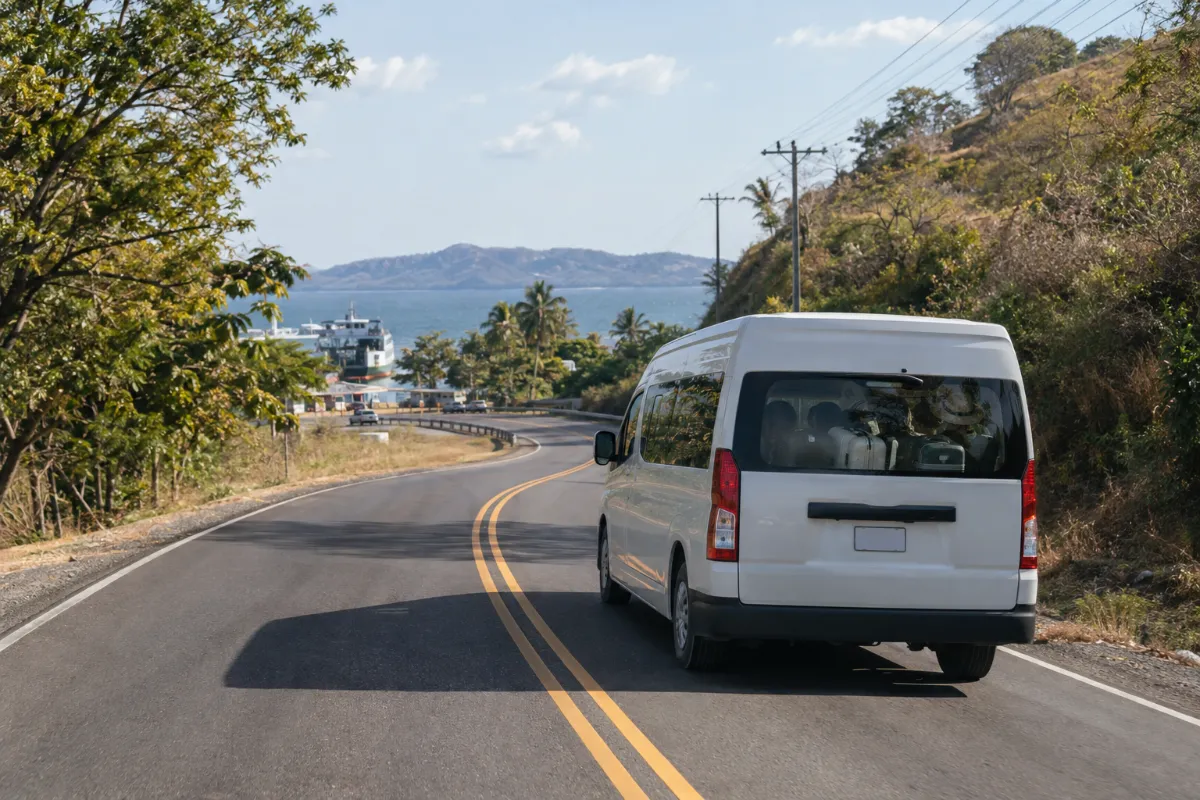
The Puntarenas ferry system connects mainland Costa Rica with the Nicoya Peninsula across the Gulf of Nicoya. The most important planning decision is not simply whether to take a ferry, but which crossing matches your final destination.
From Puntarenas, the two principal connections are:
Puntarenas to Paquera
Puntarenas to Playa Naranjo
They serve different parts of the peninsula and should not be treated as interchangeable.
Travelers continuing toward Santa Teresa, Montezuma, Tambor, Cóbano, Mal País and much of the southern Nicoya Peninsula normally evaluate the Paquera crossing. Playa Naranjo can be relevant for different central or northern peninsula itineraries.
If your immediate question is how to reach the mainland terminal before crossing, start with How to Get to Puntarenas Ferry.
Quick Answer
Choose the ferry according to your final destination and complete itinerary, not simply because both services depart from Puntarenas.
Paquera is generally the relevant arrival point for travelers continuing toward southern Nicoya Peninsula destinations such as Santa Teresa, Montezuma, Tambor, Cóbano and Mal País.
Playa Naranjo can be relevant for Playa Naranjo itself and selected routes toward other parts of the peninsula.
Travelers beginning in San José, San Jose Airport (SJO), Alajuela and many mainland destinations may use Puntarenas as the gateway to the Gulf crossing.
Travelers beginning in Liberia, Guanacaste or elsewhere on the Nicoya Peninsula should not automatically travel to Puntarenas. In many cases, remaining overland through the peninsula avoids an unnecessary Gulf crossing.
Quick Ferry Planning Information
Mainland departure area: Puntarenas
Principal Gulf crossings: Puntarenas–Paquera and Puntarenas–Playa Naranjo
Paquera is commonly relevant for: Santa Teresa, Montezuma, Tambor, Cóbano, Mal País and other southern Nicoya Peninsula destinations
Playa Naranjo can be relevant for: Playa Naranjo and selected central or northern Nicoya Peninsula itineraries
Transportation to Puntarenas: Private transportation, scheduled shared transportation where available, rental car or public transportation
After arriving in Paquera: Most travelers continue by road to their final destination
Important: Ferry schedules, ticketing procedures, vehicle capacity, fares and operating conditions should be confirmed for the actual travel date
Puntarenas to Paquera Ferry
The Paquera crossing is the principal ferry connection used by many travelers going between mainland Costa Rica and the southern Nicoya Peninsula.
After arriving in Paquera, travelers continue by road toward destinations including:
Tambor
Cóbano
Montezuma
Santa Teresa
Playa Carmen
Mal País
Cabuya
Playa Hermosa in the Santa Teresa area
Other accommodations throughout the southern peninsula
The ferry does not deliver passengers directly to Santa Teresa or Montezuma. Paquera is the Gulf-side arrival point; a separate road segment remains after disembarking.
Travelers who need more detail specifically about reaching or leaving that terminal can use the How to Get to Paquera Ferry guide.
Puntarenas to Playa Naranjo Ferry
The other principal crossing from Puntarenas reaches Playa Naranjo.
This route serves a different part of the Nicoya Peninsula and can be relevant for itineraries involving Playa Naranjo, Jicaral, Nicoya or other areas where that landing point provides a logical onward road connection.
Travelers heading farther north should compare the ferry with an entirely overland route before deciding.
For example, a traveler beginning at Liberia Airport and already on the Guanacaste side of the country should not assume that driving south to Puntarenas and then crossing back toward the peninsula is the appropriate route.
The correct choice depends on:
Starting point
Final destination
Ferry departure options for the travel date
Onward road connection
Whether you are traveling with a vehicle
Airport used
Transportation service
Overall itinerary
Paquera or Playa Naranjo: Which Ferry Should You Use?
Paquera Usually Fits Southern Peninsula Trips
Paquera is generally the crossing to evaluate when traveling from the mainland toward:
Santa Teresa
Montezuma
Tambor
Cóbano
Mal País
Playa Carmen
Cabuya
Playa Hermosa near Santa Teresa
The same logic works in reverse when travelers leave these destinations and travel toward Puntarenas, the Central Valley or another mainland region.
Playa Naranjo Fits Different Peninsula Connections
Playa Naranjo can make sense when that arrival point places you closer to the road network leading toward your actual destination.
It should not automatically be selected for every trip to Sámara, Nosara or northern parts of the peninsula. Depending on the origin, driving around the Gulf or approaching from Guanacaste may fit the itinerary better.
How to Reach Puntarenas Ferry
The ferry journey begins with the road trip to Puntarenas.
Travelers commonly approach Puntarenas from:
San Jose Airport
San José
Alajuela
Escazú
Jacó
Herradura
Manuel Antonio
Quepos
Monteverde
La Fortuna
Other mainland locations
The transportation method should be chosen according to both the road journey and the ferry connection that follows it.
A traveler who reaches Puntarenas after the intended ferry has departed has not completed the connection simply because the ground transfer arrived successfully.
San Jose Airport to Puntarenas Ferry
Juan Santamaría International Airport (SJO) is a common starting point for travelers entering Costa Rica and continuing toward the southern Nicoya Peninsula through Puntarenas.
When arranging this trip, remember that the international arrival and ferry are two different timing variables.
Before the road journey begins, an arriving passenger may still need to complete airport procedures and collect luggage. The ground transfer must then reach Puntarenas with sufficient time for the applicable ferry procedure.
Travelers who want a privately coordinated airport-to-terminal road segment can review San Jose Airport to Puntarenas Ferry Private Transportation.
A ferry connection should never be planned around an unrealistically tight airport exit or minimum road time.
San José City Is Not San Jose Airport
San José city and Juan Santamaría International Airport are different starting points.
SJO is located in Alajuela, while a downtown San José pickup begins farther east in the metropolitan area.
Traffic conditions and pickup location can therefore affect the road portion differently. When requesting transportation, provide the actual hotel, airport or pickup point rather than simply writing “San José.”
Should Travelers from Liberia Use the Puntarenas Ferry?
Not automatically.
Travelers beginning at Liberia Airport or elsewhere in Guanacaste are already positioned on the northwestern side of Costa Rica.
For several Nicoya Peninsula destinations, an overland journey through the peninsula can make more sense than traveling to Puntarenas solely to cross the Gulf.
Santa Teresa is one example. Travelers beginning in Guanacaste can compare the ferry-free Liberia Airport to Santa Teresa Private Transportation route with alternatives before deciding how to travel.
This illustrates an important rule for ferry planning: the ferry is a transportation connection, not a required attraction on every Nicoya Peninsula itinerary.
Private Transportation and Ferry Coordination
Private transportation can be useful when the road portion of a trip must be coordinated around a scheduled ferry.
Because the vehicle is reserved for one traveling party, the departure can generally be arranged according to the passenger’s itinerary rather than a shared transportation timetable.
This can be particularly relevant for:
International airport arrivals
Families
Groups
Travelers with several suitcases
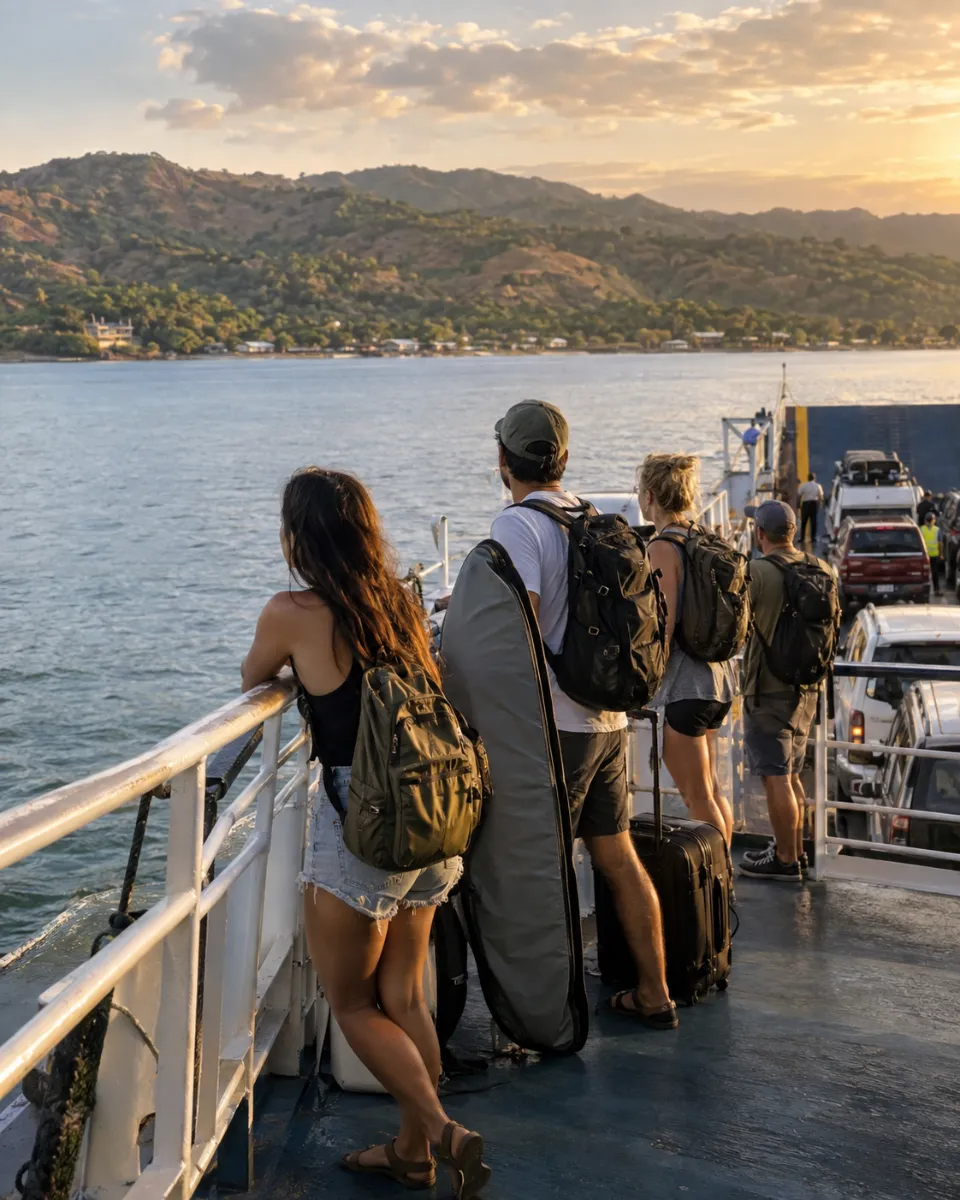
Passengers carrying surfboards or oversized luggage
Travelers staying at villas or vacation rentals
Trips with a specific ferry connection
Airport-bound journeys leaving the peninsula
However, do not assume that every private transportation service handles the ferry in the same way.
Depending on the actual route and reservation, the vehicle arrangement before, during and after the crossing may differ. Confirm whether your service ends at the terminal, continues aboard the ferry or connects with another vehicle on the opposite side.
Shared Shuttle and the Ferry
Scheduled shared transportation can work when a published route and departure fit the traveler’s itinerary.
Shared services normally operate differently from private transportation because:
Departures follow a schedule.
Other passengers may be traveling in the same vehicle.
Additional pickups or drop-offs can form part of the service.
Luggage space may need to be confirmed.
The schedule provides less flexibility around a specific ferry departure.
A shared shuttle available on one long-distance route does not mean there is scheduled shared service between every local destination and every ferry terminal.
Confirm availability for the specific origin, destination and date before arranging the rest of the trip around shared transportation.
Rental Car and the Puntarenas Ferry
A rental car may fit travelers who want independent transportation after reaching the Nicoya Peninsula or who are building a multi-destination Costa Rica road trip.
Driving introduces additional ferry logistics because the traveler must coordinate the road journey with the procedures applying to a vehicle crossing.
Before planning to take a rental car aboard a ferry, confirm:
The rental company’s applicable conditions
The ferry route you actually need
Current vehicle-ticket procedures
Vehicle capacity for the intended sailing
Required terminal procedures
Your onward road route after disembarking
Do not assume that passenger availability automatically means vehicle space is available.
Travelers comparing self-driving with transfers can review the Costa Rica Driving Rules, Roads and Safety Guide before choosing the transportation arrangement.
Public Transportation and Ferry Connections
Public transportation can work for travelers with flexible schedules who are comfortable organizing separate travel stages.
Depending on the itinerary, that may involve:
Reaching the correct bus terminal
Traveling to Puntarenas
Getting from the bus arrival point to the ferry area
Managing ferry ticketing and boarding
Crossing the Gulf
Finding an onward bus or other transportation after arrival
Making additional connections before reaching the final destination
Because each stage has its own operating conditions, public transportation is better planned from the complete origin-to-destination journey rather than treating the ferry as an isolated segment.
What Happens After Arriving in Paquera?
For many passengers, arriving in Paquera is only the midpoint of the trip.
The ferry terminal is on the eastern side of the peninsula, while several major visitor destinations require another road journey.
Paquera Ferry to Santa Teresa
Santa Teresa is reached by road after arriving at Paquera.
A prearranged transfer can connect the ferry arrival with the next stage across the southern peninsula. Travelers wanting a dedicated service can review Paquera Ferry to Santa Teresa Private Transportation.
No second Gulf ferry is needed for the Paquera-to-Santa Teresa road segment.
Paquera Ferry to Montezuma
Montezuma is also reached overland from Paquera.
Travelers comparing the available ways to continue can use the Paquera Ferry to Montezuma transportation guide.
Arranging the onward segment before arriving can be useful when traveling with luggage or when the ferry is only one part of a longer travel day.
Paquera Ferry to Tambor
Tambor is another road destination reached after disembarking in Paquera.
Travelers who want a prearranged private connection can review Paquera Ferry to Tambor Private Transportation.
Paquera Ferry to Cóbano
Cóbano functions as an important inland connection point for several southern Nicoya Peninsula destinations.
Travelers ending their journey there, or using Cóbano as the next stage of their itinerary, can review Paquera Ferry to Cóbano Private Transportation.
Paquera Ferry to Mal País
Mal País requires an onward road journey from the Paquera side toward the Pacific coast.
The Paquera Ferry to Mal País transportation guide explains that final connection in more detail.
Ferry Connections to Santa Teresa
For travelers approaching Santa Teresa from the Central Valley or other mainland areas, a ferry-connected journey commonly follows this general sequence:
Mainland Costa Rica → Puntarenas → Paquera → Road transportation → Santa Teresa
The key point is that the ferry does not terminate in Santa Teresa.
Paquera is the arrival point on the Gulf side of the peninsula. Travelers must still arrange the road transfer across the peninsula to the correct hotel, villa or vacation rental.
Travelers booking transportation should therefore clarify whether they need:
Transportation only to Puntarenas Ferry
Transportation only from Paquera
A complete ferry-connected journey
A vehicle that is intended to cross as part of the private service
Separate road services on each side of the Gulf
Those are different products and should not be assumed to operate identically.
Ferry Connections to Montezuma
Montezuma follows similar logic.
Travelers approaching from mainland Costa Rica normally reach the Paquera side first and continue by road toward Montezuma.
If Montezuma is the final destination, the complete travel plan should account for both sides of the ferry journey rather than ending the itinerary at Paquera.
Ferry Connections to Tambor and Cóbano
Tambor and Cóbano are also reached by road from Paquera.
Cóbano is particularly important because several road connections toward Santa Teresa, Mal País and Montezuma pass through or near the area.
This makes Paquera–Cóbano an important link within the larger southern Nicoya transportation network even for travelers who are not ultimately staying in Cóbano itself.
Ferry Timing and Connections
Do not build the trip around the ferry sailing time alone.
A complete ferry-connected journey may include:
Road transportation to Puntarenas
Traffic before reaching the terminal
Terminal arrival procedures
Ticketing
Waiting before boarding
Passenger or vehicle boarding
The Gulf crossing
Unloading
Ground transportation after arrival
Hotel or airport timing at the final destination
Schedules and procedures can change. Verify the applicable sailing before travel and build enough margin around any important onward connection.
This becomes especially important when the same travel day includes an international flight.
Traveling with a Vehicle
Passengers traveling with a vehicle need to plan differently from walk-on passengers.
Vehicle availability, ticketing and loading procedures can affect the connection and should be checked in advance.
For rental vehicles, confirm both sides of the equation:
The ferry permits the intended vehicle movement under the applicable ticketing and capacity conditions.
The rental agreement permits the planned itinerary.
Do not assume one automatically confirms the other.
Traveling with Surfboards or Oversized Luggage
The southern Nicoya Peninsula attracts many travelers carrying surf equipment, bicycles and larger bags.
Tell the transportation provider about oversized items before confirming the reservation.
Useful information includes:
Number of surfboards
Approximate board or bag length
Number of large suitcases
Bicycles
Sports equipment
Mobility equipment
Other oversized items
Vehicle space depends on both the passenger count and the luggage configuration.
This is especially important for shared services where luggage capacity is distributed among passengers from different reservations.
Airport Connections and the Ferry
Airport travel requires additional margin because both ends of the itinerary may operate on fixed timing.
Arriving in Costa Rica
An arriving passenger must allow for the actual airport arrival process before beginning transportation toward Puntarenas.
A ferry should not be selected based on scheduled aircraft landing time alone.
Flying Out of Costa Rica
Travelers leaving the Nicoya Peninsula should avoid calculating an airport departure using only ideal road and ferry conditions.
The itinerary may include:
Hotel pickup → Paquera → Ferry → Puntarenas → Road transportation → Airport procedures
Each segment needs sufficient margin.
Does a Domestic Flight Replace the Ferry?
Sometimes the real question is not “Which ferry should I take?” but “Do I need the ferry at all?”
Travelers whose destination is elsewhere on the southern Nicoya Peninsula may compare a regional flight and onward ground transportation with the longer road-and-ferry itinerary.
This is an alternative transportation strategy rather than another way of reaching the Puntarenas ferry.
Any flight option should be evaluated using the actual date, baggage requirements, onward transfer and final accommodation.
Frequently Asked Questions
What are the two principal ferry routes from Puntarenas?
The two principal Gulf of Nicoya connections discussed in this guide are Puntarenas to Paquera and Puntarenas to Playa Naranjo. They reach different parts of the Nicoya Peninsula.
Which ferry should I use for Santa Teresa?
Travelers approaching Santa Teresa from mainland Costa Rica normally evaluate the Puntarenas–Paquera crossing and then continue by road from Paquera toward Santa Teresa.
Which ferry should I use for Montezuma?
Paquera is normally the relevant Gulf arrival point when approaching Montezuma from Puntarenas. Montezuma itself still requires an onward road transfer.
Which ferry should I use for Tambor?
Travelers approaching Tambor from mainland Costa Rica normally use the Paquera side and continue by road after arriving.
Which ferry should I use for Nosara or Sámara?
It depends on the starting point and complete itinerary. Playa Naranjo can be relevant for some journeys, but travelers should also compare a fully overland route, particularly when beginning in Liberia or Guanacaste.
Does Liberia Airport to Santa Teresa require the Puntarenas ferry?
Normally, the direct overland approach from Liberia travels through the Nicoya Peninsula rather than first going to Puntarenas. Confirm the route for the specific transportation service you book.
Can I take a rental car on the ferry?
Vehicle crossings are subject to the ferry’s applicable procedures and capacity. Rental-car travelers must also confirm the rental company’s conditions before planning the itinerary.
Do shared shuttles use the ferry?
Some scheduled long-distance routes may incorporate a ferry crossing where appropriate. Availability and the exact operating arrangement must be confirmed for the specific route and date.
Does private transportation always cross on the ferry?
No single procedure should be assumed for every private service. A trip may end at a terminal, involve the same vehicle crossing, or use separate arrangements on each side depending on the booked service.
Should I buy ferry tickets in advance?
Check the current ticketing options for your intended route and date. Vehicle travelers and passengers traveling during busy periods should pay particular attention to current availability and terminal procedures.
What happens after I arrive in Paquera?
Most travelers continue by road. Common onward destinations include Tambor, Cóbano, Montezuma, Santa Teresa and Mal País.
Plan Transportation Around the Correct Ferry
Before requesting transportation, identify your complete origin and final destination rather than requesting only “transportation to the ferry.”
Provide:
Travel date
Pickup location
Final destination
Number of passengers
Flight details when applicable
Luggage information
Surfboards or oversized equipment
Whether you are traveling with a vehicle
Ferry direction if already known
Costa Rica Shuttles can then evaluate the appropriate road transportation based on whether your itinerary ends at Puntarenas, crosses to Paquera, continues beyond Paquera or uses a different peninsula route.
Choosing the correct ferry first prevents unnecessary crossings and makes it easier to coordinate the transportation segments before and after the Gulf of Nicoya.