Best Time to Visit Santa Teresa, Costa Rica
Compare Santa Teresa’s dry and green seasons, surf conditions, crowds and travel style to decide when to visit Costa Rica’s southern Nicoya Peninsula.
Best Time to Visit Santa Teresa, Costa Rica
The best time to visit Santa Teresa depends on the kind of trip you want.
Travelers who prioritize drier beach weather and easier outdoor planning often prefer the dry season, generally associated with December through April.
Travelers who prefer greener scenery, a different seasonal atmosphere and more flexibility around rain may enjoy the green season, generally associated with May through November.
Neither period guarantees a particular type of weather every day.
Santa Teresa is a Pacific coastal destination, and local conditions can vary by week, year, tide, swell and recent weather.
Quick Answer
December–April: Generally the drier period and a popular time for beach-focused travel.
May–November: Generally the greener and wetter period, with more need for flexible outdoor plans.
For surfing: Conditions should be evaluated according to current swell, tide, wind and experience level rather than season alone.
For quieter travel: Periods outside major holiday and peak-demand weeks may feel less busy, but visitor levels vary.
For road and activity planning: Wetter conditions can require additional flexibility, especially for secondary roads, trails and outdoor excursions.
For broader Costa Rica seasonal context, see Costa Rica Weather by Month.
Understanding Santa Teresa’s Seasons
Santa Teresa is on the southern Nicoya Peninsula on Costa Rica’s Pacific side.
Trip planning is commonly divided into two broad periods:
Dry Season
Generally associated with December through April.
This period usually brings less rainfall to the Pacific side and can make beach-focused planning more predictable.
Green Season
Generally associated with May through November.
This period usually brings more rainfall and greener landscapes.
These dates should be treated as seasonal patterns rather than exact boundaries.
Weather does not change automatically on the first day of a particular month, and transition periods can vary from year to year.
Dry Season in Santa Teresa
Dry season is popular with travelers who prioritize beach time, sunsets and outdoor activities.
Potential advantages can include:
Less frequent rain.
Easier beach-day planning.
More predictable outdoor schedules.
Drier road conditions in many areas.
Easier planning for walking and local movement.
The tradeoff is demand.
Popular travel periods can mean:
More visitors.
Earlier accommodation bookings.
Higher demand for activities.
More demand for transportation.
Busier restaurants and beach areas.
Travelers visiting during major holiday periods should reserve priority accommodation and activities earlier rather than assuming availability after arrival.
Does Dry Season Mean No Rain?
No.
“Dry season” describes the general seasonal pattern.
It does not guarantee cloudless skies or completely rain-free days.
Travelers should still expect tropical conditions and remain flexible when planning:
Surf.
Boat activities.
Nature trips.
Outdoor dinners.
Long-distance transportation.
Weather forecasts closer to the actual travel dates provide more useful short-term information than a general seasonal label.
Green Season in Santa Teresa
Green season brings a different Santa Teresa experience.
Travelers can expect a greater possibility of rain and greener landscapes.
Depending on the period and current conditions, rain may affect:
Beach plans.
Roads.
Trails.
Boat activities.
Walking.
Travel timing.
Green season does not mean travelers should expect continuous rain throughout every day.
Conditions can vary substantially.
The main practical difference is that plans should include more flexibility.
Why Visit During Green Season?
Green-season travel can fit visitors who:
Are comfortable adjusting plans around weather.
Prefer greener scenery.
Enjoy a slower travel rhythm.
Do not need every day to follow a fixed beach schedule.
Are planning a longer stay with room to move activities between days.
A flexible itinerary can make a significant difference.
Instead of assigning every outdoor activity to one exact day before arrival, travelers can prioritize the activities that matter most and adjust according to conditions.
Dry Season or Green Season?
Choose according to priorities rather than treating one as universally better.
Dry Season May Fit You When
Drier beach conditions are a priority.
You want to schedule more outdoor activities.
You have limited flexibility in the itinerary.
This is your first Santa Teresa visit.
You prefer the busier high-season atmosphere.
Green Season May Fit You When
You are comfortable with rain.
Greener surroundings appeal to you.
Your schedule is flexible.
You are staying enough nights to move activities between days.
A quieter seasonal rhythm is part of the appeal.
Best Time for Beach Days
Travelers prioritizing beach time often prefer the drier months because rain is generally less frequent.
However, beach enjoyment also depends on:
Ocean conditions.
Tide.
Wind.
Sun exposure.
Exact beach.
Time of day.
A dry-season day can still have ocean conditions unsuitable for a particular activity.
Likewise, a green-season day can still provide useful beach periods.
Separate weather conditions from ocean safety when planning.
Best Time for Surfing
Santa Teresa is strongly associated with surfing, but there is no single surf season appropriate for every person.
Conditions depend on:
Swell.
Wave size.
Tide.
Wind.
Weather.
Exact beach section.
Experience level.
Beginners should work with a qualified local instructor who can determine whether current conditions and a particular beach are appropriate.
More experienced surfers should also check local conditions rather than selecting travel dates solely from a general dry-season or green-season description.
For broader activity planning, see Santa Teresa Tours and Adventures.
Does Green Season Mean Better Surf?
Not automatically.
Green season can coincide with different swell patterns, but wave suitability depends on far more than rainfall.
Likewise, dry season should not automatically be described as “beginner surf season.”
A smaller or more manageable day can occur during different parts of the year, and powerful conditions can occur when the calendar alone would not predict them.
Use current local information.
Best Time for First-Time Visitors
First-time visitors who want relatively straightforward beach planning may prefer the drier season.
This can reduce some of the uncertainty associated with rain and local road conditions.
However, first-time travelers who are comfortable with weather flexibility can also enjoy green-season Santa Teresa.
The more important decisions are often:
Length of stay.
Accommodation location.
Activities.
Local mobility.
Arrival and departure planning.
For a broader orientation to the destination, see the Santa Teresa Beach Travel Guide.
Best Time for Families
Families can visit during either season.
Dry season can simplify outdoor scheduling because rain is generally less frequent.
Green season can also work when parents:
Keep the schedule flexible.
Choose the accommodation carefully.
Leave room for indoor or relaxed periods.
Avoid tightly scheduling several outdoor activities.
Ocean safety remains important regardless of season.
Do not assume that drier weather means every beach section is appropriate for children to swim.
Best Time for Couples
Couples can choose based primarily on preferred atmosphere.
Dry season can fit travelers who want:
Beach-focused days.
More outdoor scheduling.
A livelier seasonal atmosphere.
Green season can fit couples who:
Prefer a slower schedule.
Are comfortable with rain.
Want more time at a villa or boutique hotel.
Do not need every activity to happen on one predetermined day.
Accommodation location may matter more than the season when restaurants, privacy or evening mobility are priorities.
Best Time for Longer Stays
Longer stays provide more flexibility in either season.
This can be especially valuable during the green season because an activity affected by weather can potentially be moved to another day.
Travelers staying for a week or longer may also care about:
Road access.
Groceries.
Restaurants.
Local transportation.
Workspace.
Laundry.
Daily walking conditions.
Season can influence those routines differently than it affects a short vacation.
When Is Santa Teresa Busiest?
Visitor demand generally increases during popular dry-season and holiday periods.
Examples can include:
Christmas and New Year.
Other peak vacation periods.
Popular winter travel weeks.
Easter-related holiday travel.
Exact visitor levels vary.
Travelers who need a particular villa, hotel or activity should reserve based on actual availability rather than assuming every dry-season week will be equally busy.
Best Time for Fewer Crowds
There is no guaranteed “quiet month.”
Periods outside major holidays and the highest-demand dry-season dates may feel calmer.
Green-season travel can also produce a different destination rhythm.
However, occupancy and visitor levels depend on:
Holidays.
Events.
Flight demand.
Weekends.
Individual hotel availability.
Choose green season because its overall travel style fits you, not solely because you expect empty beaches.
Accommodation and Season
The right accommodation can change the seasonal experience.
During drier periods, travelers may be more comfortable staying farther from the main coastal area if road access is straightforward.
During wetter conditions, the practical access to a hillside or secondary-road property can become more important.
Before booking, ask:
Is the property on a hill?
Is the final access paved or unpaved?
Can vehicles reach the entrance?
Is parking available?
Can you reach restaurants without driving?
Does access change noticeably after heavy rain?
The exact property matters more than a generic “Santa Teresa” location.
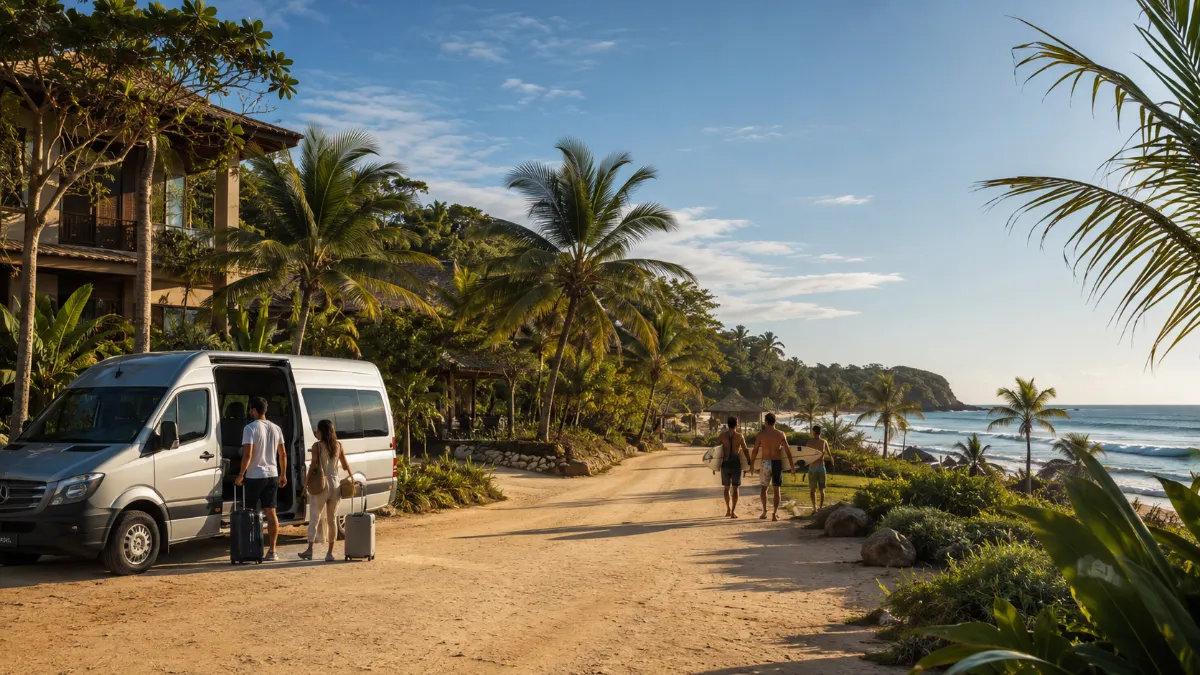
Dust in the Dry Season
Less rain does not mean local roads become irrelevant.
Some unpaved areas can be dusty during drier periods.
Travelers should consider this when evaluating:
Walking.
Open vehicles.
Accommodation near roads.
Surfboard transportation.
Outdoor activities.
This is another reason season is about tradeoffs rather than one period simply being “better.”
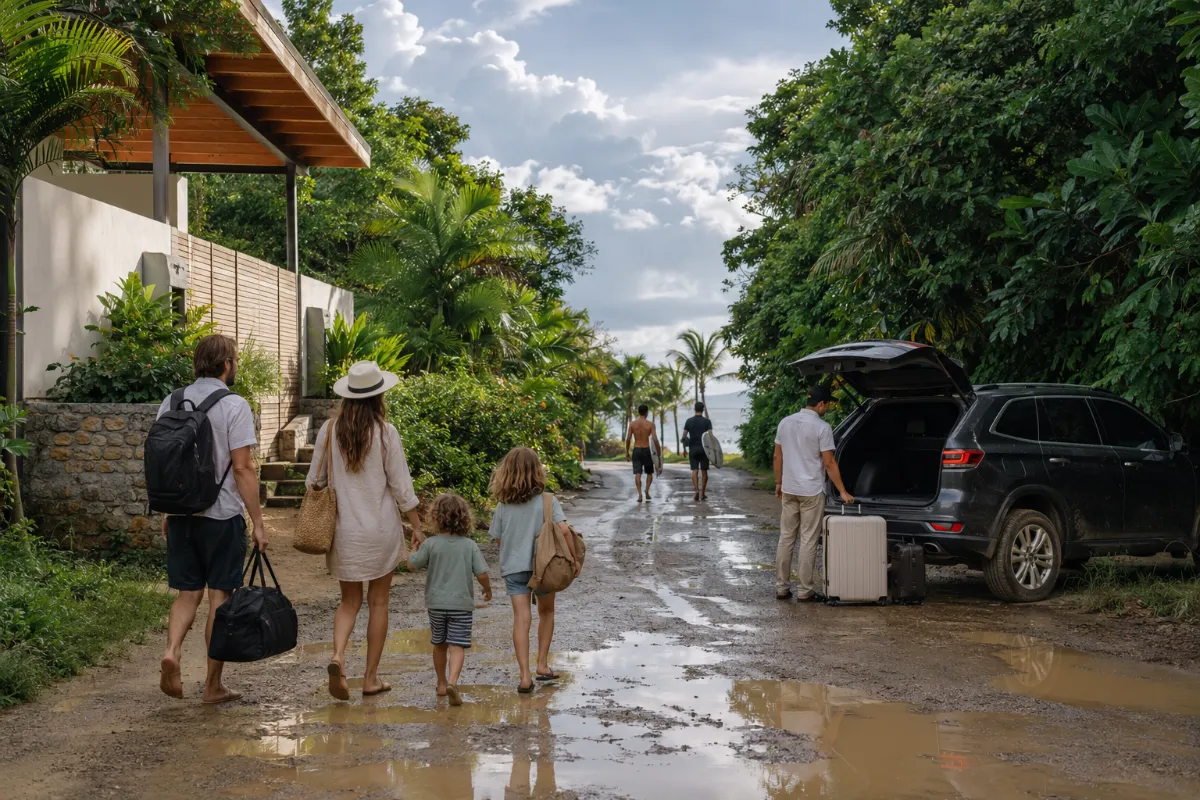
Roads in the Green Season
Rain can affect road conditions and local movement.
Possible effects include:
Mud.
Puddles.
Slower traffic.
Reduced visibility.
More difficult access on some secondary or hillside roads.
Conditions depend on recent weather and exact location.
Travelers should not assume every Santa Teresa road becomes difficult simply because it is green season.
For more detailed mobility information, see Santa Teresa Road Conditions and Getting Around Without a Rental Car.
Best Time Without a Rental Car
There is no season when a rental car automatically becomes necessary or unnecessary.
Accommodation location matters more.
A car-free stay may be straightforward when the traveler is close to:
Beach access.
Restaurants.
Activities.
Local transportation.
In wetter periods, walking can become less comfortable depending on rain and road conditions.
In drier periods, dust and heat can also influence longer walks.
Select the accommodation according to the amount of daily movement you expect.
Best Time With a Rental Car
Having a rental vehicle provides more independent mobility but does not eliminate seasonal considerations.
Travelers should still think about:
Property access.
Road conditions.
Parking.
Weather.
Vehicle type.
Rental conditions.
Do not automatically select a 4x4 only because you are visiting Santa Teresa or traveling during green season.
Ask the accommodation about the actual access requirements.
Best Time for Nature and Outdoor Activities
The appropriate season depends on the activity.
Hiking and Nature Trips
Rain can affect trails and access, while dry periods can mean hotter and dustier conditions.
Waterfall Visits
Water conditions can change after rainfall, so follow current local guidance.
Boat Excursions
Ocean and wind conditions can matter independently of rainfall.
Horseback Riding or ATV Activities
Road and trail conditions can change with dust or rain.
Travelers should review weather and cancellation policies with the activity provider rather than relying only on the season.
Monthly Planning: A Better Approach
Instead of assigning each month a fixed travel personality, group dates according to broader seasonal patterns.
December Through April
Generally drier conditions on the Pacific side.
Useful for travelers prioritizing beach days and greater weather predictability.
Demand can be higher.
May Through August
Green-season conditions generally become more established.
Travelers should prepare for a mix of weather and maintain flexibility.
September and October
These months can be among the wetter periods on parts of Costa Rica’s Pacific side.
Travelers should be especially comfortable with flexible planning and current weather information.
November
November can behave as a transition period.
Conditions may vary depending on the year, so travelers should not assume that the dry season begins on one exact date.
What About December?
December can contain both transition conditions and very high travel demand as the month progresses.
Travelers visiting around Christmas and New Year should plan high-priority accommodation and transportation early.
Do not assume every December day has identical weather.
What About September and October?
Travelers visiting during wetter periods should be prepared for plans to change.
This does not mean the destination closes or that every day is unsuitable.
Instead:
Keep activities flexible.
Avoid very tight travel days.
Check current road conditions.
Review boat and tour policies.
Choose accommodation access carefully.
This period fits travelers comfortable adapting the itinerary around actual conditions.
Weather and Arrival Day
Season matters particularly on long travel days.
Regardless of transportation format, avoid arranging the day around the minimum possible journey time.
Weather can interact with:
Traffic.
Road conditions.
Visibility.
Ferry timing on applicable routes.
Domestic flight operations.
Final property access.
Leave flexibility after arrival rather than scheduling an important tour or appointment immediately.
Weather and Departure Day
Departure planning deserves even more caution when connecting to a flight.
Build appropriate buffer time and plan around:
Distance to the airport.
Weather.
Road conditions.
Required airline check-in.
Any ferry or domestic-air connection involved.
Do not choose a departure time simply because the same route took a certain amount of time earlier in the trip.
Packing by Season
Dry Season
Consider:
Sun protection.
Lightweight clothing.
Hydration.
Dust exposure.
Beach footwear.
A light layer when useful.
Green Season
Consider:
Rain protection.
Quick-drying clothing.
Appropriate shoes.
Waterproof protection for electronics.
Extra flexibility in the daily schedule.
Regardless of season, bring appropriate sun protection because tropical sun exposure remains relevant even on cloudy days.
How Season Should Affect Your Itinerary
A useful approach is to change schedule density, not necessarily the destination.
During drier periods, travelers may feel comfortable committing to more outdoor plans.
During wetter periods, leave more unscheduled space.
For example, rather than booking:
Day 1 surf → Day 2 boat → Day 3 waterfall → Day 4 horseback riding
a green-season itinerary might prioritize the two most important activities and leave other days flexible.
That allows local conditions to guide the final schedule.
Frequently Asked Questions
What is the best time to visit Santa Teresa?
Travelers prioritizing drier conditions often prefer December through April. Travelers comfortable with more rain and flexible plans can also enjoy the May–November green season.
When is the dry season?
The broad dry-season pattern is generally associated with December through April on this part of Costa Rica’s Pacific side.
When is the green season?
The green season is generally associated with May through November.
Does it rain all day during green season?
Not necessarily. Rain patterns vary by date and year, and conditions may change during the same day.
Is dry season completely dry?
No. Seasonal labels describe broad weather patterns rather than guaranteed daily conditions.
What is the best month to visit Santa Teresa?
There is no universal best month. Choose according to your preference for drier weather, green scenery, flexibility, surf plans and visitor demand.
Is October a bad time to visit?
October can be wetter and requires greater flexibility, but whether it fits your trip depends on your priorities and tolerance for changing weather.
Is December a good time to visit?
It can fit travelers seeking the transition toward drier-season travel, but conditions vary and holiday demand can be significant.
When is the best time for surfing?
Surf conditions should be evaluated according to current swell, tide, wind, beach section and ability rather than choosing solely by season.
Is green season suitable for families?
It can be when the family is comfortable with flexible outdoor plans and has chosen accommodation and transportation with seasonal conditions in mind.
When is the best time to visit without a car?
There is no single season that determines whether you need a car. Accommodation location and daily plans matter more.
Does weather affect transportation?
Yes. Rain, visibility and road conditions can affect travel timing. Even in dry season, traffic and other variables mean arrival and departure schedules should retain flexibility.
Choose the Season That Fits Your Trip
Choose dry season when drier weather and easier outdoor scheduling are high priorities.
Choose green season when greener scenery and a more flexible travel rhythm appeal to you and occasional rain does not undermine the trip.
For surfing, choose according to current conditions and your experience rather than assuming one season is automatically better.
For activities, keep enough flexibility for weather and ocean conditions.
And for transportation, treat seasonal conditions as one planning factor rather than choosing a private transfer, shared shuttle or rental car solely because of the month.
The best time to visit Santa Teresa is ultimately the period whose tradeoffs match the kind of trip you want.