
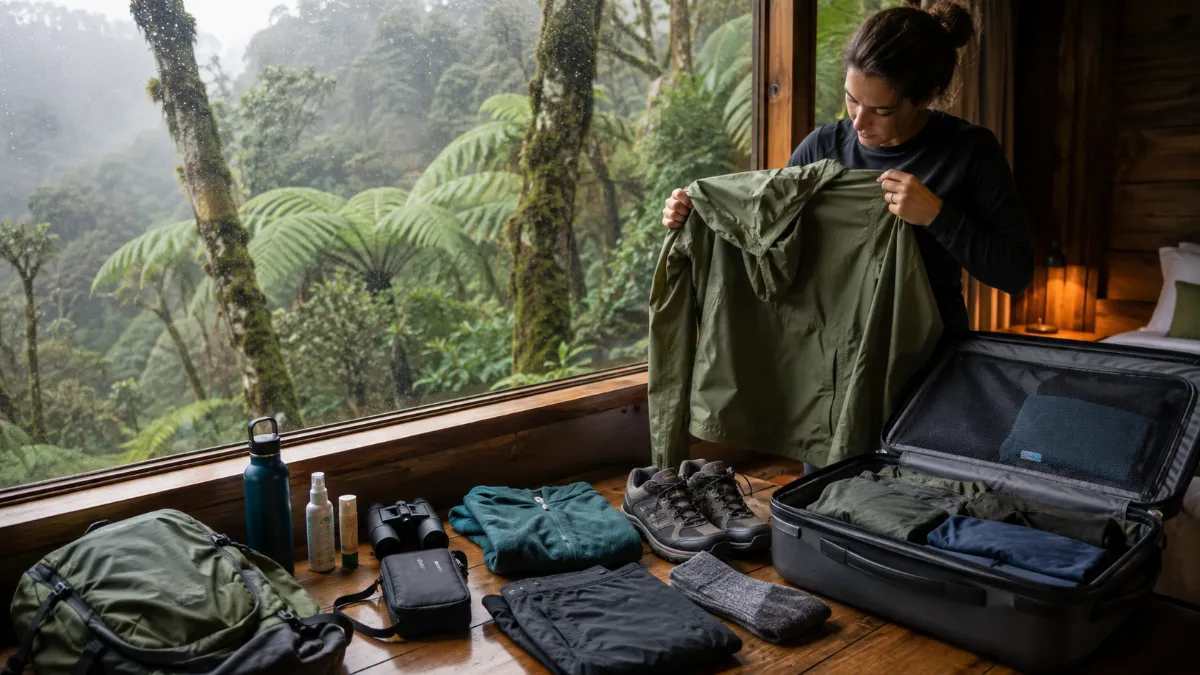
What to Pack for Monteverde
A practical Monteverde packing guide covering clothing, footwear, rain protection, hiking essentials, family supplies, and transportation-day luggage.
What to Pack for Monteverde: Clothing, Rain Gear and Travel Essentials
Knowing what to pack for Monteverde starts with understanding its mountain environment. Conditions can feel cooler, wetter, windier, and more changeable than at many Costa Rica beach destinations.
The most important items for Monteverde are a waterproof jacket, comfortable closed shoes, quick-drying clothing, warm layers, extra socks, a small daypack, sun protection, insect repellent, and waterproof storage for electronics and travel documents.
Do not prepare only for warm tropical weather. Mist and rain are part of the cloud forest environment, and conditions can change during a forest walk, hanging bridge experience, or transportation day.
The most practical packing strategy is to use light layers that can be added, removed, and dried easily. This approach works for hiking, wildlife tours, canopy activities, night walks, restaurants, hotel stays, and transportation between Monteverde and warmer regions.
What to Pack for Monteverde
A useful Monteverde packing list begins with a hooded rain jacket, quick-drying shirts, lightweight long pants, a sweater or fleece, closed walking shoes, and several pairs of socks.
Travelers should also bring sunscreen, insect repellent, a reusable water bottle, personal medication, a compact umbrella if desired, and a protective pouch for phones, passports, cameras, and other important belongings.
Binoculars can improve wildlife and birdwatching activities. A portable charger may also be helpful during long activity days when a phone is used for photos, hotel communication, transportation details, and reservations.
Most visitors do not need specialized expedition equipment. Comfortable clothing that handles moisture, hills, uneven trails, and changing temperatures is more useful than heavy outdoor gear.
Pack a Waterproof Jacket with a Hood
A waterproof jacket is one of the most important items for Monteverde. A hood protects your head and neck while keeping your hands free for walking, taking photos, or using binoculars.
Choose a jacket that can fit comfortably over a shirt and light sweater. A heavy insulated coat is usually less practical because it may become uncomfortable during active walks.
A lightweight poncho can provide backup rain protection, but it may be difficult to manage in windy conditions. A fitted rain jacket usually works better on trails, bridges, and activity platforms.
Keep the jacket near the top of your daypack. Weather can change quickly, and rain protection is not helpful when packed under everything else.
Bring Quick-Drying Clothing
Quick-drying shirts, lightweight hiking pants, and moisture-managing athletic clothing are practical for Monteverde.
Cotton clothing can remain damp after rain, mist, or physical activity. Clothing that dries more quickly is easier to reuse during a multi-day visit.
Pack enough clothing to change after a wet forest walk. Returning to the hotel in dry clothes can make the rest of the day much more comfortable.
Travelers combining Monteverde with La Fortuna, Guanacaste, Manuel Antonio, or another warmer destination should choose clothing that works across different climates. Lightweight layers reduce the need to pack separate outfits for every region.
Pack Warm Layers for Mornings and Evenings
Monteverde can feel cool during early morning walks, windy afternoons, and evenings. A light fleece, sweater, or warm long-sleeved shirt is usually more practical than one bulky jacket.
Layering allows you to begin a morning activity comfortably and remove clothing as you warm up. The same layer can be used for dinner, a night walk, or time at a mountain lodge.
Travelers arriving from a beach destination may be surprised by the temperature difference. Keep a sweater accessible during the transportation day instead of placing it at the bottom of the suitcase.
Children and travelers who become cold easily may need an additional light layer. A dry change of clothes is also useful after rain.
Choose Comfortable Closed Shoes
Closed shoes with good traction are recommended for cloud forest trails, hanging bridges, gardens, and night walks.
Hiking boots can be useful, but they are not always necessary for standard visitor activities. Comfortable trail shoes or athletic shoes with reliable grip may be sufficient for many travelers.
The most important factors are comfort, traction, and the ability to handle damp or uneven ground. Avoid bringing new shoes that have not been worn before the trip.
Sandals can be packed for the hotel or casual time in Santa Elena, but they should not be your only footwear for Monteverde.
Bring Extra Socks and Backup Footwear
Extra socks take up little luggage space and can make a major difference after a wet morning. Keep at least one dry pair in your daypack during outdoor activities.
A second pair of shoes is also useful. The backup does not need to be another pair of hiking boots. Lightweight sneakers or comfortable sandals can be worn while the main walking shoes dry.
Store wet or muddy footwear in a separate bag during hotel transfers. This prevents moisture and dirt from spreading through the rest of the luggage.
A reusable shoe bag can be especially useful when using private transportation, shared shuttle service, or hotel-to-hotel transfers.
Should You Pack Long Pants or Shorts?
Long pants are usually the most versatile option for forest walks and night tours. They provide extra coverage from vegetation, insects, cool air, and changing weather.
Lightweight hiking pants are generally more practical than thick jeans. Jeans can become heavy when wet and may take longer to dry.
Shorts can still be useful for warmer afternoons, casual activities, or transportation to lower elevations. Travelers who prefer shorts should keep a warm layer and rain protection available.
Convertible pants can be a practical option for visitors packing lightly for several Costa Rica destinations.
Do You Need Rain Pants?
Rain pants are optional for most visitors, but they can be useful during longer guided hikes, birdwatching outings, or travel during wetter conditions.
Travelers who dislike walking in damp clothing may appreciate lightweight waterproof pants. They can also protect regular clothing from mud.
For short activities, quick-drying hiking pants may be enough. The decision depends on the activity length, expected weather, and personal comfort.
Heavy waterproof pants are usually unnecessary unless the itinerary includes longer or more specialized outdoor activities.
What to Carry in a Monteverde Daypack
A small daypack should have enough room for a rain jacket, warm layer, water bottle, sunscreen, insect repellent, dry socks, medication, phone, and camera equipment.
Choose a backpack that leaves your hands free. This is helpful on trails, hanging bridges, stairs, and wildlife walks.
A backpack rain cover can be useful, but valuable items should still be placed in waterproof pouches. Water can enter through zippers even when the outside of the bag appears protected.
Avoid carrying more than you need. A heavy daypack can become uncomfortable during hills and longer forest walks.
Protect Phones, Cameras, and Travel Documents
Humidity, mist, and rain can affect electronics even when there is no heavy downpour.
Carry a waterproof phone pouch or resealable protective bag. Camera equipment should have a rain cover or dry storage space inside the daypack.
Keep passports and other travel documents protected during transportation days. Travelers arriving directly from an airport or changing hotels may have important belongings with them throughout the journey.
A small microfiber cloth can help remove moisture from glasses, binoculars, and camera lenses.
Pack Binoculars for Wildlife and Birdwatching
Binoculars can improve guided forest walks because many birds and animals may be high in the trees or partly hidden by vegetation.
Compact binoculars are easier to carry throughout the day. A neck strap or protective case helps prevent drops and moisture damage.
Some guides may have viewing equipment, but travelers should not assume it will always be available for personal use.
Bringing your own binoculars also gives you more flexibility around hotel gardens and nature areas outside guided tours.
Bring Sunscreen
Clouds, mist, and cooler temperatures do not remove the need for sun protection.
Apply sunscreen before outdoor activities and carry a small amount for reapplication. A secure hat can also be useful during open trail sections, coffee-related activities, or transportation stops.
Wind can make loose hats difficult to manage, so choose one that fits properly. Sunglasses may be helpful when visibility improves or when traveling to a sunnier region.
Keep sun protection in the daypack instead of packing it only for the beach portion of the trip.
Bring Insect Repellent
Insect activity can vary by location, weather, elevation, and time of day. Bring insect repellent for forest walks, gardens, agricultural activities, and night tours.
Follow the product directions and choose an option appropriate for the ages of everyone in your group.
Long sleeves and long pants can provide additional coverage during outdoor activities.
Bring your preferred repellent before arriving rather than depending on finding the same product in Monteverde.
Carry a Reusable Water Bottle and Snacks
Bring a reusable water bottle for activities and transportation days.
Some forest reserves and attractions may have rules about food and drinks on the trails. Confirm the current rules before entering and follow all instructions provided by the attraction or guide.
Carry compact snacks for long transportation days, hotel arrival, and children with specific meal schedules. Store all wrappers until they can be disposed of properly.
Travelers staying at remote lodges should also confirm restaurant hours and meal availability before arrival.
What to Wear for a Cloud Forest Walk
For a cloud forest walk, wear quick-drying pants, a lightweight shirt, closed walking shoes, and comfortable socks.
Carry a waterproof jacket and warm layer even when the morning begins with clear conditions. Weather may change as you move through different parts of the forest.
Avoid heavy clothing that becomes uncomfortable when wet. Loose jewelry and unnecessary accessories can also be inconvenient on narrow trails.
Your daypack should include water, insect repellent, sunscreen, medication, dry socks, and waterproof protection for electronics.
What to Wear for Hanging Bridges
Wear closed shoes with reliable traction, comfortable pants or shorts, and a lightweight shirt.
Carry rain protection and a warm layer. Loose hats, scarves, and unsecured accessories may be difficult to manage in windy conditions or on elevated walkways.
Keep cameras and phones attached securely. The experience may include more trail walking than expected, so dress for the full route rather than only for crossing the bridges.
Families should choose clothing that allows children to move comfortably while following all safety instructions.
What to Wear for a Canopy Tour
Canopy and adventure activities usually require secure closed shoes and clothing that works comfortably with safety equipment.
Wear fitted athletic clothing or flexible hiking clothes. Avoid loose accessories, unsecured phones, and anything that may interfere with a harness.
Longer shorts or lightweight pants may feel more comfortable under safety equipment. Tie back long hair and follow the provider's instructions about jewelry, cameras, and personal belongings.
Activity requirements can vary. Confirm current clothing, age, height, and participation rules before the tour.
What to Wear for a Monteverde Night Walk
Night walks can feel cooler than daytime activities. Wear long pants, closed shoes, a warm layer, and a waterproof jacket.
A small personal flashlight can be helpful before and after the tour. Follow the guide's instructions when using light around wildlife.
Carry belongings in a backpack so your hands remain available for balance.
Families should also bring an extra dry layer for children in case the weather changes during the walk.
What to Pack for Monteverde with Kids
Children need the same basic protection as adults: closed shoes, rain gear, quick-drying clothes, warm layers, extra socks, sun protection, and insect repellent suitable for their age.
Pack a complete change of clothing in the family daypack. Children may become wet from rain, mist, puddles, or normal outdoor play.
Bring familiar snacks for transportation and waiting periods while respecting attraction rules about food. Water and necessary medication should remain accessible.
A lightweight child carrier may be more practical than a stroller for some trails, but families should confirm the terrain before each activity.
What to Pack for Wetter Conditions
During wetter periods, pack additional quick-drying clothing and extra socks. A second pair of usable walking shoes becomes more valuable when the first pair needs time to dry.
Lightweight rain pants, a backpack cover, and several waterproof storage pouches can also be useful.
Avoid relying only on thick cotton clothing. It may be difficult to dry in a damp mountain environment.
A compact umbrella can be helpful around the hotel or Santa Elena. On forest trails, a hooded rain jacket usually leaves your hands freer.
What to Pack for Drier Conditions
Do not remove rain gear from your packing list because you are traveling during a generally drier period.
Monteverde can still experience mist, wind, cooler temperatures, and sudden changes in visibility.
Bring the same waterproof jacket, closed shoes, warm layer, and protective pouches you would carry at other times of year.
You may use lightweight clothing more often during sunny afternoons or while traveling between Monteverde and warmer regions.
Packing for Monteverde Without a Car
Travelers visiting Monteverde without a car should organize essential items for private transfers, shared shuttles, local taxis, and activity pickups.
Use luggage that can be moved easily between hotels and vehicles. Keep a separate daypack for rain protection, medication, documents, water, and electronics.
Do not pack the clothing needed immediately after arrival at the bottom of the suitcase. Keep a jacket and closed shoes accessible, especially when arriving from a warm coastal destination.
Confirm luggage rules for any shared shuttle or domestic flight included in the itinerary.
What to Pack for the Transportation Day
Monteverde transportation days may involve changing weather and temperatures between the departure point and the mountains.
Wear comfortable travel clothing and keep a warm layer inside the vehicle. Pack water, medication, travel documents, phone chargers, and hotel information where they can be reached without opening the main luggage.
Private transportation provides direct hotel-to-hotel service, but important belongings should still be organized before departure.
Shared shuttle passengers should label their luggage clearly and keep valuables in the daypack.
Wet clothing and muddy footwear should be separated from clean items before the transfer.
Packing for Monteverde and La Fortuna
A combined Monteverde and La Fortuna itinerary requires clothing for different environments.
Monteverde usually calls for warm layers, wind protection, and easy access to rain gear. La Fortuna often feels warmer, so lightweight clothing and swimwear can be useful for hotel pools and hot springs.
Quick-drying clothes work well in both destinations. Pack one light sweater or fleece for Monteverde instead of carrying a heavy coat.
Private transportation or shared shuttle service can connect the two areas, so organize your luggage for a hotel-to-hotel transfer.
Packing for Monteverde and the Beach
Travelers combining Monteverde with Guanacaste, Tamarindo, Manuel Antonio, Santa Teresa, or another beach area need clothing for both cool mountain conditions and warm coastal weather.
Pack swimwear, sandals, lightweight clothing, and strong sun protection alongside the Monteverde rain jacket, warm layer, long pants, and closed shoes.
Use a separate packing cube or suitcase section for mountain clothing. This makes it easier to find the correct items when arriving in Monteverde.
An organized packing system is especially helpful when using shared shuttles or changing hotels several times.
What Not to Pack for Monteverde
Avoid relying on high heels, slippery shoes, or open sandals as your main footwear. They are not practical for forest trails and wet conditions.
A heavy winter coat is usually unnecessary for standard visitor activities. Several light layers provide more flexibility.
Do not fill the suitcase with thick jeans and cotton sweatshirts that may remain damp. Lightweight and quick-drying options are generally more practical.
Expensive jewelry, bulky accessories, and equipment that will not be used should remain at home. Pack for comfort, moisture, movement, and easy transportation.
Frequently Asked Questions
Is Monteverde cold?
Monteverde can feel cool, especially during early mornings, evenings, wind, mist, and rain. Pack a light fleece or sweater rather than relying only on warm-weather clothing.
Do I need a rain jacket in Monteverde?
Yes. A waterproof jacket with a hood should remain part of your packing list throughout the year because conditions can change quickly.
Do I need hiking boots for Monteverde?
Hiking boots can be useful, but comfortable closed trail shoes with good traction may work for many standard activities.
Can I wear sneakers in Monteverde?
Sneakers may be suitable when they provide good grip and are comfortable for walking. Bring a backup pair because shoes can become wet or muddy.
Should I bring jeans to Monteverde?
One pair can be used for casual time, but lightweight quick-drying pants are usually more practical for outdoor activities.
Do I need a sweater in Monteverde?
Yes. A light sweater, fleece, or warm long-sleeved layer is useful for mornings, evenings, night walks, and windy conditions.
Should I bring an umbrella?
A compact umbrella can be helpful around town or the hotel. A hooded rain jacket is generally easier to manage on trails and during active experiences.
Do I need insect repellent in Monteverde?
Bring insect repellent for forest walks, gardens, night tours, and other outdoor activities.
Should I pack binoculars?
Binoculars are useful for birdwatching and guided nature walks. Compact travel binoculars are easier to carry in a daypack.
What shoes should children wear in Monteverde?
Children should wear comfortable closed shoes with reliable traction. Pack extra socks and a backup pair of shoes when possible.
Can I use a suitcase for Monteverde?
Yes. A standard suitcase can work for private transportation and hotel stays. Keep a separate daypack for activities and confirm luggage rules for shared shuttles or domestic connections.
What should I keep in my daypack?
Carry a rain jacket, warm layer, water, sunscreen, insect repellent, dry socks, medication, phone, documents, and waterproof protection for electronics.
Final Monteverde Packing Advice
What to pack for Monteverde depends on your activities, but the basic strategy remains the same: prepare for moisture, changing temperatures, outdoor walking, and transportation between different Costa Rica regions.
Bring a waterproof jacket, closed walking shoes, quick-drying clothes, warm layers, extra socks, a small daypack, sunscreen, insect repellent, and waterproof storage for important belongings.
Add activity-specific items such as binoculars, rain pants, backup footwear, or family supplies according to your itinerary.
Keep essential clothing accessible during the transportation day, especially when traveling from SJO, LIR, La Fortuna, or a warm beach destination. Once your hotels and route are confirmed, Costa Rica Shuttles can help organize private transportation, shared shuttle service, airport transfers, and door-to-door transportation to Monteverde.