
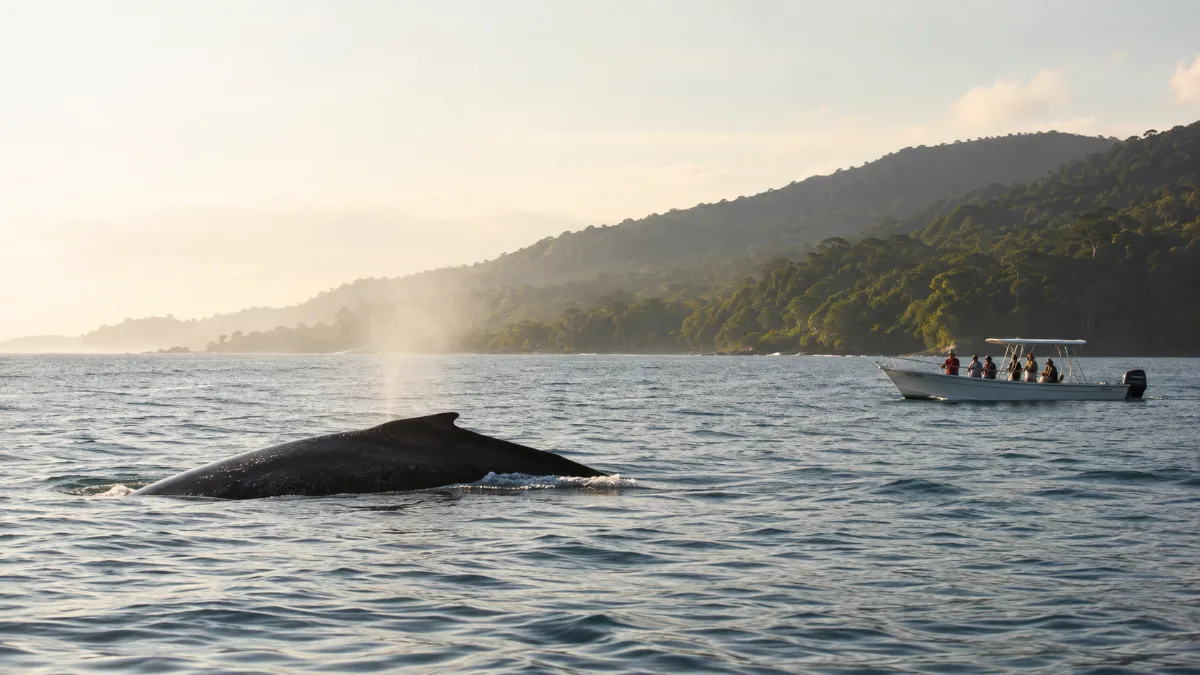
Whale Watching in Uvita: Seasons, Tours and Trip Planning
A practical guide to whale watching in Uvita, including humpback whale seasons, tour planning, Marino Ballena National Park, weather and transportation.
Whale Watching in Uvita: Seasons, Tours and Trip Planning
Whale watching in Uvita Costa Rica is one of the best-known nature experiences on the Southern Pacific coast. Uvita sits beside Marino Ballena National Park, a protected marine area visited seasonally by migrating humpback whales.
Costa Rica receives humpback whales associated with populations from both the Southern and Northern Hemispheres. This creates two broad migration periods around the Southern Pacific coast. The stronger midyear period is associated with whales arriving from the south, while another migration period occurs around the end and beginning of the year with whales arriving from northern waters. Official Costa Rica sources describe slightly different beginning and ending dates because whale movements are natural rather than fixed to an exact calendar.
For trip planning, travelers can generally think of the main southern migration period as running from around July or August into October or November, with another northern migration period centered around December through March. Wildlife sightings are never guaranteed, so travelers should choose Uvita for the overall Southern Pacific experience rather than building the entire vacation around seeing a whale on a specific day.
When Is Whale Watching Season in Uvita?
Whale watching season in Uvita is unusual because two humpback whale populations can visit Costa Rica at different times of the year.
The southern migration is the period most closely associated with Uvita. Official tourism information commonly highlights July through October, while SINAC information extends the broader seasonal presence into November or December depending on the source.
A second migration involves humpback whales arriving from the Northern Hemisphere. Official information places this period broadly around December through March, with some tourism references extending observations into April.
These ranges should be treated as seasonal guidance rather than guarantees. Migration timing, ocean conditions and individual whale movements vary.
Southern Humpback Whale Season in Uvita
The southern humpback whale migration is an important period for whale watching in Uvita Costa Rica.
These whales travel north from colder southern waters toward warmer tropical waters used for reproductive activities. The Uvita and Southern Pacific region becomes an important area during this migration.
For practical travel planning, July through October is the core period commonly promoted for southern humpback whale activity around Marino Ballena National Park. Broader official references may describe the season as continuing later into the year.
Travelers visiting during August, September or October are therefore traveling during an important whale watching period, although no specific tour can guarantee sightings.
September is particularly associated with whale and dolphin tourism in the Uvita area, but travelers should still organize the trip around several activities rather than assuming every ocean outing will produce the same wildlife experience.
Northern Humpback Whale Season in Uvita
Uvita can also receive humpback whales migrating from northern Pacific waters.
This migration generally becomes relevant around December and can continue through the first months of the year.
Official Costa Rica information describes northern humpback whales moving toward tropical waters during the Northern Hemisphere winter, broadly around December through March.
This means travelers visiting Uvita during the Costa Rica dry season may have an opportunity to combine generally drier Pacific weather with seasonal marine wildlife.
The northern migration does not mean that every day between December and March provides identical whale activity. Wildlife remains unpredictable, and actual sightings depend on natural conditions.
What Is the Best Month for Whale Watching in Uvita?
There is no single month when whale sightings can be guaranteed.
For travelers choosing dates primarily around whale watching in Uvita, August, September and October fall within the main southern migration period identified by official Costa Rica tourism information.
December through March provides another possible window associated with northern humpback whales.
Choosing between these periods depends on more than whales.
The midyear migration falls during Costa Rica's green season on the Pacific coast, so travelers should expect a greater chance of rain. The northern migration overlaps more closely with the Pacific dry season.
Travelers who are comfortable with tropical rain may prefer the lush Southern Pacific environment during the midyear season. Visitors who prioritize generally drier conditions may prefer the later migration window.
Is September Good for Whale Watching in Uvita?
September falls within the important southern humpback whale migration period and is strongly associated with whale watching around Uvita.
It is also part of the green season, which means travelers should be prepared for rainfall.
This combination makes flexible trip planning important.
Instead of scheduling a whale watching tour immediately before a long-distance transfer or flight, consider spending several days in Uvita. A longer stay provides more flexibility if weather or ocean conditions affect the preferred tour day.
September can also be combined with Marino Ballena National Park, beaches, waterfalls and other Southern Pacific nature experiences.
Is January Good for Whale Watching in Uvita?
January falls within the broader period associated with humpback whales migrating from northern Pacific waters.
It is also normally part of Costa Rica's Pacific dry season.
For travelers who prefer generally drier weather, January can therefore be an attractive period for combining whale watching with beach activities and other outdoor experiences.
However, the northern migration and southern migration are not identical. Travelers should not assume that whale activity will be the same in every season.
If seeing humpback whales is a primary reason for traveling, check current local conditions before finalizing activity dates.
Can You See Whales in Uvita Year-Round?
Travelers should not assume that humpback whales can be reliably seen year-round.
Uvita benefits from two broad migration periods, which creates more whale watching opportunities than destinations dependent on only one migration.
There can still be periods between the main migrations when humpback whale activity is lower.
Dolphins are resident in the area and may be encountered more regularly, according to Marino Ballena National Park information, but wildlife sightings should never be treated as guaranteed.
Travelers visiting outside a main whale period can still enjoy Marino Ballena National Park, beaches, rainforest, waterfalls and other Southern Pacific activities.
Why Is Uvita Known for Whale Watching?
Uvita's reputation for whale watching is closely connected with Marino Ballena National Park.
The park protects an important section of Costa Rica's Southern Pacific marine and coastal environment and receives seasonal humpback whale migrations.
Uvita also has a distinctive coastal formation commonly known as the Whale Tail because of its shape.
The combination of the national park, seasonal humpback whale migration and established marine tourism has made whale watching one of the activities most strongly associated with Uvita.
The destination should still be understood as more than a whale watching stop. Travelers can combine marine activities with beaches, rainforest, waterfalls and onward travel through the Southern Pacific region.
Marino Ballena National Park and Whale Watching
Marino Ballena National Park is central to whale watching in Uvita.
The protected area includes marine waters and coastal environments used by wildlife, including seasonal humpback whales. The park also includes several coastal access sectors in the wider area.
Whale watching itself generally involves going onto the water rather than simply waiting on the beach for animals to appear.
A boat tour provides an opportunity to search the marine area while following established wildlife observation practices.
Travelers should understand that the national park and a whale watching tour are separate experiences. A trip to Uvita can include both a boat excursion and time exploring the coastal areas of Marino Ballena National Park.
What Are Whale Watching Tours in Uvita Like?
Whale watching tours in Uvita generally involve traveling by boat into the marine area with the goal of observing humpback whales and other wildlife when conditions allow.
The exact route, length, departure schedule and activities vary according to the operator, weather and ocean conditions.
Travelers should avoid choosing a tour based solely on promises of specific wildlife encounters.
Whales are wild animals. Their location, behavior and visibility cannot be controlled by a tour company.
A responsible trip should prioritize appropriate observation practices and respect for the animals rather than trying to approach wildlife as closely as possible.
SINAC provides guidance for cetacean observation, including reducing noise, avoiding sudden changes in speed or direction around whales and limiting time spent around the animals.
Can Whale Watching Tours Guarantee a Sighting?
No responsible whale watching experience should be treated as a guaranteed wildlife sighting.
Even during an important migration period, whales are moving through a natural marine environment.
Weather, ocean conditions, migration timing and the location of individual animals can all influence what travelers see.
This is an important point when planning a Uvita vacation.
Instead of visiting for only a few hours with the expectation of a guaranteed whale encounter, consider making Uvita part of a broader Southern Pacific itinerary.
That way, whale watching can be one important activity among several rather than the only reason for the trip.
Morning or Afternoon Whale Watching in Uvita
The better departure time depends on current weather, ocean conditions and the tour schedule.
Travelers should not assume that one specific time always provides more whales.
Morning departures can fit well into an itinerary because they leave the rest of the day open for other activities. During parts of the green season, travelers may also prefer scheduling important outdoor activities earlier in the day because afternoon rainfall is possible.
However, marine conditions vary from day to day.
Follow current guidance from the selected operator rather than choosing a departure based only on a general rule.
Whale Watching During the Green Season
The main southern humpback whale migration overlaps with Costa Rica's Pacific green season.
This means some of the strongest seasonal interest in whale watching occurs during months when rain is also an important part of Uvita travel planning.
Rain does not automatically mean that every marine activity will be canceled.
However, travelers should expect conditions to change and should keep some flexibility in the itinerary.
A three or four day stay can be useful because it creates more room to adjust activities if weather or ocean conditions affect the original plan.
Travelers should also allow flexibility for transportation before and after marine activities.
Whale Watching During the Dry Season
The northern humpback whale migration overlaps more closely with the Pacific dry season.
December through March can therefore appeal to travelers who want to combine a possible whale watching experience with generally drier conditions for beaches and other outdoor activities.
Dry-season travel can also make it easier to build a multi-destination itinerary connecting Uvita with other parts of Costa Rica.
This period can be popular for Costa Rica travel, so arranging accommodation, tours and transportation before arrival can simplify the trip.
Wildlife remains unpredictable even during the correct season.
What Else Can You See on a Whale Watching Tour?
Humpback whales may be the primary reason travelers choose a marine tour, but the waters around the Southern Pacific coast support other wildlife.
Dolphins are resident in the Marino Ballena area and may be observed throughout the year.
The exact wildlife encountered varies from one trip to another.
Travelers should approach the excursion as an opportunity to experience a marine ecosystem rather than a checklist of animals that must appear.
This perspective is particularly useful for families traveling with children because expectations can be managed before the tour begins.
What Should You Bring for Whale Watching in Uvita?
Travelers should prepare for sun, changing tropical weather and time on the water.
Light clothing appropriate for warm weather is usually practical. Sun protection is important even when the sky appears cloudy.
A rain layer can also be useful during the green season.
Travelers who are sensitive to boat movement should consider their personal needs before departure.
Protect phones, cameras and other items from water and avoid carrying unnecessary valuables onto a marine excursion.
Specific requirements can vary by tour, so confirm what is included and what passengers should bring before departure.
Whale Watching With Children in Uvita
Whale watching can be an interesting family activity, but parents should consider the children's comfort with boat travel.
Ocean conditions can vary, and a marine excursion is different from visiting a land-based attraction.
Families should confirm age requirements, safety procedures, tour length and current conditions directly when arranging the activity.
It can also help to keep the rest of the day flexible instead of scheduling several demanding activities immediately after the tour.
Families arriving in Uvita by private transportation can arrange hotel pickup separately from their marine activity, making the overall itinerary easier to organize around luggage and children.
How Many Days Should You Stay in Uvita for Whale Watching?
A minimum stay should not be based only on the expected whale watching tour.
Two days can work when Uvita is a short stop and conditions cooperate.
Three days provides more flexibility and gives travelers time to combine whale watching with Marino Ballena National Park and another nature activity.
Four days is useful for travelers visiting during the green season, families or anyone who wants additional flexibility if weather affects the original schedule.
A longer stay also makes it easier to enjoy Uvita even if whale sightings do not happen as expected.
A 2 Day Whale Watching Trip to Uvita
With two days, keep the itinerary simple.
Use one day for Marino Ballena National Park and the coast.
Use the other for whale watching when seasonal and operating conditions are appropriate.
Avoid scheduling the whale watching excursion immediately before an important long-distance departure. If the tour changes because of marine conditions, a tight travel schedule leaves little flexibility.
A two day visit works best for travelers who are comfortable with a compact itinerary.
A 3 Day Whale Watching Trip to Uvita
Three days provides a more comfortable schedule.
The first day can focus on Marino Ballena National Park and the beach.
The second can be reserved for whale watching or another marine experience.
The third can include a waterfall, rainforest activity or relaxed day around the Uvita area.
This schedule also gives travelers more flexibility to adjust the sequence according to weather.
For many visitors, three days is a practical balance between whale watching and experiencing Uvita as a destination.
A 4 Day Whale Watching Trip to Uvita
Four days allows the most flexibility.
Travelers can visit Marino Ballena National Park, take a whale watching tour, enjoy an inland nature experience and still have an unscheduled beach or relaxation day.
This can be particularly valuable during the green season.
If weather affects the planned whale watching day, the itinerary may be easier to rearrange without losing another major activity.
Four days can also work well for travelers who prefer slower Costa Rica travel planning rather than moving between hotels every day.
Where to Stay for Whale Watching in Uvita
Accommodation location can affect how easily travelers reach their whale watching departure point.
Staying around Uvita or Bahia Uvita can be practical for travelers focused on Marino Ballena National Park and marine activities.
Central Uvita may provide easier access to restaurants and everyday services.
Hillside accommodations can offer privacy and rainforest surroundings but may require transportation to reach activity meeting locations.
Before booking accommodation specifically for whale watching, confirm where the selected tour expects passengers to meet.
Do not assume that every Uvita accommodation is within walking distance.
Whale Watching in Uvita Without a Car
A rental car is not required for a whale watching trip to Uvita.
Travelers can arrange private transportation or shared shuttle service to reach Uvita and then use local transportation, taxis or transportation associated with their selected activity when appropriate.
Accommodation location becomes particularly important for a car-free trip.
Travelers who want to minimize local transportation should choose a property positioned conveniently for the activities and services they expect to use.
For longer travel days, door-to-door transportation can connect Uvita directly with the airport or another Costa Rica destination.
Transportation for Whale Watching in Uvita
Transportation should be planned alongside the whale watching itinerary rather than after the tour has already been scheduled.
San Jose Airport is commonly the strongest international airport choice for travelers whose main destination is Uvita.
Visitors arriving through SJO can arrange private transportation directly to their Uvita accommodation. Shared shuttle service can also be practical when the schedule fits the flight arrival and hotel location.
Once in Uvita, travelers should confirm where their whale watching activity begins and how they will reach that location.
Private transportation is especially useful for longer routes before or after the Uvita stay, including hotel-to-hotel travel between destinations.
Costa Rica Shuttles can help organize private transportation, shared shuttle service, airport transfers and door-to-door hotel transportation as part of a whale watching trip to Uvita Costa Rica.
Combining Whale Watching in Uvita With Manuel Antonio
Uvita and Manuel Antonio can fit naturally into the same Pacific coast itinerary.
Travelers arriving through San Jose Airport can visit Manuel Antonio first and then continue south to Uvita, or travel directly to Uvita depending on the complete route.
Private transportation can provide hotel-to-hotel service between the destinations.
Shared shuttle service may also work when scheduled departures match the travel plan.
Travelers should avoid scheduling a whale watching tour immediately before the transfer to Manuel Antonio unless there is sufficient time between the two activities.
Combining Uvita With Sierpe and Drake Bay
Travelers continuing deeper into the Southern Pacific region may include Uvita before Sierpe and Drake Bay.
In this type of itinerary, complete the main Uvita activities before the onward travel day.
If the next stage of the journey requires a scheduled connection, confirm that schedule first and then arrange transportation from Uvita.
Private transportation can provide hotel pickup in Uvita and simplify the ground portion of the connection.
Keeping whale watching and important transportation connections on separate days can reduce unnecessary scheduling pressure.
Combining Uvita With Puerto Jimenez
Whale watching in Uvita can also be included in a longer Southern Pacific itinerary continuing toward Puerto Jimenez.
Rather than returning to San Jose after Uvita, travelers can continue through southern Costa Rica when that route fits the complete trip.
Private long-distance transportation can be practical for travelers carrying luggage or moving directly between accommodations.
Allow enough time for the transfer and avoid trying to complete a major marine activity immediately before departure.
Planning Whale Watching Around Your Flight
Travelers arriving from an international flight should generally avoid scheduling a whale watching tour immediately after reaching Costa Rica.
Flight delays, immigration, baggage collection, traffic and the ground journey to Uvita can all affect arrival timing.
A better approach is to reach Uvita, check into the accommodation and schedule the marine activity for a later day.
The same principle applies before departure.
Avoid planning whale watching immediately before a long airport transfer when possible.
Pre-arranged airport transportation can then be coordinated around the flight rather than around an uncertain activity finish time.
Frequently Asked Questions About Whale Watching in Uvita
When is whale watching season in Uvita Costa Rica?
Uvita has two broad humpback whale migration periods. The main southern migration is generally associated with July or August through October or November, while another northern migration occurs broadly around December through March. Exact timing varies naturally.
What are the best months for whale watching in Uvita?
August, September and October fall within the important southern migration period commonly associated with whale watching in Uvita. December through March can provide another opportunity associated with northern humpback whales.
Can you see whales in Uvita in January?
January falls within the broader period associated with northern humpback whale migration, although sightings are never guaranteed.
Can you see whales in Uvita in September?
September falls within the main southern humpback whale migration period and is one of the months strongly associated with whale watching around Uvita.
Can you see whales in Uvita all year?
Humpback whales should not be expected reliably throughout the entire year. Uvita has two broad migration periods, with lower whale activity possible between them.
Are whale sightings guaranteed in Uvita?
No. Humpback whales are wild animals, and sightings depend on natural migration, ocean conditions and the location of the animals.
Where do whale watching tours leave from in Uvita?
Whale watching activities are associated with the Uvita and Marino Ballena area. Travelers should confirm the exact meeting or departure location with their selected operator before the tour.
Is Uvita good for whale watching with children?
It can be, but families should consider tour length, safety requirements, ocean conditions and whether children are comfortable traveling by boat.
Do I need a car for whale watching in Uvita?
No. Travelers can reach Uvita by private transportation or shared shuttle and arrange local transportation when necessary.
How many days should I spend in Uvita for whale watching?
Three days is a practical choice for many travelers because it provides time for whale watching, Marino Ballena National Park and another activity while leaving some flexibility for weather.
What happens if weather affects my whale watching tour?
Marine activities depend on operating and ocean conditions. Travelers should follow the guidance of the selected operator and keep enough flexibility in the itinerary to adjust plans when necessary.
Can I combine Uvita whale watching with Manuel Antonio?
Yes. Uvita and Manuel Antonio can be included in the same Pacific coast itinerary, with private transportation or appropriate shared shuttle service connecting the destinations.
Plan a Whale Watching Trip to Uvita Costa Rica
Whale watching in Uvita Costa Rica is closely connected with the seasonal humpback whale migrations that reach the Southern Pacific coast.
For trip planning, travelers can think of two broad whale watching periods: the important southern migration centered around the middle and later part of the year, and a second northern migration around December through March. Because migration dates and wildlife behavior vary, no exact month or tour can guarantee a sighting.
A stronger Uvita trip combines whale watching with Marino Ballena National Park, beaches, rainforest activities and enough time to adjust plans around weather and ocean conditions.
Transportation should be organized as part of the itinerary. Costa Rica Shuttles can help with private transportation, shared shuttle service, airport transfers, hotel pickup and door-to-door transportation for travelers visiting Uvita from San Jose Airport, Manuel Antonio and other Costa Rica destinations.
Planning the whale season, accommodation, tour day and transportation together creates a more flexible and practical Uvita experience.