
Tamarindo Safety Guide
Use this Tamarindo safety guide to plan a smarter Costa Rica beach vacation with practical advice for swimming, surfing, nightlife, transportation, valuables, families, solo travelers, and day trips.
Tamarindo Safety Guide
Overview
Tamarindo is one of the most popular beach towns in Guanacaste and one of the easier Costa Rica destinations for travelers to navigate. The town has a walkable center, hotels, restaurants, surf schools, nightlife, tours, transportation services, and easy access from Liberia Airport. For most visitors, Tamarindo can be a comfortable and practical beach destination when basic travel precautions are followed.
Like any busy tourist town, Tamarindo requires common sense. Travelers should pay attention to beach conditions, protect valuables, use reliable transportation, avoid isolated areas at night, be careful with alcohol, and plan airport transfers before arrival.
This Tamarindo safety guide covers the most important safety topics for travelers, including beach safety, surfing, nightlife, taxis, private transportation, rental cars, road conditions, family safety, solo travel, health tips, wildlife, scams, and emergency planning.
Is Tamarindo Costa Rica Safe?
Tamarindo is generally considered a safe and well-traveled beach destination, especially in the main tourist areas during the day. Many visitors walk around town, take surf lessons, eat out, join tours, and enjoy the beach without problems.
Most safety issues in Tamarindo are preventable with basic precautions. The most common concerns for travelers are petty theft, unattended beach bags, nightlife-related risks, ocean conditions, traffic, and transportation planning.
Tamarindo is not a place where travelers should be careless. It is a busy tourism town, and that means visitors should treat it the same way they would treat any popular beach destination. Keep valuables secure, avoid walking alone late at night in quiet areas, use official transportation, and pay attention to ocean safety.
Main Safety Concerns in Tamarindo
The main safety concerns in Tamarindo are:
Petty theft from beaches, cars, hotel rooms, and bags
Unattended belongings while swimming or surfing
Rip currents, waves, tides, and changing ocean conditions
Nightlife-related risks, especially late at night
Driving after dark or on unfamiliar roads
Unplanned transportation from the airport or remote lodging
Overexposure to sun and dehydration
Scams, overcharging, or unclear taxi pricing
Wildlife encounters and insects
Most travelers can reduce these risks by planning ahead and making smart daily decisions.
Beach Safety in Tamarindo
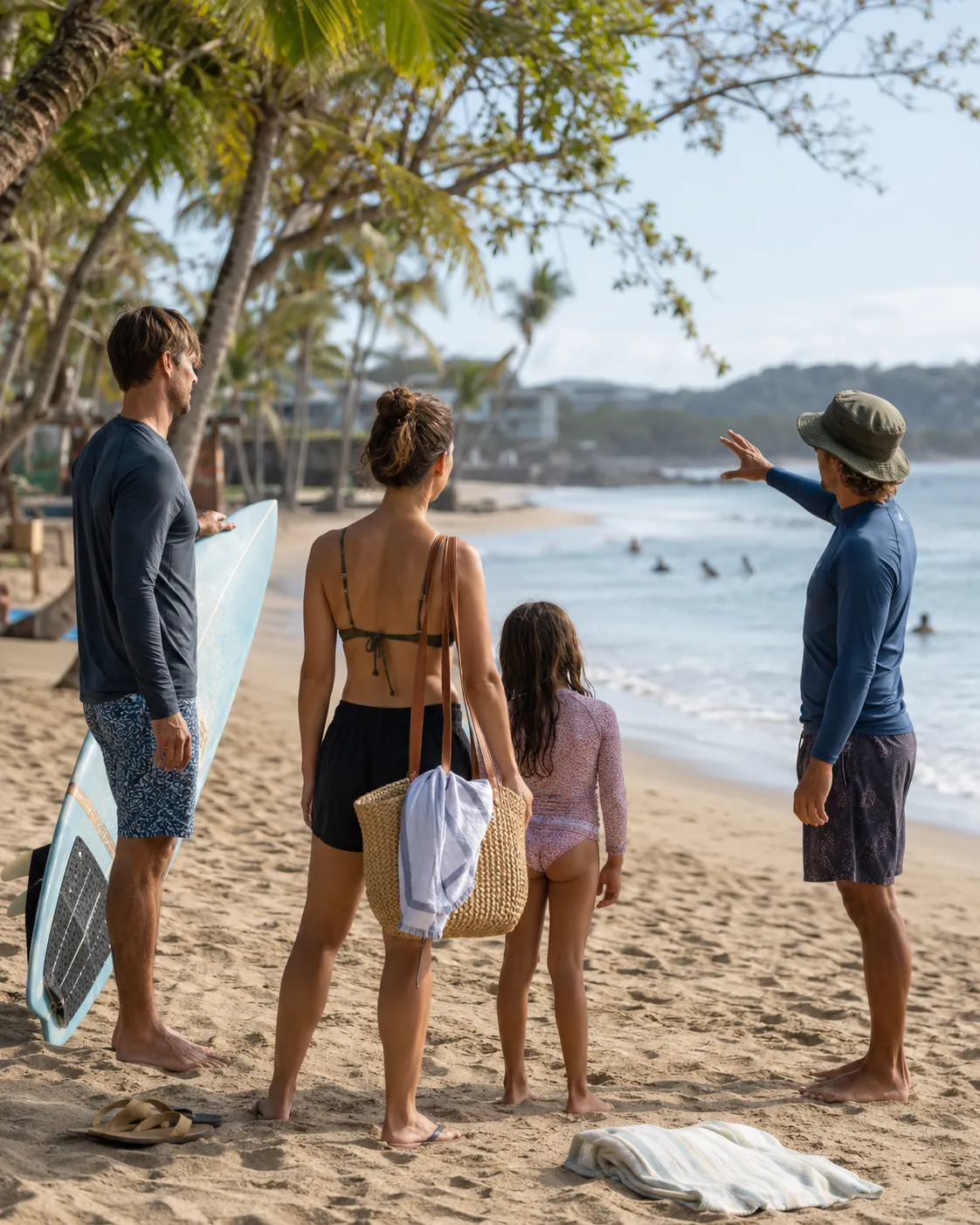
Beach safety is one of the most important parts of any Tamarindo trip. Tamarindo Beach is popular for surfing, walking, sunsets, and swimming, but ocean conditions can change quickly.
Before entering the water, look at the waves, currents, tide, and local conditions. Do not assume calm-looking water is always safe. Rip currents can occur along Pacific beaches, and not every beach has lifeguards or clear warning signs.
Do not swim alone. Avoid swimming at night. Avoid alcohol before swimming. Stay close to shore if you are not a strong swimmer. If you are unsure about conditions, ask a surf instructor, lifeguard if available, hotel staff, or local guide before entering the water.
Families should supervise children closely at all times. Even shallow water can become dangerous if waves, currents, or sudden drop-offs are present.
Rip Current Safety
Rip currents are one of the biggest ocean risks in Costa Rica. A rip current can pull swimmers away from shore, even if they are strong swimmers.
If you are caught in a rip current, do not try to swim directly against it. Stay calm, float if needed, signal for help, and swim parallel to shore until you are out of the current. Once free, swim back toward the beach at an angle.
The best strategy is prevention. Do not swim in unfamiliar conditions, avoid isolated beaches, pay attention to warning signs, and ask local experts before entering the water.
Surfers should also understand currents before paddling out. Beginners should take lessons in appropriate areas rather than trying to surf alone.
Surf Safety in Tamarindo
Tamarindo is one of Costa Rica’s most popular surf towns and a good place for beginner lessons. However, surfing still requires caution.
Beginners should take lessons from a qualified instructor. A good surf instructor helps you choose the right board, understand the beach, avoid dangerous areas, and learn basic surf etiquette.
Do not paddle into crowded surf areas until you can control your board. Always hold onto your board, watch for swimmers, and avoid dropping in on another surfer’s wave.
Surf conditions change by tide, swell, wind, and season. Tamarindo Beach is usually the best place for beginner lessons, while Playa Langosta, Playa Grande, and Playa Avellanas may be better for more experienced surfers depending on conditions.
If you are traveling with your own board, arrange private transportation with enough space for surf gear.
Safety at Nearby Beaches
The best beaches near Tamarindo include Playa Langosta, Playa Grande, Playa Avellanas, Playa Conchal, Brasilito, Flamingo, Potrero, and other Guanacaste coastal areas. These beaches can be beautiful, but they may have different safety conditions than Tamarindo Beach.
Some nearby beaches have stronger surf, fewer services, limited shade, rocky areas, or less reliable cell signal. Others may require a rental car, taxi, private driver, or guided transportation.
Do not leave bags, phones, cameras, passports, wallets, or electronics unattended on the beach. If you are visiting multiple beaches, travel light and keep valuables secured.
Private transportation is useful for beach hopping because you can avoid parking stress, reduce navigation issues, and keep the day more organized.
Nightlife Safety in Tamarindo
Tamarindo has an active nightlife scene with bars, restaurants, music, and late-night activity. The main nightlife areas can be fun, but travelers should use normal precautions.
Stay with people you trust. Watch your drinks. Do not accept drinks from strangers. Avoid excessive alcohol. Keep your phone charged. Do not walk alone late at night on dark or quiet roads. Use a taxi or arranged transportation if your lodging is not close to the nightlife area.
Travelers staying directly in the nightlife zone should expect more noise and activity. Families, couples, and travelers who want quiet nights should stay on side streets, in Playa Langosta, or in lodging away from the busiest bars.
Walking Around Tamarindo
Central Tamarindo is walkable during the day. Travelers staying near the beach or town center can usually walk to restaurants, surf schools, shops, cafes, tour offices, and the main beach.
At night, use more caution. Stay on well-lit streets, avoid isolated areas, and do not walk alone if you have been drinking or if your hotel is far from the center.
Roads and sidewalks may be uneven, and traffic can be close to pedestrians in some areas. Wear practical shoes when walking at night or during rain.
If you are unsure about walking back to your hotel, take a taxi or arrange transportation.
Transportation Safety in Tamarindo
Transportation planning is a major part of staying safe and comfortable in Tamarindo. The easiest arrival airport is usually Liberia Airport, and most travelers should arrange airport transportation before landing.
Private transportation is the safest and most convenient option for families, groups, late arrivals, travelers with surfboards, and visitors staying in villas or vacation rentals outside central Tamarindo. A private driver takes you directly to your lodging and avoids the stress of finding transportation after a flight.
Shared shuttle service can work well for solo travelers and couples on fixed schedules. It is best for travelers staying in central Tamarindo or easy pickup areas.
For local rides, use official taxis, hotel-recommended drivers, or prearranged transportation. Confirm pricing before starting the ride.
Airport Transfer Safety
Book airport transportation before you arrive, especially during high season, holidays, and late-night arrivals.
Liberia Airport is usually the best airport for Tamarindo because it offers the shortest major airport transfer to the beach area. San Jose Airport can also work, but the road transfer is much longer and requires more planning.
For airport transfers, confirm your pickup details, driver information, destination, and arrival time. Keep your hotel address available offline. If you are staying at a villa or rental home, make sure the driver has clear directions.
Avoid accepting random transportation offers from people who approach you without confirmation. Use a trusted private transportation company, hotel-arranged transfer, official taxi, or scheduled shuttle service.
Rental Car Safety in Tamarindo
Some travelers rent a car in Tamarindo, especially if they want to visit nearby beaches independently. A rental car can be useful, but it also adds responsibility.
Before driving, understand your rental agreement, insurance, deposit, fuel policy, and road restrictions. Take photos of the vehicle before leaving the rental office.
Do not leave luggage, wallets, passports, electronics, or bags visible inside the car. Vehicle break-ins can happen in beach areas, parking lots, and isolated stops. If you visit beaches, bring only what you need and keep valuables out of sight.
Avoid driving at night when possible, especially on unfamiliar roads. Roads may be dark, narrow, uneven, or affected by rain. Watch for pedestrians, bicycles, motorcycles, animals, potholes, and sudden stops.
Road Safety Around Tamarindo
Road conditions around Tamarindo are generally easier than in more remote parts of Costa Rica, but travelers should still drive carefully. Traffic, dust, rain, potholes, motorcycles, pedestrians, and limited lighting can all affect road safety.
During green season, rain can make roads more difficult. Some beach routes may be slower or rougher than expected. If you plan to visit Playa Avellanas, Playa Grande by road, Potrero, Conchal, or other nearby beaches, check route conditions before going.
Private transportation is a good alternative for travelers who do not want to drive. It is especially helpful for beach hopping, airport transfers, night arrivals, and villa access.
Petty Theft Prevention
Petty theft is one of the most common safety concerns in tourist destinations. Tamarindo visitors should be careful with phones, wallets, cameras, passports, bags, and rental cars.
Do not leave bags unattended on the beach while swimming or surfing. Do not leave valuables visible in a parked car. Use hotel safes when available. Carry only the cash and cards you need for the day.
At restaurants and bars, keep your bag close and do not hang it unattended on a chair. At the beach, travel light or take turns watching belongings.
If your hotel room has a safe, use it for passports, backup cards, and extra cash.
Money and ATM Safety
Use ATMs in secure, well-lit areas, preferably during the day. Avoid withdrawing large amounts of cash at night or in isolated places.
Carry small amounts of cash for taxis, tips, snacks, parking, and small purchases. Use cards when practical, but keep a backup payment method in a separate place.
Do not display large amounts of money in public. If using a wallet or phone case with cards, keep it secure.
Before your trip, notify your bank if needed and know how to freeze or cancel cards in case of loss.
Hotel and Vacation Rental Safety
Choose lodging with good access, reliable reviews, secure doors, and practical location. For a Tamarindo safety-focused trip, location matters as much as price.
Central Tamarindo is best for walkability, but choose a quieter street if you want better sleep. Playa Langosta is good for travelers who want a calmer area near town. Hillside villas can be comfortable for groups but require transportation planning.
When checking in, ask about security, nighttime access, safe storage, local taxi contacts, and walking routes. Lock doors and windows when leaving the room. Do not share gate codes or rental details with strangers.
For villas and vacation rentals, confirm directions before arrival and arrange private transportation if the property is difficult to find.
Safety for Families in Tamarindo
Tamarindo can be a good destination for families, especially when staying near the beach or on quieter streets close to town. Families should choose lodging with a pool, air conditioning, secure rooms, and easy transportation pickup.
The main family safety concerns are ocean conditions, heat, sun exposure, traffic, and nighttime logistics. Children should be supervised closely near the water, even if they can swim.
Private transportation is recommended for airport transfers because it is easier with luggage, car seats, strollers, and tired children. Families should also use taxis or private transportation at night rather than walking long distances.
Book beginner surf lessons with instructors who have experience teaching children.
Safety for Solo Travelers
Tamarindo can work well for solo travelers because it is walkable, social, and easy to navigate from the center. Solo travelers can join surf lessons, group tours, yoga classes, shared shuttles, and social activities.
Solo travelers should avoid isolated beaches, late-night walks alone, and accepting rides from unknown people. Stay in central areas, keep friends or family updated, and use official transportation.
For nightlife, stay aware of your surroundings, watch your drink, and leave with trusted people. If your lodging is outside the center, arrange a taxi before going out.
Solo surfers should not paddle out alone in unfamiliar conditions. Join lessons or ask local surf shops about safe conditions.
Safety for Couples
Couples usually find Tamarindo easy to enjoy, especially when staying near Tamarindo Beach, central Tamarindo, or Playa Langosta. The main safety advice is to plan transportation after dinner, avoid dark isolated walks, and keep valuables secure.
Couples staying in Playa Langosta should confirm walking distance to Tamarindo and decide when taxis are better, especially at night.
For beach hopping, private transportation can make the day safer and easier because you do not need to manage parking, navigation, or valuables in a rental car.
Safety for Groups
Groups often stay in villas, condos, or hillside rentals around Tamarindo. These properties can offer privacy and space, but they require more planning.
Book private transportation from the airport so the group arrives together. Confirm the property location before arrival. Ask the property manager about security, entry gates, taxi options, grocery stops, and night transportation.
Groups should avoid splitting up late at night without a plan. If going out, arrange transportation back to the villa before the evening gets late.
For bachelor parties, weddings, family reunions, and retreats, private transportation is usually safer and easier than multiple taxis or rental cars.
Health and Medical Safety
Tamarindo has access to basic medical services and pharmacies, but travelers should still prepare before arrival. Bring prescription medications, copies of important medical information, and travel insurance details.
Stay hydrated, especially during dry season when heat and sun can be intense. Use sunscreen, wear a hat, and take breaks from midday sun.
Insect repellent is useful, especially during green season or near vegetation. If you have allergies, bring appropriate medication.
For serious emergencies, call 911 and seek medical assistance. Travelers should know the location of nearby clinics or ask their hotel where to go for urgent care.
Sun and Heat Safety
Sun exposure is a major safety issue in Tamarindo. The heat can be strong, especially during dry season and midday hours.
Use sunscreen, reapply often, and wear a hat or rash guard. Drink water throughout the day. Avoid long beach walks during the hottest hours if you are not used to the climate.
Surfers should use a rash guard or surf shirt for sun protection. Families should plan pool and indoor breaks for children.
Heat exhaustion can happen when travelers combine sun, alcohol, dehydration, and outdoor activities. If you feel dizzy, weak, nauseous, or overheated, move to shade, drink water, and rest.
Food and Drink Safety
Tamarindo has many restaurants, cafes, bars, and casual dining options. Most travelers eat normally without problems, but it is smart to use basic food safety habits.
Choose restaurants with good hygiene and steady traffic. Drink enough water, especially if you are drinking alcohol or surfing. Be careful with excessive alcohol in hot weather.
If you have food allergies, communicate them clearly and choose restaurants carefully. Travelers with sensitive stomachs may want to avoid sudden changes in diet, too much alcohol, or heavy meals before tours and transfers.
Wildlife and Nature Safety
Tamarindo and nearby areas may have monkeys, iguanas, birds, crabs, insects, crocodiles in estuary areas, and other wildlife. Wildlife should be observed from a distance.
Do not feed animals. Do not try to touch wildlife. Keep food secured, especially around monkeys or raccoons. Feeding animals can make them aggressive and unhealthy.
Be especially cautious near estuaries, river mouths, and mangroves. Do not swim near estuary mouths or areas where crocodiles may be present. Use guided tours for mangrove and wildlife viewing.
If visiting Las Baulas National Marine Park or nearby protected areas, follow all rules and guide instructions.
Safety During Rainy Season
The green season can be a good time to visit Tamarindo, but rain may affect road conditions, visibility, and activity plans. Rain is more common from May through November, with September and October usually among the wetter months on the Pacific side.
During rainy season, plan outdoor activities earlier in the day when possible. Allow extra time for transfers. Wear shoes that can handle wet ground. Keep electronics in waterproof bags during tours and beach days.
Private transportation can be helpful during rainy season because drivers are familiar with local roads and changing conditions.
Safety During High Season
High season brings more visitors, busier beaches, more nightlife, higher demand for transportation, and increased pressure on hotels, restaurants, tours, and roads.
During Christmas, New Year, Easter week, spring break, and busy weekends, book lodging and transportation early. Keep a closer eye on belongings in crowded places.
Allow extra time for airport transfers and local travel. If you are staying in a villa or remote rental, confirm arrival instructions in advance.
Scams and Overcharging
Most Tamarindo tourism businesses are professional, but travelers should still confirm prices and details before agreeing to services.
For taxis, confirm the fare before leaving. For tours, ask what is included, what is not included, pickup location, cancellation policy, and return time. For rentals, understand deposits, damage policies, and insurance.
Avoid deals that seem unclear or unusually cheap. Use reputable transportation providers, surf schools, tour operators, and hotel-recommended services.
Emergency Tips
Save important contacts before your trip, including your hotel, transportation provider, tour operator, travel insurance company, and emergency contacts.
In Costa Rica, 911 is the emergency number.
Keep a copy of your passport stored separately from the original. Carry a photo or digital copy for backup. Store your passport in a hotel safe when possible.
Let someone know your plan if you are going surfing, hiking, beach hopping, or taking a day trip. Keep your phone charged and bring a portable battery if you will be away for the day.
Tamarindo Safety Without a Car
Tamarindo is one of the easier Costa Rica beach towns to visit without a car. Staying in central Tamarindo or near Tamarindo Beach allows you to walk to most daily needs.
Without a car, the safest plan is to book private transportation or shared shuttle service from the airport, walk during the day, use taxis at night when needed, and book tours with pickup.
Avoid booking remote villas or hillside rentals unless you also arrange transportation. A beautiful property outside town can become inconvenient and less safe if you must walk long distances on dark roads.
Private Transportation and Safety
Private transportation is one of the best safety choices for many Tamarindo travelers. It gives you direct service, a confirmed driver, hotel-to-hotel transportation, and less need to navigate unfamiliar roads.
Private transportation is especially useful for:
Airport transfers
Families with children
Groups staying in villas
Late-night arrivals
Travelers with surfboards
Beach hopping
Day trips outside Tamarindo
Travel between Costa Rica destinations
Shared shuttle service can work well for budget-conscious travelers, but private transportation is better when schedule, safety, comfort, luggage, or direct access matters.
Safety Checklist Before Visiting Tamarindo
Book airport transportation in advance.
Choose lodging in a safe and practical location.
Use Liberia Airport for the easiest Tamarindo arrival when possible.
Do not leave valuables unattended on the beach.
Use hotel safes for passports and extra cash.
Ask about ocean conditions before swimming or surfing.
Take surf lessons if you are a beginner.
Avoid isolated areas at night.
Use taxis or private transportation after dark when needed.
Do not drink heavily before swimming.
Keep your phone charged.
Carry only what you need for the day.
Plan beach hopping with reliable transportation.
Confirm tour details before booking.
Know that 911 is the emergency number in Costa Rica.
Frequently Asked Questions
Is Tamarindo safe for tourists?
Yes. Tamarindo is generally safe for tourists who use normal precautions. Travelers should protect valuables, pay attention to ocean conditions, use reliable transportation, and avoid isolated areas at night.
Is Tamarindo safe at night?
Tamarindo can be safe at night in busy, well-lit areas, but travelers should use caution. Avoid walking alone late at night, watch your drinks, stay with trusted people, and use taxis or private transportation if your lodging is not close.
Is Tamarindo Beach safe for swimming?
Tamarindo Beach can be safe in appropriate conditions, but ocean conditions change. Travelers should watch for waves, currents, tides, and surf zones. Do not swim alone, do not swim at night, and ask local experts if you are unsure.
Are rip currents a problem in Tamarindo?
Rip currents can occur on Costa Rica beaches, including beaches near Tamarindo. If caught in a rip current, do not swim directly against it. Stay calm, float, signal for help, and swim parallel to shore until you escape the current.
Is Tamarindo safe for families?
Yes. Tamarindo can be a good destination for families, especially when staying near the beach or on quieter streets close to town. Families should supervise children near the ocean, use private airport transportation, and choose lodging with safe access.
Is Tamarindo safe for solo travelers?
Yes. Tamarindo can be a good destination for solo travelers because it is walkable and social. Solo travelers should stay in central areas, avoid isolated beaches and late-night walks alone, and use official transportation.
Is it safe to walk around Tamarindo?
Central Tamarindo is generally walkable during the day. At night, stay on well-lit streets, avoid isolated areas, and use taxis or private transportation if your lodging is far from the center.
Is it safe to drive in Tamarindo?
Driving in Tamarindo can be safe for experienced travelers, but roads, traffic, pedestrians, motorcycles, rain, and limited lighting require caution. Avoid driving at night when possible and never leave valuables visible in a parked car.
Should I rent a car in Tamarindo?
You do not need a rental car if you stay in central Tamarindo and plan airport transportation in advance. A rental car is useful for independent beach hopping, but private transportation can often be safer and easier.
What is the safest airport transfer to Tamarindo?
Private transportation from Liberia Airport is usually the safest and easiest airport transfer to Tamarindo. It gives travelers direct service to hotels, condos, villas, and vacation rentals without waiting for shared schedules.
Is Tamarindo safe for nightlife?
Tamarindo nightlife can be enjoyable, but travelers should use caution. Stay with trusted people, watch your drink, limit alcohol, keep valuables secure, and arrange safe transportation back to your lodging.
What should I do in an emergency in Tamarindo?
In an emergency in Costa Rica, call 911. You should also contact your hotel, transportation provider, travel insurance company, or local authorities depending on the situation.
Conclusion
Tamarindo is a practical and popular Costa Rica beach destination, and most travelers can enjoy it safely with good planning and common sense. The most important safety steps are protecting valuables, respecting ocean conditions, arranging reliable transportation, using caution at night, and choosing lodging in a convenient area.
When planning a Tamarindo safety guide for your own trip, focus on beach safety, transportation, nightlife awareness, and smart daily habits. Stay near central Tamarindo or Tamarindo Beach if you want the easiest no-car experience, use private transportation for airport transfers and day trips, and take surf lessons if you are new to the ocean.
With the right precautions, Tamarindo Costa Rica can be a safe, comfortable, and enjoyable base for surfing, beach time, restaurants, nearby beaches, Las Baulas National Marine Park, and travel along the Guanacaste coast.