Surfing in Puerto Viejo: Beaches, Seasons, Skill Levels and Board Transport
A practical guide to surfing in Puerto Viejo, including surf beaches, seasonal conditions, beginner lessons, advanced breaks, safety, and board transport.
Surfing in Puerto Viejo: Beaches, Seasons, Skill Levels and Board Transport
Surfing in Puerto Viejo offers a different experience from the better-known Pacific surf regions of Costa Rica. The southern Caribbean coast has warm water, tropical scenery, beach breaks, powerful reef waves, and a relaxed surf community. Conditions can range from manageable beach waves to fast, heavy surf that should be attempted only by experienced surfers.
The main surf areas include Salsa Brava near Puerto Viejo town and Playa Cocles south of the center. Other beaches may produce surf depending on swell direction, wind, tides, and local conditions, but they are not equally consistent or appropriate for every skill level.
Travelers should select beaches according to current conditions rather than relying only on general descriptions. A beach that works for beginners one day may become unsuitable when the swell increases. Local instructors, surf schools, and experienced guides can help visitors choose the right location and time.
Transportation also requires planning. Surfboards, longboards, multiple-board bags, and other equipment may not fit in every shared shuttle or standard vehicle. Surfers traveling to Puerto Viejo should confirm board dimensions, storage space, and any transportation restrictions before booking an airport transfer or hotel-to-hotel service.
Is Puerto Viejo Good for Surfing?
Puerto Viejo is a strong surf destination for travelers who want warm Caribbean water, a laid-back coastal atmosphere, and access to waves for different experience levels.
The area is especially known for Salsa Brava, a powerful reef break close to town. This wave attracts advanced and expert surfers when conditions are working. Playa Cocles provides a broader beach setting where surf schools commonly operate and where beginners or intermediate surfers may find appropriate conditions on selected days.
Puerto Viejo is not a destination where every beach always has beginner-friendly waves. Caribbean swell patterns can change quickly, and some surf locations involve reefs, rocks, currents, shallow water, or strong shore breaks.
Visitors who are new to surfing should book a lesson rather than renting a board and entering unfamiliar water alone. Experienced surfers should also speak with local professionals before paddling into a reef break for the first time.
Best Surf Beaches in Puerto Viejo
The best beach for surfing in Puerto Viejo depends on skill level, swell, wind, tide, crowd conditions, and the type of wave a surfer wants.
Salsa Brava and Playa Cocles are the two most recognized surf areas around Puerto Viejo. Beaches farther south may also have waves, but conditions are less predictable and local knowledge becomes increasingly important.
Salsa Brava
Salsa Brava is the most famous surf break in Puerto Viejo. It is located close to town and is known for powerful, fast waves breaking over a shallow reef.
This is not a beginner surf spot. Surfers should have strong paddling ability, reef-break experience, reliable wave judgment, and confidence in powerful conditions before entering the water.
The wave can be hollow and demanding when a suitable Caribbean swell reaches the coast. The reef, takeoff zone, current, crowd, and speed of the wave can make mistakes serious.
Visitors should observe the break before paddling out and speak with local surfers or instructors. Understanding the entry point, exit route, reef exposure, tide, and current is essential.
A surfer who is comfortable at an open beach break may still be unprepared for Salsa Brava. Experience level should be evaluated honestly, and advanced surfers should avoid entering simply because the wave is famous.
Spectators can watch from the shore without entering the break. This can be a better option for families, non-surfing companions, and intermediate surfers when conditions are heavy.
Playa Cocles
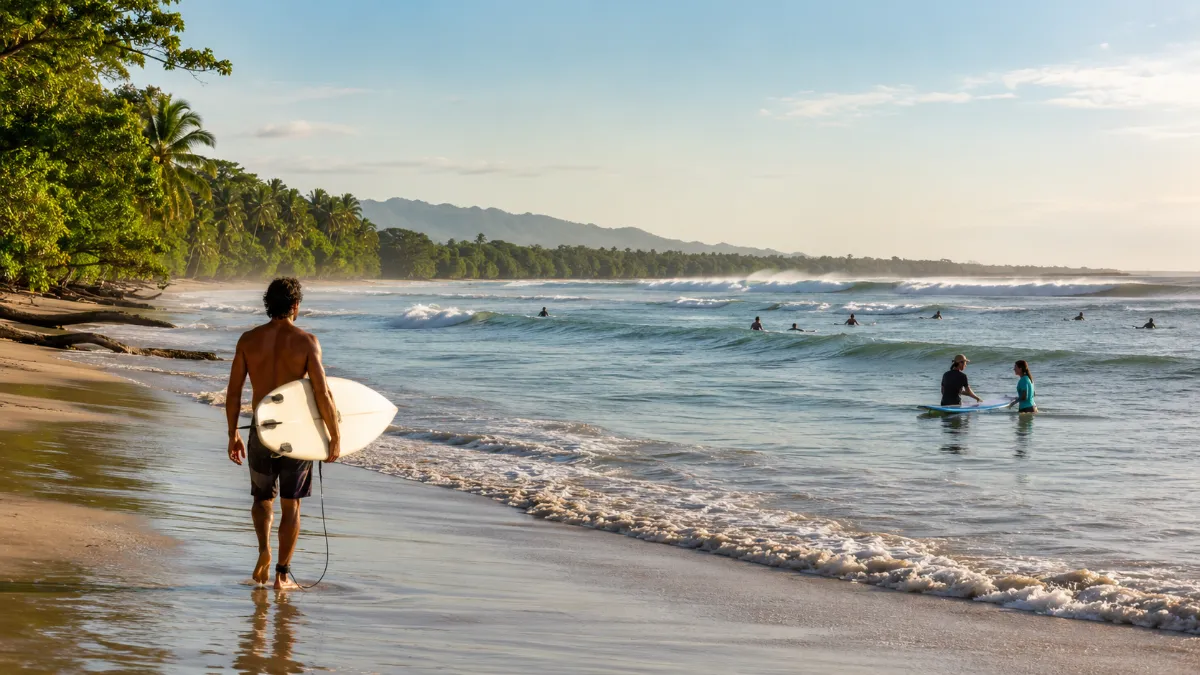
Playa Cocles is the main beach area for many visitors interested in surf lessons, board rentals, and more accessible waves near Puerto Viejo.
The beach has a sandy shoreline and can produce waves for different skill levels. However, conditions vary considerably. Smaller, organized surf may work for lessons, while larger days can create stronger currents, heavy shore break, and waves better suited to experienced surfers.
Beginners should surf only in an area selected by a qualified instructor. The instructor can evaluate current conditions, identify hazards, choose an appropriate section of the beach, and provide a board suitable for the student's size and ability.
Intermediate surfers may find Playa Cocles useful for practicing paddling, positioning, turns, and wave selection. They should still check conditions because a manageable session can become more challenging as the swell, tide, or wind changes.
Playa Cocles is located south of Puerto Viejo town and is surrounded by accommodations, restaurants, surf services, and other tourism businesses. Families and groups can combine a surf lesson with beach time, although non-surfing children should remain closely supervised near the water.
Playa Negra
Playa Negra is located on the northern side of Puerto Viejo and is recognized for its dark sand and broad coastal setting.
Surf conditions here can be less predictable than at Cocles. Smaller waves may appear suitable for practice on some days, but the beach should not automatically be treated as a beginner location.
Currents, uneven wave patterns, weather, and swell direction can affect the experience. Surfers should evaluate the water after arrival and ask locally before entering with limited experience.
Playa Negra can be useful for travelers staying north of town who want to check nearby conditions without transporting boards to another community. However, dedicated surf travelers may still need to move between beaches to find the most appropriate waves.
Punta Uva
Punta Uva is better known as a scenic beach and nature area than as a consistent surf destination. Waves may appear when conditions align, but travelers should not choose accommodation here based only on the expectation of daily surfing.
The area may work for a relaxed beach day, swimming when conditions are appropriate, or kayaking with a local operator. Surfers should check the swell before carrying equipment to the beach.
Punta Uva can be included in a surf-focused coastal day when travelers want to explore several beaches. Private transportation is useful for carrying boards between Cocles, Playa Chiquita, Punta Uva, and Manzanillo.
Playa Chiquita
Playa Chiquita has small beach access points surrounded by tropical vegetation. It is not normally the first recommendation for a beginner surf lesson.
Conditions can involve reefs, rocks, narrow sections, and waves that require local understanding. Surfers unfamiliar with the area should not paddle out simply because a break appears uncrowded.
A quiet lineup does not always mean a wave is easy or safe. Access, bottom conditions, currents, and suitable swell direction should be confirmed with local surfers.
For most visitors, Playa Chiquita is better included as a beach stop rather than treated as the primary base for a first Puerto Viejo surf trip.
Manzanillo and the Southern Beaches
Manzanillo is located south of Puerto Viejo near the Gandoca-Manzanillo Wildlife Refuge. The area is known mainly for beaches, nature, coastal scenery, and access to protected environments.
Surf may be present depending on conditions, but visitors should not expect a consistent surf-school environment comparable to Playa Cocles.
Remote or less developed beaches require additional caution. Rescue services, equipment rentals, transportation, and immediate assistance may be limited. Surfers should avoid entering unfamiliar breaks alone.
Travelers carrying boards to Manzanillo should arrange return transportation before the session. Taxis may not always be waiting near the beach, and large board bags require a suitable vehicle.
Puerto Viejo Surf Seasons
Surfing in Puerto Viejo is influenced by Caribbean weather and swell patterns rather than the Pacific surf calendar.
The strongest Caribbean surf often appears during periods when storms and weather systems generate swell across the Caribbean Sea. These conditions can produce powerful waves at Salsa Brava and larger surf at exposed beaches.
Puerto Viejo commonly receives notable surf during parts of the period from December through March. Another active period may occur around the middle of the year. Exact timing varies, and no month guarantees a specific wave size or quality.
Smaller conditions can occur between stronger swell periods. These days may create better opportunities for beginner lessons at suitable beach sections, although calm or beginner-friendly surf is never guaranteed.
Wind, rain, local storms, tides, and swell direction can change conditions within the same travel week. Surfers planning a short visit should remain flexible and avoid building the entire itinerary around one expected day.
Surfing from December to March
December through March can bring stronger Caribbean swell and more demanding surf conditions.
Advanced surfers may visit during this period hoping to experience Salsa Brava and other powerful waves. Larger surf can also make Playa Cocles more challenging, with stronger currents and heavier beach-break conditions.
Beginners can still take lessons when instructors identify an appropriate location and safe conditions. However, some days may not be suitable for first-time surfers.
Travelers should avoid assuming that the national dry season means completely dry weather in Puerto Viejo. The Caribbean coast follows different weather patterns from the Pacific side, and rain may occur during a surf trip.
Mid-Year Surf Conditions
Parts of June, July, and August may also receive active Caribbean surf. These conditions can attract experienced surfers and create powerful sessions at exposed breaks.
Mid-year weather can include sun, rain, humidity, and rapidly changing coastal conditions. Surfers should check the ocean in person and speak with local professionals before choosing a break.
Families traveling during school vacations should understand that stronger surf may limit safe swimming areas. A beach suitable for watching surfers may not be appropriate for young children entering the water.
Smaller Surf Periods
Periods with less swell may provide more manageable conditions for beginners and intermediate surfers, especially at selected parts of Playa Cocles.
Smaller does not always mean safe. Currents, shore break, rocks, changing tides, and sudden sets can still create hazards.
Beginners should continue using an instructor, while intermediate surfers should observe the beach and identify the best entry and exit areas before paddling out.
Travelers interested mainly in surf lessons may benefit from a longer stay. Additional days create flexibility if the first scheduled lesson is affected by heavy waves, rain, or unsuitable conditions.
Best Puerto Viejo Surf Beaches by Skill Level
Skill level should be based on actual ability rather than the number of previous surf trips. A surfer who has taken several beginner lessons may still need instruction in unfamiliar Caribbean conditions.
Beginners
Playa Cocles is generally the most practical starting point for beginner surfing in Puerto Viejo when conditions are suitable.
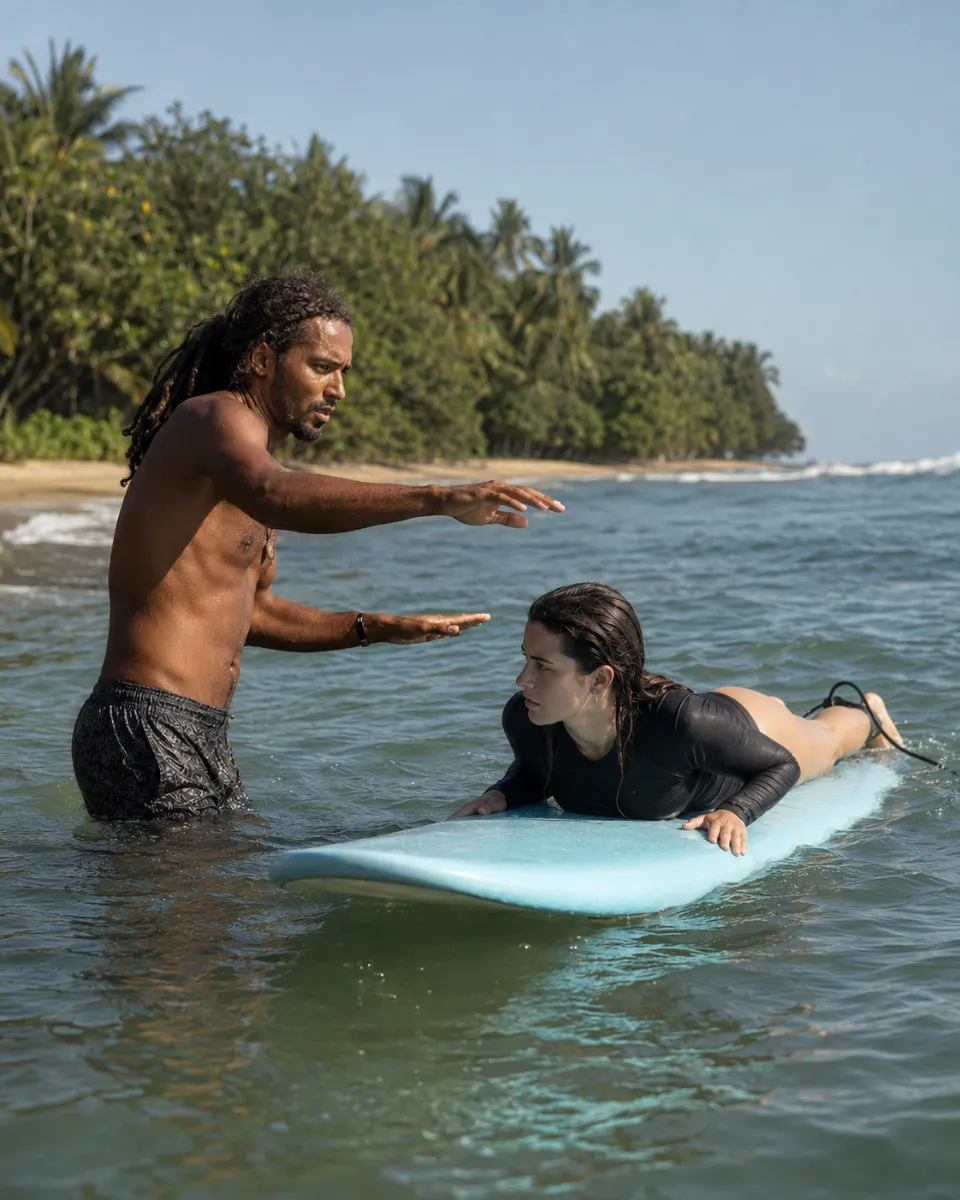
Beginners should book a lesson with an established local instructor or surf school. The lesson should include ocean safety, paddling technique, board control, standing position, wave selection, and instructions about currents.
A larger soft-top board is often used for first lessons because it provides more stability and flotation. Board choice should be made by the instructor according to the student's size, fitness, and experience.
First-time surfers should not enter Salsa Brava, isolated reef breaks, or unfamiliar beaches without professional guidance.
Children taking surf lessons should use age-appropriate equipment and remain within the instructor's designated area. Parents should confirm instructor-to-student ratios, lesson duration, board type, and water conditions before the session.
Intermediate Surfers
Intermediate surfers may find suitable waves at Playa Cocles and other beach areas when conditions match their ability.
They should be comfortable paddling through broken waves, catching unbroken waves independently, controlling the board, turning, following surf priority, and avoiding other surfers.
An intermediate surfer who has experience only at slow sand-bottom waves should be cautious around reefs and faster Caribbean surf. A guided session can help identify appropriate breaks without entering conditions beyond the surfer's experience.
Travelers should also consider board selection. A familiar board may provide more control than an unfamiliar rental, but transporting a personal board requires additional planning.
Advanced Surfers
Advanced and expert surfers may be interested in Salsa Brava and other powerful breaks that depend on specific Caribbean swell.
These surfers should have experience with reefs, fast takeoffs, shallow water, currents, crowded lineups, and heavy waves. Local knowledge remains valuable even for highly experienced visitors.
Advanced ability does not remove the need to understand the break. Surfers should watch several sets, observe how local surfers enter and exit, and identify exposed reef areas before paddling out.
Traveling with more than one board can improve flexibility. A surfer may need different equipment for powerful reef surf, beach-break conditions, or smaller days.
Surf Lessons in Puerto Viejo
Surf lessons are widely associated with the Cocles area, where instructors can select an appropriate section of beach according to the day's conditions.
Travelers should choose an instructor who emphasizes safety and current conditions rather than promising that every scheduled lesson will proceed exactly as planned.
A responsible instructor may change the meeting time, move the lesson, shorten the water portion, or reschedule when waves are unsuitable. This flexibility should be seen as a safety measure.
Before booking, travelers should confirm what the lesson includes. Important details include board rental, leash, rash guard, instructor ratio, meeting point, transportation, lesson length, and minimum age.
Students should mention swimming ability, previous surf experience, injuries, medical conditions, and comfort in the ocean. This information helps the instructor select the correct board and lesson environment.
Private lessons offer more individual attention and may be useful for nervous beginners, children, older travelers, or students working on a specific skill. Group lessons may suit travelers who are comfortable learning with others.
Surfboard Rentals
Surfboard rentals are available around Puerto Viejo and Cocles, but inventory varies.
Travelers may find soft-top beginner boards, shortboards, funboards, and longboards. Specialized performance boards or a particular volume may be more difficult to find.
Experienced surfers should contact rental providers before arrival when board dimensions are important. Assuming that a preferred model will be available can leave the surfer with equipment that does not match the conditions.
Rental periods may range from a lesson session to several days. Surfers should understand the return time, damage policy, repair responsibility, and whether the board can be transported between beaches.
Boards should be checked before leaving the rental location. Existing damage, fin condition, leash quality, and board repairs should be discussed with the provider.
A rental board should never be left unattended on a vehicle, at the beach, or outside an accommodation property.
Bringing Your Own Surfboard to Puerto Viejo
Traveling with a personal surfboard provides familiar equipment and may be worthwhile for experienced surfers with specific board preferences.
The main challenges are airline handling, oversized baggage policies, airport movement, vehicle capacity, and secure storage at the accommodation.
Travelers should confirm the airline's current surfboard policy before purchasing a flight. Board-bag length, weight, number of boards, and connecting airlines can affect acceptance and baggage charges.
A strong travel bag, internal padding, protected rails, covered fins, and clear identification can reduce the risk of damage. Removable fins should usually be packed carefully rather than left exposed.
Surfers should also confirm that their hotel or vacation rental has secure board storage. Leaving boards in a public hallway, open vehicle, or unsecured outdoor area can create unnecessary risk.
Surfboard Transportation to Puerto Viejo
Surfboard transportation should be arranged before arriving in Costa Rica.
A board bag may not fit in a standard car, and attaching equipment to an unsuitable roof can damage the board or create a road hazard. Longboards and multi-board bags require particular attention.
When booking transportation, travelers should provide the number of boards, board-bag length, approximate width, and total luggage. The transportation company can then determine the appropriate vehicle and storage arrangement.
Private transportation is usually the clearest option for surfers carrying large equipment. A private transfer can be selected according to the group size, number of boards, luggage, and hotel location.
Board space should never be assumed, even in a larger van. Passenger capacity does not automatically mean there is enough room for long surfboards and suitcases.
Costa Rica Shuttles can arrange board-friendly private transportation when surfboard details are provided in advance. Pickup can be organized from the airport, a San Jose hotel, another Costa Rica destination, or accommodation in Puerto Viejo.
Shared Shuttle Travel with Surfboards
Shared shuttle service may accept surfboards only when space is available and the equipment meets the operator's conditions.
The vehicle may already be carrying several passengers and suitcases. A longboard or multi-board bag can reduce luggage capacity and may not be accepted without prior approval.
Surfers should never arrive at a shared shuttle pickup with an undeclared board. The driver may be unable to load it safely, which can interrupt the trip and leave the traveler searching for alternative transportation.
Before booking, provide the exact board-bag dimensions and ask whether an additional reservation, special vehicle, or equipment charge is required.
Private transportation is generally more reliable for several boards, longboards, groups of surfers, or travelers with both board bags and standard luggage.
Airport Transfers with Surfboards
Juan Santamaria International Airport, or SJO, is generally the most practical international airport for reaching Puerto Viejo.
The ground journey should be planned as a substantial travel day. Surfers arriving after a long international flight may prefer a private airport transfer with enough space for boards, luggage, and planned rest stops.
Late arrivals require particular attention. Continuing directly to Puerto Viejo may not suit every itinerary, especially after delays or a long flight. An overnight stay near the airport or in the Central Valley may create a more comfortable transfer the following day.
Guanacaste Airport, or LIR, is located on the other side of Costa Rica and is usually less convenient for Puerto Viejo. Surfers using LIR as part of a multi-region itinerary should prepare for a longer cross-country transportation day.
The driver should receive the flight number, arrival time, board-bag dimensions, passenger count, and final hotel location before pickup.
Hotel-to-Hotel Board Transport
Puerto Viejo is often combined with other Costa Rica surf or travel destinations. Hotel-to-hotel transportation can help surfers move boards without returning to the airport.
A private transfer is useful for groups carrying several boards or traveling between regions with limited direct shared service. Pickup can be arranged at the hotel, and the vehicle can be selected according to equipment needs.
Travelers should not leave wet boards, sand, or unsecured fins inside a vehicle. Boards should be rinsed when possible, placed in bags, and loaded according to the driver's instructions.
When the itinerary includes a ferry or another transportation connection, board dimensions should be disclosed during booking. Every segment must have enough capacity for the equipment.
Local Board Transport Between Beaches
Surfers staying in Puerto Viejo may need transportation to Cocles or beaches farther south.
Cycling with a surfboard is possible for experienced riders using a properly installed board rack. It should not be attempted without secure equipment, road awareness, and confidence riding near traffic.
Rain, wind, darkness, uneven road edges, and passing vehicles can make cycling with a board more difficult. Helmets and visible clothing are recommended.
Taxis may transport boards when the vehicle has suitable racks or interior space. Availability should be confirmed before the pickup rather than assumed at the beach.
Private local transportation is useful for surf groups, families, photographers, or travelers checking several beaches. A driver can provide hotel pickup, board storage, and a planned return after the session.
Where to Stay for a Puerto Viejo Surf Trip
Puerto Viejo town is convenient for travelers who want restaurants, nightlife, shops, and access to Salsa Brava. Advanced surfers interested in checking the reef break may value being close enough to observe conditions.
Cocles is generally more practical for beginners, surf students, and travelers who want to stay near the main beach-break area. Accommodation options are spread along the road and near the beach.
Playa Chiquita and Punta Uva offer quieter surroundings but are farther from the central surf services. Travelers staying there may need a bicycle, taxi, rental car, or private transportation to check Cocles or Salsa Brava.
The exact property location should be confirmed before booking. A hotel described as being in Puerto Viejo may be several kilometers from the town center or preferred surf beach.
Board storage, outdoor showers, security, road access, and distance from the beach are important accommodation details for surfers.
Surfing in Puerto Viejo with Kids
Puerto Viejo can be included in a family surf trip when activities are selected according to the children's ages and ocean experience.
Children should take lessons with qualified instructors in conditions chosen specifically for beginners. Parents should not assume that a calm-looking section of beach is free from currents.
Lessons should use suitable soft-top boards, properly fitted leashes, and clear supervision. Parents should confirm whether they need to remain nearby during the session.
Strong surf days may not be suitable for children's lessons. Families should keep alternative activities available, such as a wildlife visit, Cahuita National Park, a cacao experience, or a quiet beach day away from dangerous water.
Private transportation is often helpful for families carrying surfboards, towels, child equipment, snacks, and dry clothing.
Surf Safety in Puerto Viejo
Ocean conditions in Puerto Viejo deserve careful attention. Warm water and tropical scenery do not make every surf break safe.
Surfers should check waves, currents, tide, wind, entry points, exit areas, reefs, rocks, and crowd behavior before entering.
Beginners should stay with an instructor and avoid surfing alone. Intermediate surfers should not enter a reef break unless they have the necessary experience.
Leashes, fins, board condition, and any protective equipment should be checked before every session. A damaged leash can create a serious problem in strong surf.
Surfers should respect priority rules and avoid dropping in on another rider. Crowded takeoff areas become more dangerous when visitors ignore lineup etiquette.
Reefs should not be touched or walked on unnecessarily. Besides damaging the environment, exposed reef can cause severe cuts.
Travelers should protect themselves from sun exposure, dehydration, heat, and fatigue. A surfer who feels tired or uncertain should leave the water before conditions become more difficult.
Weather and Rain
Puerto Viejo has a tropical Caribbean climate, and rain can occur during different parts of the year.
Rain alone does not always prevent surfing, but storms, wind, poor visibility, river runoff, lightning, and changing water conditions may affect safety.
Surfers should leave the water when lightning is present or when local professionals recommend avoiding the ocean.
Heavy rain can also affect roads and transportation. Travelers carrying boards should allow flexibility in the schedule and avoid planning a narrow airport connection after a surf session.
Quick-drying clothes, waterproof bags, board covers, and dry storage for electronics are useful throughout the year.
What to Pack for a Puerto Viejo Surf Trip
A practical surf packing list includes swimwear, rash guards, sun protection, insect repellent, a reusable water bottle, quick-drying clothes, rain protection, sandals, and walking shoes.
Surfers bringing personal equipment should pack spare fins, fin keys, leashes, wax suited to warm water, repair materials, and secure board straps when appropriate.
A small first-aid kit is useful for minor cuts, but reef injuries and serious accidents require professional medical attention.
Waterproof storage helps protect phones, travel documents, and vehicle keys. Valuables should not be left unattended on the beach.
Travelers should bring any preferred specialized surf equipment because the exact brand, size, or replacement part may not be available locally.
Frequently Asked Questions
Is Puerto Viejo good for beginner surfers?
Yes, beginners may find suitable conditions at Playa Cocles when working with a local instructor. Conditions change, so lessons should be scheduled according to the day's waves and currents.
What is the best surf beach in Puerto Viejo?
The best surf beach depends on skill level. Playa Cocles is the main option for lessons and beach-break surfing, while Salsa Brava is a powerful reef wave for advanced and expert surfers.
Is Salsa Brava suitable for beginners?
No. Salsa Brava is a powerful reef break that requires advanced surfing ability, strong paddling skills, reef experience, and local knowledge.
When is the best surf season in Puerto Viejo?
Stronger Caribbean surf often occurs during parts of December through March, with another possible active period around the middle of the year. Conditions vary, and no month guarantees a particular swell.
Can I rent a surfboard in Puerto Viejo?
Yes. Surfboard rentals are commonly available around Puerto Viejo and Cocles. Travelers needing a particular size or performance board should confirm availability before arrival.
Are surf lessons available in Puerto Viejo?
Yes. Lessons are commonly offered near Playa Cocles. Beginners should choose an instructor who selects the lesson area according to current ocean conditions.
Can children take surf lessons in Puerto Viejo?
Yes, when age, swimming ability, equipment, supervision, and ocean conditions are appropriate. Parents should confirm the instructor ratio and safety procedures before booking.
Can I bring a surfboard on a shared shuttle?
It may be possible, but advance approval is required. Space depends on the vehicle, passengers, luggage, and board dimensions. Private transportation is more practical for longboards or several boards.
Can a private transfer carry multiple surfboards?
Yes, when a suitable vehicle is arranged. Travelers must provide the number of boards, bag length, passenger count, and luggage details before booking.
What is the best airport for a Puerto Viejo surf trip?
SJO, or Juan Santamaria International Airport, is generally the most practical international airport for Puerto Viejo. Surfers should arrange ground transportation that can accommodate their boards and luggage.
Do I need a rental car for surfing in Puerto Viejo?
No. Surfers can use bicycles with proper board racks, local taxis, shared shuttles for suitable long-distance routes, and private transportation. The best option depends on accommodation location and board size.
Is Playa Cocles always safe for beginners?
No. Playa Cocles can have strong waves, currents, and shore break. Beginners should enter only with an instructor who has evaluated current conditions.
Can I surf in Puerto Viejo during the rainy season?
Surfing may be possible during rainy periods, but storms, lightning, wind, visibility, runoff, and road conditions must be considered. Local advice should guide the decision.
Where should surfers stay in Puerto Viejo?
Puerto Viejo town is convenient for restaurants and Salsa Brava, while Cocles is generally better for surf lessons and beach-break access. Quieter areas south of Cocles require more transportation planning.
Plan Your Puerto Viejo Surf Trip
Surfing in Puerto Viejo combines warm Caribbean water, tropical beaches, powerful reef waves, and accessible surf instruction. Playa Cocles provides the main setting for beginner lessons and beach-break sessions, while Salsa Brava is reserved for advanced surfers prepared for fast waves and shallow reef conditions.
The best surf experience depends on choosing a beach that matches actual ability and current conditions. Beginners should work with instructors, intermediate surfers should remain cautious around unfamiliar reefs, and advanced surfers should respect local knowledge and lineup etiquette.
Board transport should be organized before the trip. Shared shuttle space may be limited, while private transportation provides more flexibility for longboards, multiple-board bags, groups, airport pickups, and hotel-to-hotel transfers.
Costa Rica Shuttles can arrange private transportation to Puerto Viejo with space planned around passenger luggage and declared surfboards. Travelers should provide board dimensions, group size, pickup location, and accommodation details in advance so the correct vehicle can be organized.