Surfing in Dominical
A practical guide to surfing in Dominical, including wave conditions, beginner considerations, surf planning, nearby beaches, and transportation.
Surfing in Dominical, Costa Rica
Dominical is one of the most recognized surf destinations on Costa Rica's Pacific coast. The town sits directly beside a long beach where powerful Pacific swells create regular surfing opportunities throughout much of the year.
Surfing in Dominical attracts experienced surfers, intermediate riders, and travelers who want to take lessons during their Costa Rica trip. Conditions can change quickly with swell direction, tides, wind, and weather, so choosing the right time and section of beach is important.
Dominical is also a convenient base for travelers who want to combine surfing with waterfalls, wildlife, beaches, Uvita, Manuel Antonio, and other Southern Pacific destinations. Transportation planning is useful when bringing boards, visiting nearby surf beaches, or continuing to another destination after a stay in Dominical.
Why Dominical Is Popular for Surfing
Dominical has developed a strong reputation as a surf town because the Pacific coastline receives regular swell and the main beach offers a beach break rather than a single fixed reef or point.
That means waves can form in different areas along the beach depending on current sand conditions, tide, swell, and weather.
The town itself is close to the beach, making it easy for travelers staying near central Dominical to walk between accommodations, restaurants, surf shops, and the shoreline.
The surfing atmosphere is an important part of Dominical, but visitors should not assume that conditions are always suitable for beginners. The waves can become strong, and currents can be significant when the ocean is active.
What Are the Waves Like in Dominical?
Dominical is generally known for energetic beach-break waves.
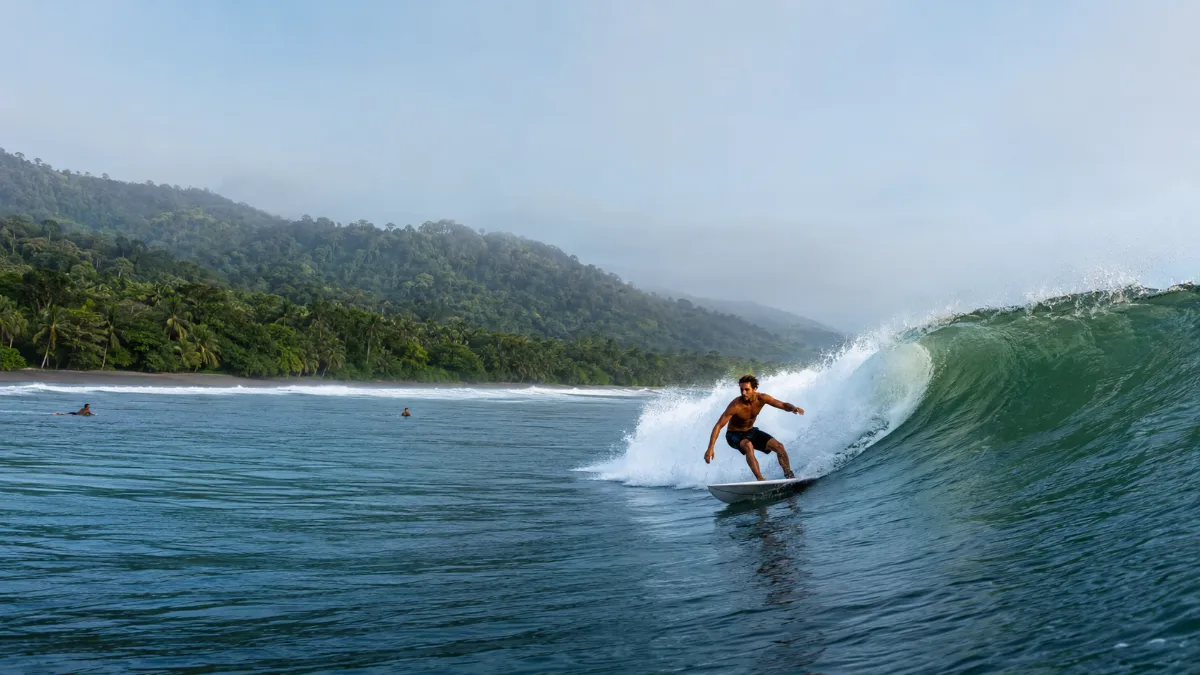
Wave size and shape vary considerably. Some days may provide manageable conditions for intermediate surfers, while larger swells can produce powerful surf better suited to experienced riders.
Because Dominical is an exposed Pacific beach, conditions should always be evaluated on the day of the session rather than based only on a general seasonal description.
Tides also affect how waves break. A section of beach that works well at one point in the day may look very different several hours later.
Travelers who are unfamiliar with Dominical should speak with a local surf instructor or experienced surf professional before entering the water, particularly when swell is larger or currents appear strong.
Is Dominical Good for Beginner Surfers?
Beginners can learn to surf in Dominical, but the suitability of the main beach depends heavily on conditions.
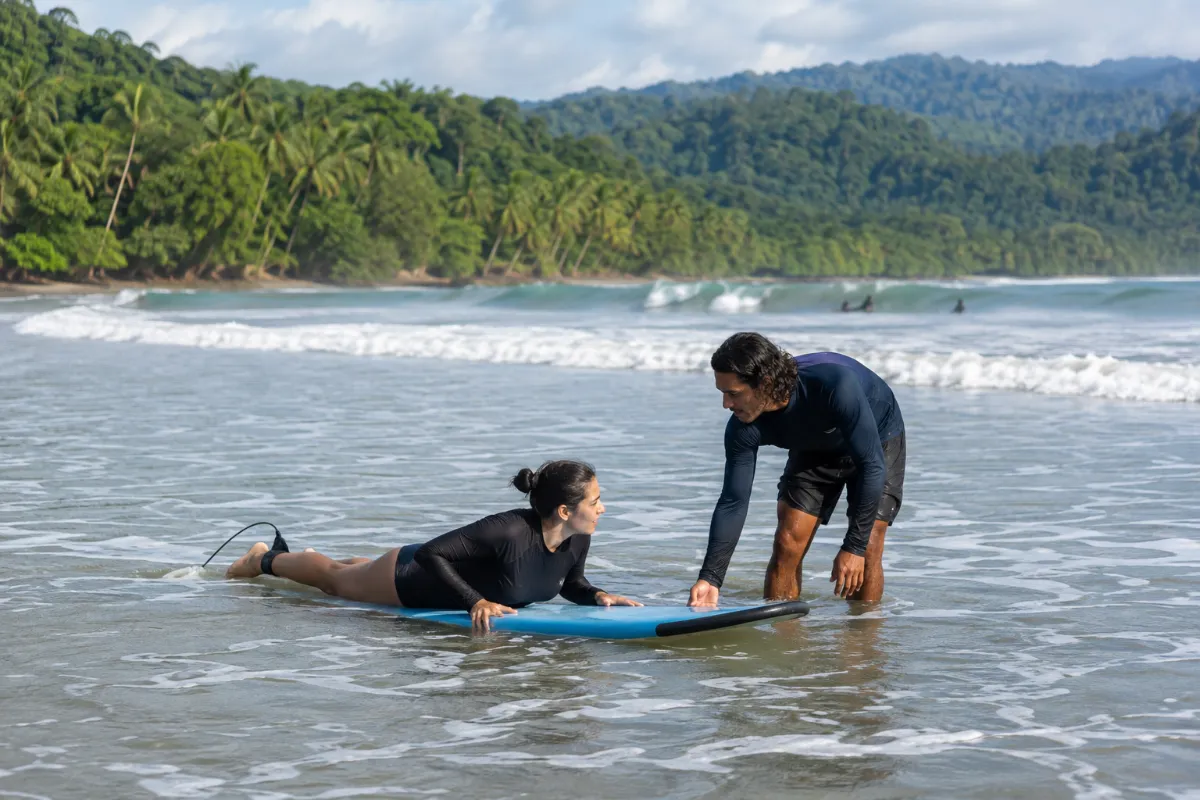
On smaller and more manageable days, lessons can introduce first-time surfers to paddling, standing, positioning, and basic ocean awareness. When waves are larger or currents are stronger, instructors may recommend a different section of beach or another nearby location.
Taking a lesson is a practical approach for first-time surfers because an instructor can evaluate current conditions rather than relying on general information.
Travelers should avoid choosing a surf location based only on convenience. The safest and most productive beginner session depends on the ocean conditions that day.
Surf Lessons in Dominical
Surf lessons are widely associated with the Dominical travel experience and are available through local surf businesses and instructors.
A typical beginner session focuses on basic technique, board control, paddling, standing, and understanding where to surf under the current conditions.
Travelers should confirm what equipment is included, where the lesson will take place, and whether the instructor may change locations according to the surf.
This is especially important during periods of stronger swell. A responsible lesson plan should match the location and wave conditions with the student's ability.
Surfing for Intermediate and Experienced Surfers
Intermediate and advanced surfers are often drawn to Dominical because conditions can become powerful and challenging.
Experienced surfers may find opportunities for faster waves and stronger surf when Pacific swells reach the coast. However, beach-break conditions can change from one day to another as sandbars, tides, wind, and swell direction affect the shape of the waves.
Visitors should observe the ocean before paddling out and avoid assuming that a familiar-looking section of beach will behave the same way every day.
Local knowledge can be especially valuable for understanding currents, entry points, tides, and changing conditions.
Best Time for Surfing in Dominical
Surfing in Dominical is possible during much of the year, but the type of conditions can vary by season.
Costa Rica's Pacific coast generally experiences changing swell patterns throughout the year. The wetter months can bring more frequent southern swell activity, while the drier part of the year can still offer surf depending on regional weather and ocean systems.
Instead of choosing travel dates based on the expectation of one exact wave size, surfers should consider their ability level and how much flexibility they want.
Experienced surfers may prefer periods associated with more energetic swell, while beginners may benefit from smaller conditions.
No season guarantees a specific surf forecast. Daily swell, wind, tides, and weather remain important.
Morning Surfing in Dominical
Many surfers prefer to check conditions early in the day because local winds can change as the day develops.
However, the best time to surf should not be determined by the clock alone. Tide and swell conditions can be equally important.
A useful approach is to check the beach in the morning, compare conditions with the tide, and decide whether to surf immediately or wait for a different part of the tidal cycle.
Travelers taking lessons should follow the timing recommended by their instructor.
Surfing During Costa Rica's Green Season
The green season can be attractive for surfers visiting Dominical because Pacific swell activity can be more noticeable during parts of this period.
Rain is also more common, which can affect road conditions, visibility, and travel plans outside the surf session.
Travelers visiting during wetter months should keep some flexibility in their itinerary. Surfing may be excellent on one part of the day while heavy rain later changes transportation or sightseeing plans.
If Dominical is part of a multi-destination itinerary, private transportation can be useful when traveling with surfboards and luggage during periods when road conditions require more careful planning.
Surfing During the Dry Season
The dry season is popular with Costa Rica travelers because Pacific beach destinations generally experience less rainfall.
Surf conditions still vary and should be checked daily. Smaller days can sometimes be more approachable for less experienced surfers, while swell events can still produce stronger waves.
The dry season can also be busy in popular coastal areas, so travelers planning lessons, accommodations, or transportation may prefer to organize important parts of the trip in advance.
Surf Safety in Dominical
Ocean safety is particularly important in Dominical because strong surf and currents can develop.
Surfers should evaluate conditions before entering the water and avoid paddling out beyond their ability level.
Beginners should consider lessons rather than surfing alone. Even experienced surfers visiting Dominical for the first time can benefit from asking local professionals about current conditions.
Surfing ability does not eliminate the need for caution. Currents, larger sets, changing tides, and crowded conditions can affect any session.
Travelers should also avoid leaving phones, wallets, passports, or other important belongings unattended on the beach while surfing.
What to Bring for Surfing in Dominical
Travelers who already own surf equipment may prefer to bring their own board, especially when Dominical is one of several surf stops in the itinerary.
Others may find board rental more practical because it reduces the amount of equipment that must be transported between airports, hotels, and destinations.
The right board depends on ability and conditions. Beginners should generally rely on an instructor or rental shop to recommend appropriate equipment rather than selecting a board based only on size or appearance.
Sun protection, drinking water, and clothing suitable for tropical conditions are also important for longer sessions.
Surfboard Rentals in Dominical
Travelers who do not want to fly with a surfboard can usually plan their Dominical stay around local board rentals.
Rental availability, board types, policies, and operating hours can vary, so surfers with specific equipment requirements should confirm availability directly with their chosen provider.
Renting locally can make airport transportation easier because travelers do not need to organize vehicle space for a board during every stage of the trip.
For surfers planning several Costa Rica surf destinations, however, traveling with personal equipment may still be preferable.
Nearby Surf Beaches from Dominical
Dominical is not the only beach travelers can explore along this part of the Pacific coast.
The coastline between Dominical, Uvita, and surrounding communities includes additional beaches with different exposure and conditions. Which location works best on a particular day depends on swell, tide, weather, and surfer ability.
Travelers should avoid assuming that a nearby beach is automatically safer or easier. Conditions should be evaluated locally.
Private transportation can be useful for surfers who want to explore more than one beach without depending on a fixed shuttle schedule.
Combining Surfing with Other Things to Do in Dominical
Dominical works well for travelers who want more than a dedicated surf trip.
A morning surf session can sometimes be combined with a waterfall excursion, nature activity, beach visit, or relaxed afternoon in town.
Nauyaca Waterfalls is one of the better-known nature attractions inland from the Dominical area. Travelers can also explore Uvita, Marino Ballena National Park, nearby nature areas, and other Southern Pacific destinations.
Trying to combine a long surf session with a distant full-day excursion can make the itinerary unnecessarily rushed. Travelers staying several nights can usually create a better balance by separating major activities across different days.
Where to Stay for Surfing in Dominical
Travelers coming primarily for surfing often prefer accommodations near the beach because they can check conditions without arranging transportation every morning.
Other visitors may choose hotels or vacation rentals outside central Dominical for more privacy or a different setting.
Before booking, consider whether you plan to walk to the beach, rent a vehicle, or arrange transportation.
Surfers traveling with boards should also confirm whether their accommodation has appropriate space for storing equipment.
Getting to Dominical for a Surf Trip
Dominical is located on Costa Rica's Pacific coast and can be reached by ground transportation from San Jose, SJO Airport, Manuel Antonio, Uvita, and other destinations.
For international travelers planning a Dominical surf trip, SJO is commonly the more practical main international airport for reaching this part of the Pacific coast.
The complete travel day depends on flight arrival time, traffic, road conditions, weather, hotel location, and any stops along the route.
Pre-arranged airport transportation can be especially useful when arriving with surfboards or other large luggage.
Private Transportation to Dominical with Surfboards
Private transportation is a practical option for surfers because vehicle arrangements can be discussed before the travel day.
Travelers carrying surfboards should tell the transportation company how many passengers, boards, and pieces of luggage will be traveling.
Board length also matters when planning vehicle space.
A private transfer can provide direct transportation from the airport, hotel, or previous destination to accommodation in Dominical without requiring travelers to move equipment between several vehicles.
This can be particularly useful for groups of surfers traveling together.
Shared Shuttle Transportation to Dominical
Shared shuttle service can be practical for travelers without large surf equipment when scheduled departures match the itinerary.
Surfers carrying boards should confirm equipment policies before reserving a shared shuttle. Available space can depend on the vehicle, passenger count, and board dimensions.
A shared shuttle is generally better suited to point-to-point travel between destinations than customized trips between several surf beaches.
Travelers who want to explore different surf locations during their Dominical stay may find private transportation more flexible.
Continuing from Dominical to Other Costa Rica Surf Destinations
Dominical can be part of a larger Costa Rica surf itinerary rather than the only destination.
Travelers may continue north or south along the Pacific coast or combine surfing with inland destinations such as La Fortuna or Monteverde.
When planning a multi-stop trip, consider the amount of surf equipment being transported and whether each transportation option has suitable luggage capacity.
Door-to-door transportation between hotels can reduce the need to move boards and bags through multiple connections.
Frequently Asked Questions About Surfing in Dominical
Is Dominical good for surfing?
Yes. Dominical is widely known as a Costa Rica surf destination and offers regular Pacific beach-break conditions. Wave size and difficulty change with swell, tide, wind, and weather.
Is Dominical good for beginners?
Beginners can take surf lessons in Dominical, but the main beach can become powerful. The suitability of conditions should be evaluated on the day of the lesson.
Is Dominical better for experienced surfers?
Dominical can be particularly attractive to intermediate and experienced surfers because larger swells can produce strong and challenging beach-break conditions.
Can I take surf lessons in Dominical?
Yes. Surf lessons are part of the local tourism offering. Beginners should choose an instructor who selects the lesson location and timing according to current conditions.
Can I rent a surfboard in Dominical?
Surfboard rentals are available through businesses serving the local surf community. Travelers with specific equipment requirements should confirm current board availability directly with the rental provider.
What is the best time to surf in Dominical?
There is no single best time for every surfer. Conditions vary by season, swell, tide, wind, and ability level. Checking daily conditions is more useful than relying only on the month of travel.
Are the waves in Dominical dangerous?
Dominical can have powerful waves and strong currents, particularly during larger swell. Surfers should stay within their ability level and beginners should consider professional instruction.
Can I bring a surfboard on a private transfer?
Surfboards can often be accommodated when transportation is arranged with the correct vehicle. Travelers should provide the number and approximate size of boards when making transportation arrangements.
Are shared shuttles suitable for surfboards?
Policies and available space can vary. Travelers should confirm surfboard acceptance and equipment capacity before booking a shared shuttle.
Can I surf and visit other attractions from Dominical?
Yes. Dominical is well positioned for combining surfing with waterfalls, beaches, wildlife, Uvita, Manuel Antonio, and other Southern Pacific activities. Staying several nights makes it easier to balance surf sessions with day trips.
Conclusion
Surfing in Dominical is one of the main reasons travelers choose this part of Costa Rica's Pacific coast. The area offers regular beach-break surf, a strong local surf culture, lessons for visitors, and access to nearby beaches and Southern Pacific attractions.
Conditions can range from manageable to powerful, so surfers should plan around their ability level, daily swell, tides, wind, and local advice. Beginners can benefit from professional lessons, while more experienced surfers may appreciate Dominical when stronger Pacific swells arrive.
Transportation is another important part of a Costa Rica surf trip, particularly for travelers carrying boards. Costa Rica Shuttles can help organize private transportation, airport transfers, hotel pickup, door-to-door transportation, and long-distance transfers to or from Dominical. Travelers using shared shuttle service should confirm surfboard capacity before booking.
With the right surf conditions, accommodation, and transportation plan, Dominical can serve as both a dedicated surf destination and a practical base for exploring the Southern Pacific region of Costa Rica.