Puerto Viejo Caribbean Guide
A practical guide to Puerto Viejo and the southern Caribbean coast, covering beach areas, local culture, activities, accommodations and transportation planning.
Puerto Viejo Caribbean Guide
This Puerto Viejo Caribbean guide helps travelers explore one of the most distinctive coastal regions in Costa Rica. Located on the southern Caribbean coast, Puerto Viejo de Talamanca combines tropical beaches, rainforest, wildlife, local communities and a relaxed coastal atmosphere.
The destination is different from the resort areas of Guanacaste and the larger tourism centers of the Central Pacific. Puerto Viejo is surrounded by several beach communities, including Playa Negra, Cocles, Playa Chiquita, Punta Uva and Manzanillo. Each area offers a different balance of beach access, restaurants, accommodations and distance from the town center.
Good travel planning is important because Puerto Viejo is far from Costa Rica's main international airports. Most travelers arrive through SJO near San Jose and continue by private transportation or shared shuttle service. Choosing the right hotel area and arranging airport transportation before arrival can make the entire Caribbean itinerary easier.
Where Is Puerto Viejo on the Caribbean Coast?
Puerto Viejo de Talamanca is located in Limon Province on Costa Rica's southern Caribbean coast. It is south of Cahuita and north of Manzanillo, close to the Panama border.
Puerto Viejo town is the main commercial center for the surrounding beach communities. Visitors can find restaurants, small hotels, shops, tour operators and local services in and around the center.
The wider Puerto Viejo area extends along the coastal road. Hotels described as being in Puerto Viejo may actually be located in Cocles, Playa Chiquita, Punta Uva or closer to Manzanillo. Travelers should confirm the exact address before booking airport transfers, shared shuttles or activity pickups.
This Puerto Viejo Caribbean guide focuses on Puerto Viejo de Talamanca and the southern Caribbean coast. It does not refer to Puerto Viejo de Sarapiqui, which is in a different part of Costa Rica.
What Makes Puerto Viejo Different?
Puerto Viejo offers a combination of beach travel, rainforest scenery and Caribbean cultural influences. The atmosphere is generally informal, and many travelers divide their time between beaches, wildlife activities and local restaurants.
Unlike a single resort destination, Puerto Viejo is made up of several connected communities. Visitors can stay near the activity of town or choose a quieter property farther south along the coast.
The area appeals to travelers who prefer independent exploration and a less structured beach experience. It can work well for couples, families, nature travelers, surfers and visitors building a longer Costa Rica itinerary.
Puerto Viejo also provides access to Cahuita and Manzanillo, allowing travelers to explore much of the southern Caribbean without changing hotels every night.
Puerto Viejo Town
Puerto Viejo town is the most active part of the destination. It has a broad selection of restaurants, accommodations, shops and local services.
Staying near town can be convenient for travelers who do not have a rental car. Restaurants and basic services may be easier to reach, although walking conditions vary and sidewalks are not continuous in every area.
The town can feel busy during weekends and popular travel periods. Travelers who prefer a quieter environment may be more comfortable staying in Cocles, Playa Chiquita, Punta Uva or Manzanillo.
Before choosing a hotel, consider whether access to restaurants and nightlife is more important than privacy and direct beach surroundings.
Playa Negra
Playa Negra is located near Puerto Viejo and is recognized for its dark sand. The area offers accommodations within reach of town while providing a different coastal setting from the beaches farther south.
Hotel location remains important because some properties are closer to the center than others. Travelers should confirm walking conditions, road access and transportation options before booking.
Playa Negra may be practical for visitors who want to stay near Puerto Viejo without being directly in the busiest part of town.
Cocles
Cocles is one of the most popular beach areas near Puerto Viejo. It offers accommodations, restaurants and access to a long coastal section south of town.
The area can work well for travelers who want beach access while remaining relatively close to Puerto Viejo's services. However, the exact distance from town depends on the hotel location.
Ocean conditions can change, and travelers should follow local advice before swimming. Waves and currents may be stronger on some days.
Cocles is also a useful base for continuing toward Playa Chiquita, Punta Uva and Manzanillo.
Playa Chiquita
Playa Chiquita is a quieter coastal area between Cocles and Punta Uva. Accommodations are often surrounded by tropical vegetation, creating a more secluded atmosphere.
The area may appeal to couples, families and travelers who prefer staying outside the activity of Puerto Viejo town. Restaurants and services are more spread out, so local transportation should be considered.
Travelers staying in Playa Chiquita should confirm whether their hotel is within comfortable walking distance of restaurants and the beach. Tropical rain, heat and limited nighttime visibility can make short distances less convenient than expected.
Punta Uva
Punta Uva is known for its attractive coastal scenery and forested surroundings. It is one of the areas many travelers include when exploring the southern Caribbean beaches.
Some accommodations are close to the coast, while others are located inland or along connecting roads. Travelers should verify the exact hotel location and vehicle access.
Punta Uva can provide a quieter experience than Puerto Viejo town. Visitors should still plan how they will reach restaurants, tours and other beaches during their stay.
Manzanillo
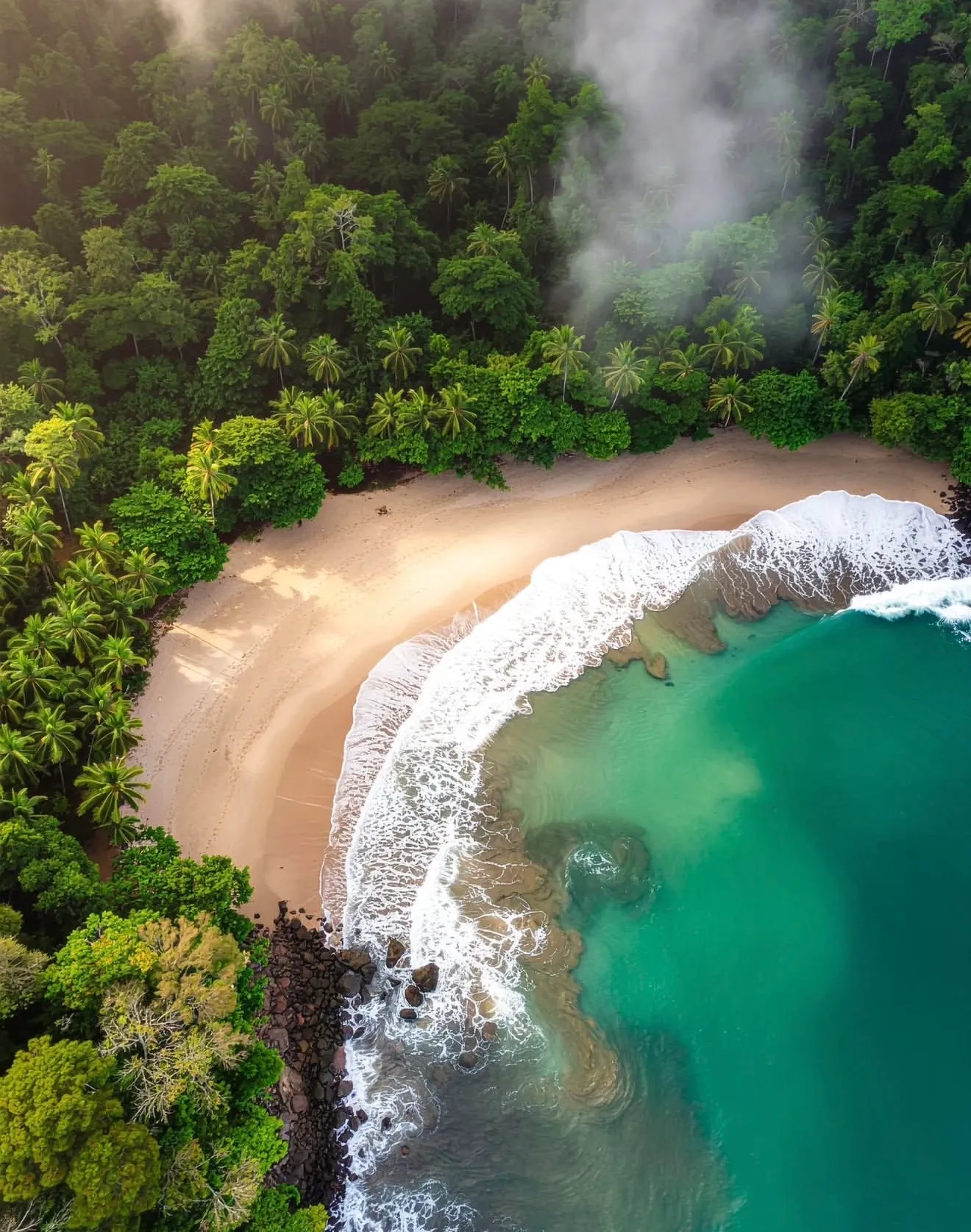
Manzanillo is located near the southern end of the coastal road. It offers a quieter community setting with access to beaches and forest areas.
This area is farther from Puerto Viejo town, so transportation planning is especially important. Travelers should consider whether they want a remote stay or regular access to Puerto Viejo's restaurants and services.
Visitors staying in Manzanillo should provide the complete hotel location when arranging an airport transfer or hotel pickup. A reservation labeled only as Puerto Viejo may not give the transportation provider enough information.
Cahuita and the Northern Caribbean Connection
Cahuita is located north of Puerto Viejo and can be visited as a day trip or included as a separate overnight destination. The area is known for its coastal environment, wildlife and protected natural spaces.
Travelers may choose to stay in Cahuita before continuing to Puerto Viejo or use Puerto Viejo as a base for visiting the area. The best arrangement depends on the number of travel days and preferred hotel style.
Moving between Cahuita and Puerto Viejo is easier when transportation is planned in advance, especially for visitors carrying luggage or changing hotels.
Best Things to Do in Puerto Viejo
The main things to do in Puerto Viejo center on beaches, wildlife, nature and the cultural character of the southern Caribbean coast.
Travelers can visit several beaches instead of spending the entire trip in one location. Each coastal area has its own setting, ocean conditions and level of development.
Nature activities are also a major part of the experience. Guided wildlife walks can help visitors identify animals and understand the surrounding ecosystem. Monkeys, sloths, birds and other wildlife may be seen in forested areas, but sightings are never guaranteed.
Visitors can also explore nearby communities, take guided cultural experiences or plan a trip toward Cahuita and Manzanillo. Activity requirements, pickup locations and weather policies should be confirmed before booking.
Beaches and Swimming Conditions
The beaches around Puerto Viejo are visually appealing, but ocean conditions can vary. Waves, currents, tides and weather may affect swimming safety.
Travelers should not assume that every beach is suitable for swimming every day. Local conditions should be checked after arrival, and posted warnings should be respected.
Families with children should pay particular attention to water conditions and choose beach areas carefully. A calm appearance near the shore does not always indicate safe swimming conditions farther out.
Early visits can be useful for avoiding the strongest heat and allowing flexibility if afternoon rain develops.
Wildlife and Responsible Tourism
The southern Caribbean coast supports a wide range of wildlife. Visitors may see animals near forest edges, hotel gardens and protected areas.
Wildlife should be observed from a respectful distance. Travelers should not feed animals, attempt to touch them or block their movement for photographs.
A knowledgeable local guide can improve wildlife viewing while reducing disturbance. Guided activities may also help travelers notice animals that are difficult to find without experience.
Visitors should keep food secured and follow hotel instructions when animals are present near accommodations.
Where to Stay in Puerto Viejo
The best place to stay depends on the traveler's preferred atmosphere and transportation plan.
Puerto Viejo town is convenient for restaurants, shops and a more active setting. Cocles offers beach access and a useful position between town and the southern beach communities.
Playa Chiquita and Punta Uva can be better for travelers seeking a quieter, more natural environment. Manzanillo provides an even more remote coastal experience but requires additional planning for restaurants, tours and transfers.
Hotel descriptions should be reviewed carefully. A property may be marketed as beachfront even when access involves a road, path or short walk. Travelers should confirm whether the room, restaurant and beach can be reached easily.
Those traveling without a rental car should ask about taxis, bicycle access, tour pickups and evening transportation before making a reservation.
Best Airport for Puerto Viejo
SJO, or Juan Santamaria International Airport, is commonly the most practical international airport for Puerto Viejo and the southern Caribbean coast.
SJO provides access to San Jose and the main road connection toward Limon and Puerto Viejo. Most travelers should expect a long ground transportation day between the airport and their Caribbean hotel.
LIR in Guanacaste is generally less convenient because it is on the opposite side of Costa Rica. Choosing LIR may create a significantly more complicated route unless the trip also includes northern Pacific destinations.
Travelers should compare flight arrival times as well as airfare. An arrival late in the day may require an overnight stay near San Jose before continuing to Puerto Viejo.
Transportation for a Puerto Viejo Caribbean Guide Itinerary
Transportation is a central part of any Puerto Viejo Caribbean guide itinerary because the destination is separated from the main international airport by a long cross-country route.
Private transportation offers direct pickup from SJO, a San Jose hotel or another Costa Rica destination. It is useful for families, groups, travelers with several bags and visitors staying outside Puerto Viejo town.
A private transfer can be arranged around the flight arrival and final hotel location. This avoids changing vehicles or finding onward transportation after reaching the Caribbean coast.
Shared shuttle service may be suitable when scheduled departure times match the traveler's itinerary. Shared shuttles can include other passengers and hotel stops, so total travel time and pickup rules should be reviewed in advance.
Travelers should provide the complete hotel name and location. Drop-off planning is different for a property in central Puerto Viejo than for a hotel near Punta Uva or Manzanillo.
Costa Rica Shuttles can help organize private transportation, shared shuttle service, airport transfers and door-to-door hotel transfers based on the arrival point and final destination.
Getting Around the Southern Caribbean Coast
Travelers can explore Puerto Viejo and the nearby beach areas using a combination of local transportation, bicycles, taxis, organized tours and private transfers.
Bicycles are widely associated with the destination, but they are not suitable for every traveler or every condition. Heat, rain, road traffic, limited lighting and the distance between communities should be considered.
Walking may be practical within parts of Puerto Viejo town, but the larger coastal region is spread out. Travelers staying outside town should not assume they can easily walk to every restaurant or activity.
Taxis or pre-arranged transportation can be useful for evening dining, hotel changes and travel with luggage. Tour operators may also provide pickup, depending on the activity and hotel location.
Puerto Viejo Weather
Puerto Viejo has a warm, humid Caribbean climate. Rain can occur throughout the year, and the weather pattern is different from the Pacific side of Costa Rica.
Travelers should not plan a Puerto Viejo trip using only general information about Costa Rica's dry and green seasons. Conditions on the Caribbean coast can follow a separate pattern.
Weather forecasts often show rain even when there are usable periods of sunshine. A rainy forecast does not always mean continuous rainfall throughout the day.
Travelers should prepare for changing conditions by packing light rain protection, quick-drying clothing, sun protection and suitable footwear.
Best Time to Visit Puerto Viejo
The best time to visit Puerto Viejo depends on beach conditions, rainfall preferences and the traveler's larger itinerary.
Periods with calmer weather may be better for beaches and outdoor activities, while wetter periods can bring lush vegetation and a quieter atmosphere. No month guarantees dry conditions on the Caribbean coast.
Travelers planning several nature activities should keep the schedule flexible. Important outdoor excursions can be arranged earlier in the day, leaving room to adjust if weather changes.
Transportation should also account for rain. Road conditions, visibility and traffic can affect the route between San Jose and Puerto Viejo.
Food and Local Culture
Puerto Viejo's food scene reflects the character of the southern Caribbean coast. Travelers can find local Caribbean cooking alongside international restaurants and casual beach dining.
Restaurant options are concentrated in and around Puerto Viejo town, with additional choices in Cocles and the southern beach communities. Opening days and hours may vary, particularly outside busy travel periods.
Visitors staying in remote accommodations should confirm dining options before arrival. A hotel that feels close to restaurants on a map may be less convenient at night or during heavy rain.
Travelers should approach local culture respectfully and remember that Puerto Viejo is a living community, not only a tourism destination.
Safety and Practical Travel Planning
Puerto Viejo can be enjoyed with normal travel awareness. Visitors should protect valuables, avoid leaving bags unattended and use caution in poorly lit areas at night.
Phones, cameras and wallets should not be left visible on the beach while swimming. Travelers should also avoid storing luggage in unattended vehicles.
Road travel after dark can be more tiring because of rain, limited visibility and unfamiliar conditions. Pre-arranged transportation can reduce the need to make last-minute travel decisions after a flight.
Visitors should keep hotel contact information available and confirm where their driver or shuttle will meet them.
Combining Puerto Viejo with Other Destinations
Puerto Viejo can be combined naturally with Cahuita and Manzanillo. These destinations are within the same Caribbean region and do not require crossing the country.
San Jose is commonly included at the beginning or end of the itinerary because most travelers use SJO. An overnight stay may be helpful when the international flight arrives late or departs early.
La Fortuna can also be combined with Puerto Viejo, but the hotel-to-hotel transfer should be treated as a dedicated travel day.
Combining Puerto Viejo with Manuel Antonio, Uvita, Tamarindo or Guanacaste creates a longer and more complex itinerary. Travelers should avoid adding too many distant regions to a short trip.
Private long-distance transportation can simplify multi-destination travel by providing direct hotel pickup and drop-off.
Suggested Puerto Viejo Caribbean Itinerary
A practical itinerary should allow enough time to experience several beach areas without changing hotels repeatedly.
The first day can be used for arrival, hotel check-in and exploring the immediate area. The next days can include Puerto Viejo town, Cocles, Playa Chiquita, Punta Uva and a guided wildlife activity.
Travelers with additional time can visit Cahuita or continue toward Manzanillo. A free day is useful for weather changes, beach time or an activity that was not scheduled in advance.
The final travel day should include enough time for the return to San Jose or the next Costa Rica destination. Tight airport connections should be avoided.
Frequently Asked Questions
Is Puerto Viejo on the Caribbean side of Costa Rica?
Yes. Puerto Viejo de Talamanca is located on Costa Rica's southern Caribbean coast in Limon Province.
What is Puerto Viejo known for?
Puerto Viejo is known for Caribbean beaches, tropical forest, wildlife, local culture, surfing and access to nearby areas such as Cocles, Punta Uva and Manzanillo.
What airport is best for Puerto Viejo?
SJO near San Jose is commonly the most practical international airport for Puerto Viejo. Ground transportation should be arranged before arrival.
How do I get from San Jose Airport to Puerto Viejo?
Travelers can use a private airport transfer or a shared shuttle when the departure schedule matches the flight arrival and hotel location.
Is Puerto Viejo the same as Puerto Viejo de Sarapiqui?
No. Puerto Viejo de Talamanca is on the southern Caribbean coast. Puerto Viejo de Sarapiqui is in northern Costa Rica.
Which area is best for staying in Puerto Viejo?
Puerto Viejo town is useful for restaurants and services. Cocles provides convenient beach access, while Playa Chiquita, Punta Uva and Manzanillo offer quieter surroundings.
Can I visit Puerto Viejo without renting a car?
Yes. Travelers may use shared shuttles, private transportation, taxis, bicycles and organized tours. The best option depends on the hotel location and itinerary.
Are shared shuttles available to Puerto Viejo?
Shared shuttle service may be available from San Jose and other common tourism destinations. Schedules and pickup locations should be confirmed before booking.
Is private transportation available from SJO to Puerto Viejo?
Yes. Private transportation can provide direct airport pickup and door-to-door service to hotels in Puerto Viejo and nearby beach communities.
How many days should I spend in Puerto Viejo?
Several days allow time to visit different beaches, explore the town, take a wildlife activity and plan around changing Caribbean weather.
Is Puerto Viejo good for families?
Puerto Viejo can work well for families, but hotel location, swimming conditions, transportation and activity requirements should be evaluated carefully.
What destinations can I combine with Puerto Viejo?
Cahuita and Manzanillo are natural additions to a Caribbean itinerary. San Jose and La Fortuna can also be included with sufficient travel time.
Conclusion
This Puerto Viejo Caribbean guide shows why the destination is more than one beach town. Puerto Viejo connects travelers with Cocles, Playa Chiquita, Punta Uva, Manzanillo, Cahuita and the wider southern Caribbean coast.
The right hotel area depends on whether the traveler prefers restaurants and activity in town or a quieter setting closer to the beach and rainforest. Weather flexibility, local transportation and the exact accommodation location should all be considered before booking.
For most international visitors, SJO is the strongest airport choice. Pre-arranged private transportation, shared shuttle service or a direct airport transfer can simplify the long route from San Jose to Puerto Viejo and provide door-to-door service to the correct Caribbean hotel.