Montezuma Travel Guide
Explore Montezuma, Costa Rica, including waterfalls, beaches, wildlife, Cabo Blanco, activities, Cóbano Airport, ferry access, transportation, weather, and visitor tips.
Montezuma Costa Rica Travel Guide
Overview
Montezuma, Costa Rica is a small beach town on the southern Nicoya Peninsula known for waterfalls, tropical forest, beaches, wildlife, restaurants, wellness activities, and a relaxed bohemian atmosphere.
The destination combines a compact town center with rugged coastline and dense vegetation. Visitors can hike to waterfalls in the morning, explore beaches during the afternoon, and reach nearby nature destinations such as Cabuya and Cabo Blanco.
Montezuma feels smaller and more rustic than neighboring Santa Teresa, making it particularly attractive to couples, independent travelers, nature lovers, backpackers, and visitors who prefer a walkable coastal town.
Quick Answer
Montezuma is best known for:
Montezuma Waterfalls
Tropical beaches
Jungle scenery
Wildlife
Bohemian atmosphere
Yoga and wellness
Beach walks
Boat excursions
Proximity to Cabuya and Cabo Blanco
Two to four nights works well for most visitors, while longer stays allow time for waterfalls, beaches, wildlife, Cabo Blanco, and neighboring southern Nicoya destinations.
Where Is Montezuma?
Montezuma is located in the Cóbano district of Puntarenas Province on the southeastern side of the Nicoya Peninsula.
Nearby destinations include:
Cabuya
Cóbano
Tambor
Santa Teresa
Mal País
Cabo Blanco
The town is relatively remote from Costa Rica's international airports, so transportation should be planned before arrival.
Travelers coming from SJO can use scheduled services such as San Jose Airport to Montezuma Shared Shuttle, while private transportation, rental cars, buses, ferry connections, and domestic flights are additional options.
Montezuma Waterfalls
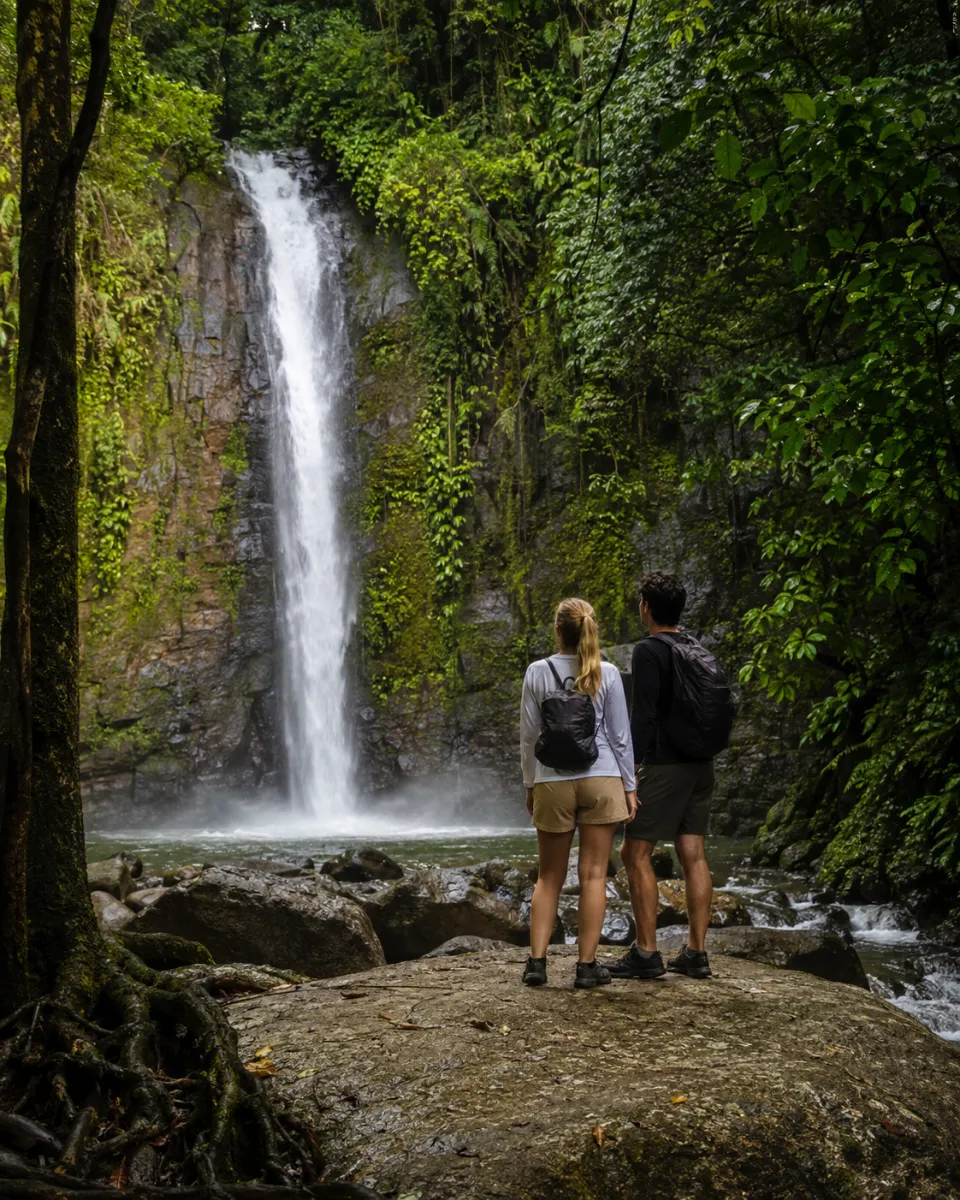
The Montezuma Waterfalls are the area's best-known natural attraction.
Costa Rica's tourism authority describes the principal waterfall as approximately 20 meters high, reached after roughly a 20-minute walk along the river area from town.
The waterfall system includes different levels rather than one single viewing point.
Visitors should expect:
Rocks
Uneven terrain
Slippery surfaces
River crossings or wet sections
Steeper access toward some upper areas
Conditions can change significantly after heavy rain.
Wear suitable footwear and check local conditions before entering pools or attempting more difficult sections. Do not assume that jumping from rocks or waterfall ledges is safe.
Beaches in Montezuma
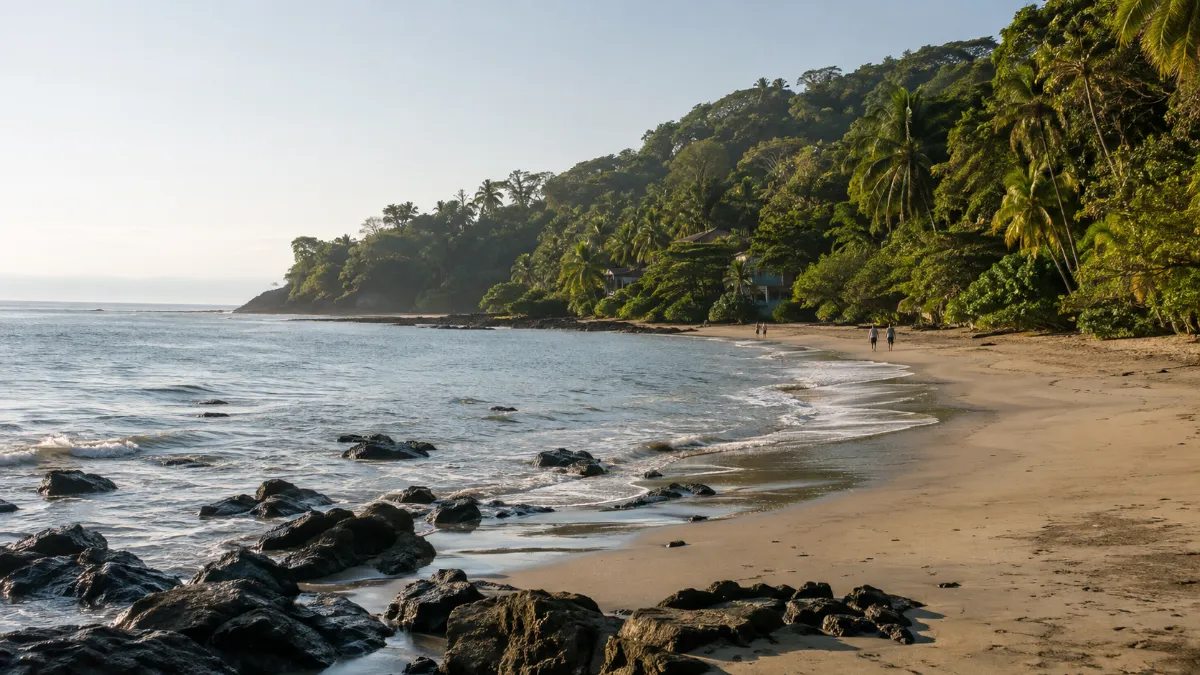
Montezuma's coastline combines sandy beaches, rocky areas, tropical vegetation, and natural pools exposed during low tide.
The main beach near town is a small bay. Continuing north, visitors can follow the coast toward additional beaches such as Playa Cocal. Costa Rica's tourism authority highlights the combination of white-sand sections, rocky shoreline, vegetation, monkeys, and birds.
Popular beach activities include:
Walking
Relaxing
Photography
Tide-pool exploration
Wildlife observation
Swimming when conditions permit
Ocean conditions vary considerably. Waves, currents, rocks, tides, and weather should always be evaluated before entering the water.
Playa Las Manchas
Playa Las Manchas is a scenic beach south of central Montezuma known for lighter sand, turquoise water, and dark volcanic rocks.
Although it can look calm, currents can become dangerous in some conditions.
Visitors should therefore avoid assuming that visually calm water means safe swimming, particularly when unfamiliar with the beach.
Wildlife
Montezuma is surrounded by forest and coastal vegetation.
Possible sightings include:
Howler monkeys
White-faced capuchin monkeys
Iguanas
Coatis
Tropical birds
Butterflies
Other reptiles and small mammals
Wildlife sightings are never guaranteed, but early morning and late afternoon are often productive times for walking and birdwatching.
Do not feed monkeys or other wild animals.
Cabo Blanco Absolute Natural Reserve
Cabo Blanco Absolute Natural Reserve is one of the most important protected areas near Montezuma.
The regular visitor entrance is reached through Cabuya, rather than directly from Montezuma.
Cabo Blanco protects Pacific lowland forest and habitat for monkeys, deer, coatis, peccaries, armadillos, birds, and many other species.
The reserve works best as a dedicated excursion because hiking can require several hours.
Travelers should confirm current operating days, trail-access times, and conditions before leaving Montezuma.
Things to Do in Montezuma
Hiking
Walking opportunities range from waterfall trails to beaches and protected forest areas.
Conditions can be hot, humid, muddy, and uneven depending on the season.
Yoga and Wellness
Montezuma has long attracted yoga, wellness, massage, and retreat-oriented travelers.
Offerings change according to season and individual hotels or studios.
Boat Tours
Boat excursions may connect Montezuma with islands, snorkeling areas, fishing grounds, or other coastal destinations.
Availability depends on ocean conditions and operator schedules.
Fishing
Sport and recreational fishing trips can be arranged with local operators.
Marine conditions and target species vary seasonally.
Visit Cabuya
Cabuya provides a quieter coastal experience south of Montezuma and is also the road gateway to Cabo Blanco.
Its island cemetery, rocky coastline, wildlife, and rural atmosphere make it a worthwhile half-day or full-day excursion.
Best Time to Visit Montezuma
December to April
The dry season generally provides:
More sunshine
Less frequent rain
Easier hiking conditions
More predictable road travel
This is also one of the busiest periods on the Nicoya Peninsula.
May to November
The green season brings:
Lusher vegetation
More active waterfalls
More frequent rain
Muddy trails
More variable road conditions
Waterfalls can become more powerful after rainfall, but higher water levels can also make river areas more hazardous.
Travelers should prioritize current conditions rather than assuming stronger waterfalls automatically mean better access.
How to Get to Montezuma
From San Jose Airport
A common overland route is:
SJO → Route 27 → Puntarenas → Paquera Ferry → Cóbano → Montezuma
The complete trip normally requires approximately 5.5 to 7 hours when using shared transportation, depending on traffic, ferry coordination, weather, stops, and road conditions.
The ferry does not arrive in Montezuma. Ground transportation is required after reaching Paquera.
Travelers should review the current Puntarenas to Paquera Ferry Guide because schedules and operating conditions can change.
From Guanacaste Airport
Travelers arriving through Guanacaste Airport (LIR) normally travel south through the Nicoya Peninsula.
A Puntarenas ferry is generally unnecessary because both the airport and Montezuma are on the peninsula side of the Gulf of Nicoya.
The journey is long and should be planned as a major ground transfer rather than a short airport ride.
Cóbano Airport
Cóbano Airport (ACO) is the closest regional airport to Montezuma.
Current domestic schedules include SJO–ACO services, making Cóbano the relevant air gateway for Montezuma, Santa Teresa, Mal País, and surrounding southern Nicoya destinations.
Older travel guides may still refer to Tambor Airport. Travelers should use current Cóbano Airport information instead.
Cóbano Airport is approximately 9 kilometers from Montezuma, with typical ground transportation taking around 15 to 25 minutes depending on road and traffic conditions.
Travelers arriving by air can arrange Cóbano Airport to Montezuma Private Transportation.
Do You Need a Rental Car?
Not necessarily.
Central Montezuma is compact enough that many visitors can walk to restaurants, accommodations, the beach, and selected attractions.
A rental car becomes more useful for exploring:
Cabuya
Cabo Blanco
Cóbano
Santa Teresa
Mal País
Tambor
More remote accommodations
Travelers can also arrive without a vehicle and collect one later through Car Rental in Cóbano.
Do You Need a 4x4?
A 4x4 is not automatically required for every Montezuma trip.
Vehicle choice depends on:
Exact accommodation
Hillside access
Unpaved roads
Rainfall
Planned excursions
Other destinations in the itinerary
Some properties are accessible with regular vehicles, while steep, loose, muddy, or rural roads may justify higher clearance or 4x4.
Confirm the final road directly with your accommodation before reserving a vehicle.
How Long Should You Stay?
Two nights provides enough time for a quick introduction.
Three or four nights allows a more comfortable combination of:
Waterfalls
Beaches
Wildlife
Restaurants
Cabuya
Cabo Blanco
Five nights or longer works well for travelers who prefer a slower pace or want to combine Montezuma with wellness and multiple peninsula excursions.
Visitor Tips
For a smoother stay:
Reserve transportation in advance
Use Cóbano Airport rather than outdated Tambor Airport information
Verify ferry schedules before leaving SJO
Wear proper footwear at the waterfalls
Check recent rainfall before river activities
Evaluate ocean conditions before swimming
Carry insect repellent and sun protection
Confirm rural accommodation access
Avoid feeding wildlife
Allow additional road time during heavy rain
Frequently Asked Questions
What is Montezuma known for?
Montezuma is best known for its waterfalls, beaches, jungle scenery, wildlife, and relaxed bohemian atmosphere.
How do you get to Montezuma from San Jose?
The standard ground route normally uses the Puntarenas–Paquera ferry followed by road transportation through Cóbano to Montezuma.
What is the closest airport to Montezuma?
Cóbano Airport (ACO) is the closest regional airport. Current domestic flights operate between SJO and Cóbano.
Is Tambor Airport still the airport for Montezuma?
Travelers should now plan scheduled domestic air travel through Cóbano Airport (ACO) rather than relying on older Tambor Airport information.
Are Montezuma Waterfalls easy to reach?
The lower waterfall is relatively close to town, but the route includes riverbed terrain and rocks. Upper sections can require more effort.
Can you swim at Montezuma beaches?
Swimming may be possible when conditions are appropriate, but currents, rocks, waves, and tides vary by beach and day.
Do you need a 4x4?
Not automatically. Choose a vehicle according to the final accommodation and the most difficult road included in your itinerary.
Is Montezuma crowded?
It is generally smaller and more relaxed than Santa Teresa, although waterfalls, central beaches, and restaurants can become busy during peak travel periods.
Conclusion
Montezuma, Costa Rica combines waterfalls, tropical beaches, wildlife, forest, restaurants, and a distinctive relaxed atmosphere in one compact southern Nicoya Peninsula destination.
Its greatest advantage is variety: visitors can hike beside a jungle river, spend time at the beach, explore wildlife habitat, visit Cabuya and Cabo Blanco, and still return to a small walkable town.
Transportation requires advance planning, particularly from SJO, but access has improved significantly with Cóbano Airport (ACO) only a short drive away.
For travelers looking for a nature-focused beach destination with more activity than Cabuya but a smaller-town feel than Santa Teresa, Montezuma remains one of the most distinctive places on the Nicoya Peninsula.