Monteverde Wildlife Guide
A practical guide to wildlife watching in Monteverde, including birds, mammals, cloud forest reserves, guided tours, weather, and transportation.
Monteverde Wildlife Guide: Animals, Birds and Cloud Forest Experiences
Monteverde is one of Costa Rica's most important wildlife destinations. Its cool mountain climate, dense cloud forest, changing elevations, and protected habitats support an impressive variety of birds, mammals, amphibians, reptiles, insects, and plant life.
A successful Monteverde wildlife experience requires patience and realistic expectations. Animals move freely through the forest, visibility can change quickly, and sightings are never guaranteed. Early morning walks with a naturalist guide are usually a strong choice for birdwatching, while guided night walks reveal animals that remain hidden during the day.
Transportation also requires advance planning. Monteverde is reached by mountain roads, and the best airport, transfer type, and route depend on the rest of the travel itinerary.
Why Monteverde Is Famous for Wildlife
Monteverde is known for its cloud forest ecosystem. Moist air rises through the mountains and creates frequent mist, supporting mosses, orchids, bromeliads, ferns, vines, and trees covered with plant life.
This dense vegetation provides food, shelter, and nesting areas for many species. Elevation changes also create different habitats within a relatively compact region. A traveler may see different birds and animals by visiting a high-elevation cloud forest, a lower forest reserve, and an open forest edge.
Wildlife watching in Monteverde is not similar to visiting a zoo or animal sanctuary. Most sightings are brief and depend on movement, weather, feeding activity, season, and the experience of the guide. Binoculars and a spotting scope can make a major difference.
Best Wildlife to See in Monteverde
Monteverde supports a wide range of wildlife, but birds are often the main attraction. Mammals, frogs, reptiles, insects, and nocturnal animals are also present, although they may be more difficult to find.
The wildlife seen during a visit will depend on the reserve, elevation, weather conditions, time of day, and season.
Birds of Monteverde
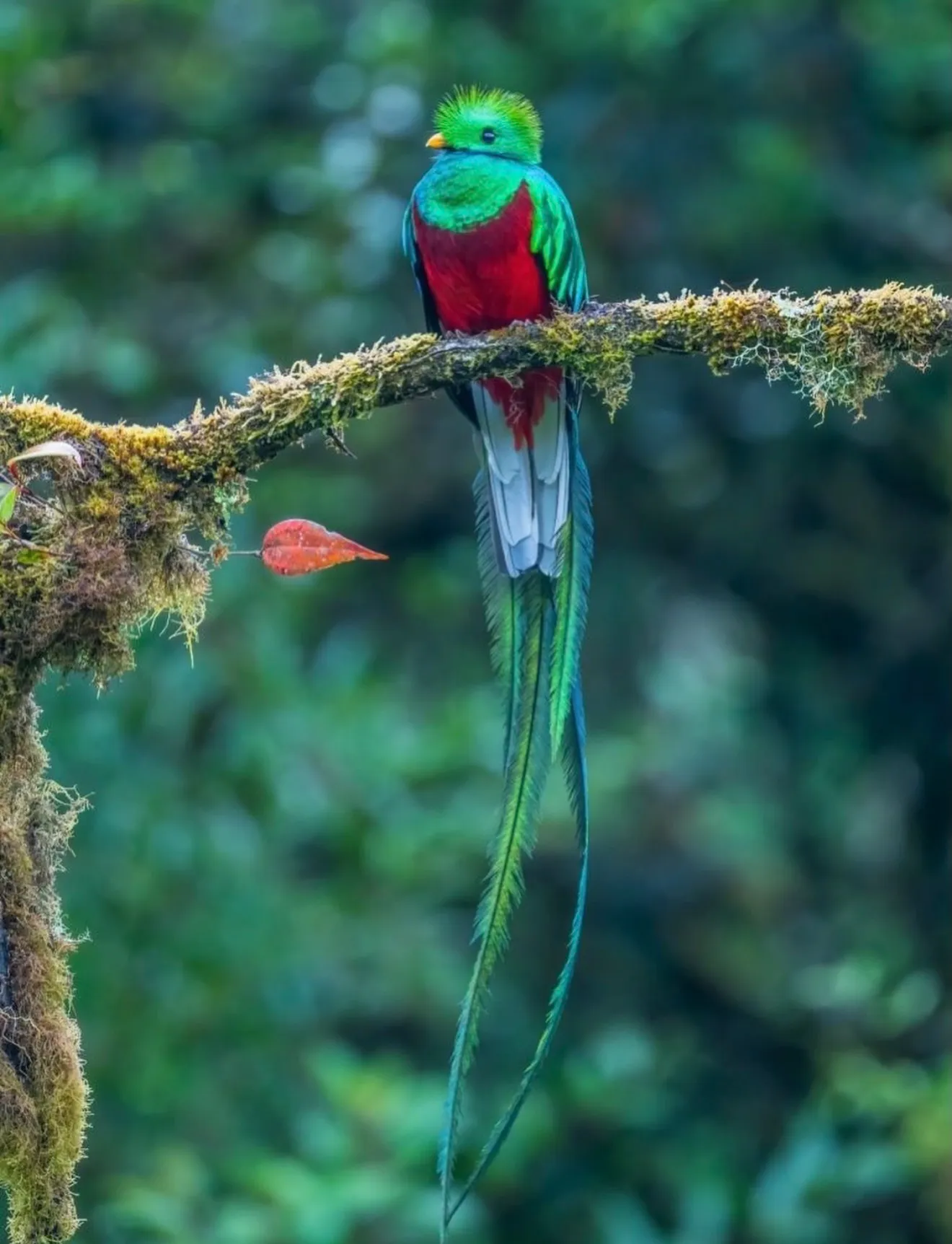
The resplendent quetzal is one of the most searched-for birds in Monteverde. Its bright colors and long tail feathers make it easy to recognize when it appears in an open position, but it can remain difficult to see inside dense vegetation.
Naturalist guides often listen for calls, monitor fruiting trees, and use spotting scopes to locate quetzals. Even during favorable conditions, visitors should not expect a guaranteed sighting.
Monteverde is also associated with hummingbirds, toucans, toucanets, trogons, motmots, tanagers, woodpeckers, flycatchers, and many smaller forest birds. Some species prefer the upper cloud forest, while others are more common along forest edges and at lower elevations.
The three-wattled bellbird is another important bird associated with the Monteverde area. Its distinctive call can travel through the forest, although its presence and visibility can vary during the year.
Early morning is generally the most productive time for birdwatching. Birds are often more active before the temperature rises and before trails become busier.
Mammals in Monteverde
Mammals are present throughout the Monteverde area, but many remain hidden by thick vegetation. Coatis and agoutis are among the animals visitors may see near trails, gardens, forest edges, or feeding areas.
Monkeys can also be present, especially in lower and warmer habitats around the region. White-faced capuchin monkeys and mantled howler monkeys may be encountered, although their location changes as groups move through the forest.
Nocturnal mammals may include kinkajous, olingos, bats, and other small forest species. These animals are more likely to be found during a guided night walk than during a daytime reserve visit.
Larger mammals live in the broader forest ecosystem, but sightings are uncommon. Visitors should not plan a Monteverde wildlife trip around seeing rare or secretive animals.
Sloths may be seen in parts of the wider region, particularly in lower and warmer areas, but they are less predictable in the cool, high-elevation cloud forest. Travelers primarily interested in sloths may have better opportunities when combining Monteverde with La Fortuna, the Caribbean region, or lower-elevation Pacific destinations.
Frogs, Reptiles, and Insects
The humid forest environment supports frogs, salamanders, lizards, snakes, insects, spiders, and many other small species. These animals can be difficult to notice without a trained guide because their colors, patterns, and behavior help them blend into the vegetation.
Night tours are especially useful for finding frogs, sleeping birds, insects, and reptiles. A guide can search leaves, branches, tree trunks, and forest edges while helping visitors observe animals without touching or disturbing them.
Not every night walk produces the same sightings. Rain, temperature, moonlight, wind, and recent weather can affect animal activity.
Best Places to See Monteverde Wildlife
Monteverde has several protected areas, and each offers a different environment. Choosing more than one reserve can provide a broader wildlife experience.
Monteverde Cloud Forest Biological Reserve
The Monteverde Cloud Forest Biological Reserve is one of the best-known protected areas in the region. It offers high-elevation cloud forest, dense vegetation, misty trails, and opportunities to observe forest birds and plant life.
The reserve is an important choice for travelers who want to experience the classic cloud forest environment. Wildlife can be difficult to spot because of the dense canopy, so a naturalist guide is valuable.
Trail conditions may be wet or muddy even when the weather near the hotel appears clear. Visitors should prepare for changing conditions.
Curi-Cancha Reserve
Curi-Cancha Reserve includes a mixture of forest, open areas, and forest edges. This combination can create useful wildlife viewing conditions because birds and animals are sometimes easier to see outside the densest vegetation.
The reserve is particularly popular for guided birdwatching. Quetzals, hummingbirds, toucanets, trogons, and other forest birds may be observed depending on the season and current feeding activity.
Open areas can also provide better light for photography than the darker interior of a cloud forest.
Santa Elena Cloud Forest Reserve
Santa Elena Cloud Forest Reserve provides another opportunity to explore high-elevation forest. It is known for misty conditions, dense vegetation, mountain scenery, and a quieter cloud forest atmosphere.
Visitors should expect a forest experience rather than constant wildlife sightings. The reserve can be rewarding for travelers interested in ecology, plant life, bird calls, and the overall cloud forest environment.
Forest Edges, Hotel Grounds, and Gardens
Wildlife watching is not limited to formal reserves. Hotel gardens, forest edges, flowering plants, and quiet roads can attract hummingbirds, tanagers, toucans, coatis, and other animals.
Travelers should ask their hotel whether the property has trails, observation areas, feeders, or nearby guided walks. The location of the hotel matters because accommodations are spread across Santa Elena, Monteverde, and surrounding mountain areas.
Wildlife should never be fed unless it is part of a properly managed conservation or observation program. Feeding wild mammals can change their behavior and create safety problems.
Day Tours vs Night Walks
Day tours and night walks provide different experiences. Travelers interested in a complete Monteverde wildlife guide should consider both.
Morning tours are usually better for birdwatching. Guides can listen for calls, locate feeding areas, and use scopes to observe birds high in the canopy.
Afternoon walks may be quieter, but wildlife activity can vary depending on weather and temperature. Mist and rain may reduce visibility while creating the classic cloud forest atmosphere.
Night walks focus on animals that become active after sunset. Visitors may see insects, frogs, sleeping birds, spiders, reptiles, and nocturnal mammals. These tours usually take place on designated trails within private reserves or protected properties.
A night walk should be arranged with an established guide or tour operator. Visitors should not enter unfamiliar forest trails alone after dark.
Is a Wildlife Guide Necessary in Monteverde?
A guide is not required for every reserve, but guided tours greatly improve the chances of noticing wildlife. Many animals remain motionless, hide behind leaves, or stay high in the canopy.
Local naturalist guides understand animal calls, feeding behavior, seasonal movement, and common observation areas. They may also carry a spotting scope that allows several people to view a bird without leaving the trail.
Independent walking can still be enjoyable for travelers interested in scenery, hiking, photography, and plant life. However, visitors with a specific goal, such as seeing a quetzal or identifying cloud forest birds, will usually benefit from a guided morning tour.
A practical plan is to take a guided walk first and return independently afterward. The guided experience helps visitors understand what to listen for and where to look.
Best Time to See Wildlife in Monteverde
Monteverde wildlife can be observed throughout the year. The most suitable season depends on whether the priority is trail comfort, bird activity, photography, fewer visitors, or the green cloud forest environment.
Drier periods can provide easier trail conditions and clearer visibility. However, Monteverde remains cool, windy, misty, or wet at times, even during months commonly associated with Costa Rica's dry season.
The green season brings more frequent rain and a lush forest environment. Some animals may become active during or after rainfall, but heavy weather can affect visibility and trail conditions.
Seasonal food sources and animal movement are often more important than the calendar alone. A local guide can provide current information about recent sightings without promising that a particular species will appear.
Travelers should leave enough time in the itinerary for changing weather. Scheduling only one short wildlife tour may reduce flexibility if heavy rain or strong wind arrives at the same time.
What to Wear for Wildlife Watching
Monteverde is cooler than many Costa Rica beach destinations. Conditions can change between sunny, windy, misty, and rainy during the same day.
Visitors should wear comfortable closed shoes with traction, lightweight layers, and rain protection. Dark or neutral clothing can be less distracting when observing wildlife. Bright lights, loud conversations, and sudden movements may cause animals to retreat.
Binoculars are useful even on a guided tour. A waterproof bag or cover can protect phones, cameras, and travel documents from mist and rain.
For night walks, visitors should follow the guide's instructions and remain on the designated trail. Animals should not be handled, moved, or surrounded for photographs.
Wildlife Photography in Monteverde
Cloud forest photography can be challenging because of low light, mist, moving animals, and dense vegetation. A large zoom range is useful for birds and mammals, while a smaller lens or phone camera can work well for plants, insects, and close forest details.
Photography is often easier along forest edges, clearings, gardens, and open sections of a reserve. Inside the forest, branches and leaves may block the subject.
Visitors should avoid damaging plants or leaving the trail to improve a photograph. Flash rules can vary by location and species, so photographers should follow the reserve and guide instructions.
Patience is more useful than chasing an animal through the forest. Remaining quiet in one observation area can produce better opportunities.
How Many Days Do You Need for Monteverde Wildlife?
Two or three nights allow travelers to experience more than one wildlife activity without rushing. A typical plan may include an early morning guided reserve tour, an independent afternoon walk, and a guided night tour.
Additional time is useful for birdwatchers, photographers, families traveling at a slower pace, and visitors combining wildlife with hanging bridges, coffee experiences, gardens, or other Monteverde activities.
Arrival and departure days should not be treated as full wildlife days. Mountain transportation can take longer than expected, and travelers may arrive after morning wildlife activity has ended.
Where to Stay for Wildlife Experiences
Santa Elena is the main service area, with restaurants, shops, accommodations, and transportation connections. It can be a practical base for travelers who want access to different reserves and activities.
Hotels outside the center may provide quieter surroundings, forest views, gardens, or private trails. However, visitors should confirm how they will reach reserves, restaurants, and tour meeting points.
A remote hotel can be excellent for wildlife watching but less convenient without a rental vehicle, private driver, hotel shuttle, or pre-arranged transportation. Travelers should review the exact hotel location before booking transfers.
Best Airport for a Monteverde Wildlife Trip
SJO and LIR can both work for Monteverde. The right airport depends on flight availability and the destinations included before or after the cloud forest.
SJO can fit itineraries that include San Jose, La Fortuna, Jaco, Manuel Antonio, or other central and southern destinations. LIR can fit itineraries that include Guanacaste, Tamarindo, Papagayo, Samara, Nosara, or northern Pacific beaches.
Neither international airport is located in Monteverde. Travelers must continue by road, and the mountain approach requires careful route planning.
Choosing an airport based only on the map can create an inefficient itinerary. Travelers should consider the entire route, including the first hotel, final beach destination, and airport used for departure.
Transportation for a Monteverde Wildlife Guide Itinerary
Private transportation and shared shuttle services are the main options for travelers who do not want to drive to Monteverde.
A private transfer offers direct hotel pickup, space for luggage, and departure times planned around the itinerary. It can be particularly useful for families, groups, photographers carrying equipment, late arrivals, and travelers moving between hotels in different regions.
Shared shuttle service can be practical on common tourism routes when departure schedules match the travel plan. Pickup areas, luggage policies, and hotel accessibility should be confirmed before booking.
Road conditions and travel times can change with weather, traffic, construction, and the exact hotel location. The final mountain portion may feel slower than travelers expect from the distance shown on a map.
Pre-arranged door-to-door transportation can simplify connections from San Jose, Liberia Airport, La Fortuna, Tamarindo, Manuel Antonio, Santa Teresa, and other major destinations. Costa Rica Shuttles can help organize private transportation, shared shuttle service, airport transfers, and hotel-to-hotel transportation for a Monteverde wildlife itinerary.
Combining Monteverde with Other Wildlife Destinations
Monteverde combines well with La Fortuna because the two destinations offer different ecosystems and wildlife experiences. Monteverde is known for cool cloud forest, while the La Fortuna and Arenal region includes warmer rainforest habitats, wetlands, and lower-elevation wildlife areas.
Manuel Antonio can add coastal rainforest, beaches, monkeys, and other tropical wildlife. This combination provides a contrast between mountain cloud forest and the Central Pacific coast.
Guanacaste destinations can add tropical dry forest and marine environments. Travelers using LIR may combine Monteverde with Tamarindo, Papagayo, or other northern Pacific areas.
Multi-destination itineraries should be designed around logical travel flow. Moving back and forth between regions can use valuable wildlife viewing time and create unnecessary transportation days.
Responsible Wildlife Watching
Responsible wildlife tourism protects both animals and visitors. Travelers should remain on marked trails, keep a respectful distance, avoid loud noises, and follow instructions from guides and reserve staff.
Wild animals should not be touched, chased, surrounded, or encouraged to approach for photographs. Food should not be offered to monkeys, coatis, birds, or other wildlife.
Visitors should also avoid removing plants, insects, feathers, rocks, or other natural materials. Small actions can affect sensitive habitats when repeated by many travelers.
Choosing guided experiences in established reserves supports conservation, environmental education, trail maintenance, and responsible access to the cloud forest.
Frequently Asked Questions About Monteverde Wildlife
What wildlife can you see in Monteverde?
Visitors may see quetzals, hummingbirds, toucanets, trogons, tanagers, coatis, agoutis, monkeys, bats, frogs, insects, and reptiles. Sightings vary by reserve, elevation, season, weather, and time of day.
Is Monteverde good for seeing quetzals?
Monteverde is one of Costa Rica's best-known destinations for quetzal watching. However, sightings are not guaranteed. A guided early morning tour can improve the chances of locating birds and viewing them through a spotting scope.
Are there sloths in Monteverde?
Sloths may be found in parts of the wider region, especially at lower and warmer elevations, but they are not the most predictable wildlife sighting in the high cloud forest. Travelers focused on sloths may consider combining Monteverde with another lower-elevation destination.
What is the best time of day for wildlife watching?
Early morning is generally the strongest time for bird activity. Night walks are useful for nocturnal mammals, frogs, insects, reptiles, and sleeping birds.
Do I need a guide in Monteverde?
Visitors can walk independently in many reserves, but a naturalist guide can identify calls, find camouflaged animals, explain the ecosystem, and provide access to a spotting scope.
Which reserve is best for wildlife in Monteverde?
There is no single reserve that guarantees the most wildlife. The Monteverde Cloud Forest Biological Reserve provides a classic cloud forest experience, Curi-Cancha offers a mixture of forest and open habitats, and Santa Elena provides another high-elevation forest environment.
Can I see wildlife without entering a reserve?
Yes. Hotel gardens, forest edges, flowering plants, and quiet roads can attract birds and small animals. Protected reserves usually provide better trails, habitat protection, and access to professional guides.
Is a Monteverde night walk worth it?
A guided night walk provides access to a different group of animals than a daytime tour. It can be especially useful for seeing insects, frogs, sleeping birds, reptiles, and nocturnal mammals.
What should I bring for a wildlife tour?
Closed shoes, rain protection, comfortable layers, water, binoculars, and protection for cameras or phones are useful. Travelers should prepare for cool temperatures, wind, mist, and changing rain conditions.
Should I fly into SJO or LIR for Monteverde?
Both airports can work. SJO may fit itineraries connected with central or southern Costa Rica, while LIR may fit itineraries connected with Guanacaste and the northern Pacific. The best airport depends on the complete route.
Are shared shuttles available to Monteverde?
Shared shuttle services operate on common tourism corridors, but schedules and pickup areas must match the itinerary. Private transportation is more flexible for airport arrivals, groups, remote hotels, and custom departure times.
Can I book a private airport transfer to Monteverde?
Yes. Private airport transportation can be arranged from SJO or LIR to hotels in the Monteverde area. The exact hotel location should be provided because accommodations are spread across the mountains.
Planning Your Monteverde Wildlife Experience
A well-planned Monteverde wildlife guide itinerary should include at least one guided morning walk, enough time for changing weather, and a night tour for a different view of the forest. Visiting more than one habitat can improve the variety of wildlife observations.
Travelers should select accommodations based on both comfort and location, then arrange transportation before arrival. Private transportation, shared shuttles, airport transfers, and hotel-to-hotel transfers can connect Monteverde with SJO, LIR, La Fortuna, Guanacaste, Manuel Antonio, and other Costa Rica travel regions.
Wildlife sightings can never be guaranteed, but careful timing, an experienced guide, responsible behavior, and practical transportation planning can make a Monteverde wildlife experience more rewarding.