
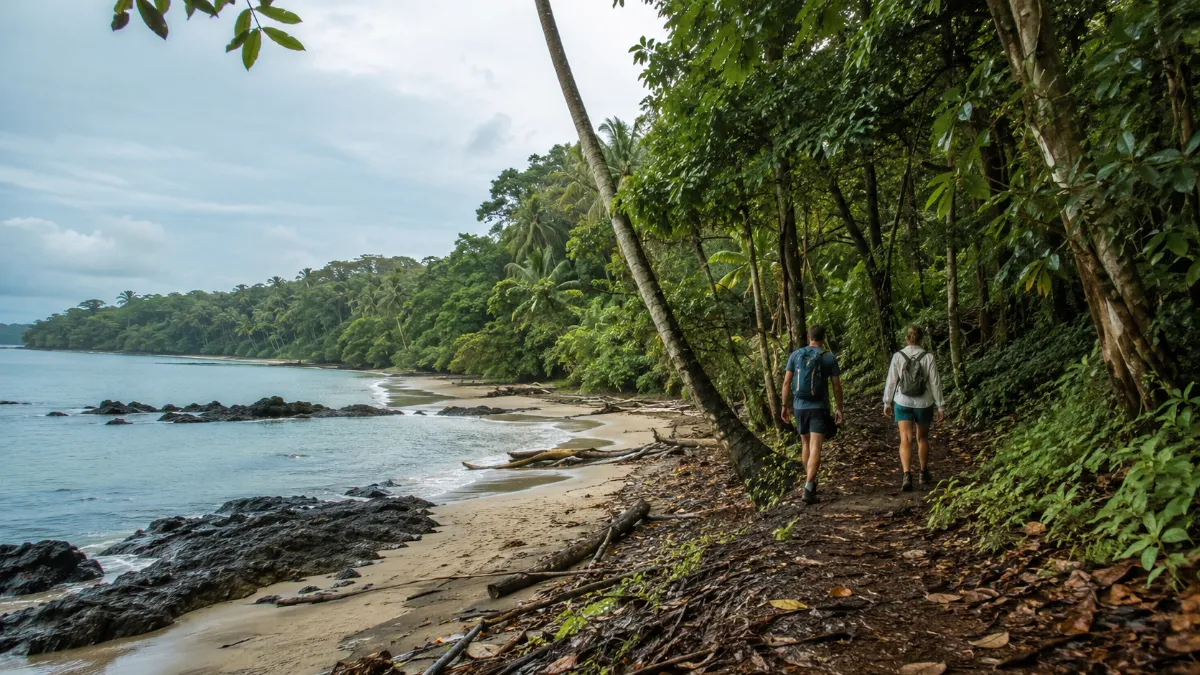
Manzanillo Wildlife Refuge
Explore Gandoca-Manzanillo Wildlife Refuge on Costa Rica’s Caribbean coast, including Manzanillo, Punta Mona, rainforest trails, coral reefs, wildlife, weather, access, and travel tips.
Gandoca-Manzanillo Wildlife Refuge Travel Guide
Overview
Gandoca-Manzanillo National Wildlife Refuge protects one of the most diverse coastal environments on Costa Rica’s southern Caribbean coast.
The protected area combines tropical rainforest, beaches, wetlands, lagoons, coral reefs, seagrass areas, and marine habitat between the Cocles and Sixaola river areas.
Unlike a conventional national park centered around one entrance, Gandoca-Manzanillo includes both public and private land and has distinct Manzanillo and Gandoca sectors.
The refuge is particularly attractive to travelers interested in hiking, wildlife, beaches, snorkeling, birdwatching, and a quieter Caribbean nature experience.
Quick Answer
For most first-time visitors staying around Puerto Viejo, the Manzanillo Sector is the easiest way to experience the refuge.
Visitors can combine:
Tropical forest
Coastal trails
Wildlife watching
Caribbean beaches
Birdwatching
Snorkeling when conditions are appropriate
Longer hiking toward Punta Mona
SINAC currently lists the refuge as open daily from 8:00 a.m. to 4:00 p.m. Visitors should confirm current access conditions before arrival.
For broader planning along the coast, see Puerto Viejo Travel Guide.
Where Is Gandoca-Manzanillo Wildlife Refuge?
The refuge is located in Talamanca, Limón Province, near Costa Rica’s border with Panama.
The Manzanillo entrance is reached by continuing south along the coastal road from Puerto Viejo through communities such as:
Cocles
Playa Chiquita
Punta Uva
Manzanillo
The Gandoca Sector uses a different approach through the Bribri–Sixaola area and should not be confused with the Manzanillo entrance.
This distinction is important when using navigation or arranging transportation.
Manzanillo Sector
The village of Manzanillo is the most practical starting point for many visitors.
From the village, travelers can enter forest and coastal trails where the landscape quickly becomes less developed.
The experience can include:
Dense tropical vegetation
Rocky coastal viewpoints
Small beaches
Wildlife habitat
Coral reef areas
Forest trails
SINAC lists basic visitor services in the refuge, including information, potable water, restrooms, trails, and parking.
Visitors should still carry their own water and basic supplies when planning longer hikes.
Punta Mona
Punta Mona is one of the refuge’s most distinctive remote coastal areas.
Reaching it requires a longer hike from the Manzanillo side rather than a simple roadside stop.
Official management documents identify a Punta Mona trail with viewpoints, rest areas, and sections following an older historical route through forested coastal terrain.
Travelers considering Punta Mona should:
Start early
Ask about current trail conditions
Carry sufficient water
Wear proper footwear
Prepare for mud and humidity
Avoid attempting unfamiliar remote sections late in the day
A local nature guide can make the experience easier and improve wildlife identification.
Punta Uva and the Coral Reef
The refuge protects approximately 5 square kilometers of reef extending around Punta Uva, Manzanillo, and Punta Mona.
Coral formations include brain corals and sea fans, while surrounding marine habitats support a broad variety of aquatic life.
Punta Uva is easier to access than Punta Mona and is often incorporated into a wider southern Caribbean beach itinerary.
Travelers can explore additional nearby options through Best Day Trips from Puerto Viejo.
Wildlife
Gandoca-Manzanillo protects both terrestrial and marine ecosystems.
Possible wildlife includes:
Howler monkeys
Sloths
Tropical birds
Iguanas
Frogs
Reptiles
Butterflies
Marine turtles
Other coastal and rainforest species
SINAC records hundreds of bird species and dozens of mammal species within the protected area.
Wildlife sightings are never guaranteed.
Dense vegetation can make animals surprisingly difficult to find, which is why guided walks are useful for visitors primarily interested in wildlife.
Beaches and Swimming
The refuge contains beautiful Caribbean beaches, but travelers should not assume every section is safe for swimming.
Ocean conditions can change because of:
Waves
Currents
Wind
Rain
Reef formations
Localized hazards
SINAC specifically advises visitors not to swim in areas marked as dangerous.
Always evaluate current conditions before entering the water and follow local warning signs.
Snorkeling
Snorkeling can be excellent when the sea is calm enough.
The reef areas around Punta Uva, Manzanillo, and Punta Mona may contain:
Tropical fish
Coral formations
Sea fans
Reef-associated marine life
Visibility varies considerably from day to day.
Rainfall, waves, sediment, and currents can reduce underwater visibility even during periods that are generally considered favorable.
Visitors must never stand on coral, remove coral or shells, or disturb marine animals.
Gandoca Sector
The Gandoca Sector provides a different experience from Manzanillo.
It includes beaches, wetlands, lagoon environments, and important habitat for marine turtles.
Access comes from the Bribri–Sixaola corridor rather than the Puerto Viejo–Manzanillo coastal road.
Gandoca is more remote and receives fewer casual visitors than the Manzanillo side, making it better suited to travelers who specifically want a less-developed nature experience.
Best Time to Visit
Costa Rica’s Caribbean coast does not follow the same dry-season pattern as Guanacaste or the Central Pacific.
The southern Caribbean typically has two relatively drier periods:
February to March
and
September to October
Rain is possible throughout the year.
These months may provide better chances for calmer beach and trail conditions, but good snorkeling or hiking weather is never guaranteed.
Before a visit, check:
Recent rainfall
Trail conditions
Ocean conditions
Local forecasts
Hiking Conditions
Trails can become:
Muddy
Slippery
Uneven
Root-covered
Hot and humid
Closed walking shoes are strongly recommended for forest sections.
A rain jacket or lightweight waterproof layer is useful even during relatively dry periods.
Getting There from Puerto Viejo
Puerto Viejo is the main tourism base for visitors exploring the southern Caribbean coast.
Manzanillo is reached by continuing south along the coastal road through Cocles, Playa Chiquita, and Punta Uva.
Visitors can travel using:
Private transportation
Rental car
Taxi
Local transportation
Bicycle for shorter coastal journeys
Travelers should consider heat, rain, traffic, and nighttime visibility before relying on bicycles for longer distances.
Getting There from San Jose Airport
Most international visitors arrive through Juan Santamaría International Airport (SJO) and continue toward Puerto Viejo and the southern Caribbean by road.
The cross-country journey normally requires several hours.
Travelers who prefer scheduled transportation can review San Jose Airport to Puerto Viejo Shared Shuttle.
Manzanillo is farther south than central Puerto Viejo, so travelers should always provide the complete final hotel or accommodation location.
Rental Car
A rental car can be useful for travelers staying outside Puerto Viejo town or exploring several beaches and attractions independently.
The main Puerto Viejo–Punta Uva–Manzanillo corridor does not automatically require a 4x4 under normal conditions.
Travelers can also reach Puerto Viejo first and rent locally rather than driving across Costa Rica immediately after an international flight.
See Car Rental in Puerto Viejo de Talamanca for local pickup information.
What to Bring
Useful items include:
Drinking water
Comfortable hiking shoes
Lightweight clothing
Rain protection
Insect repellent
Sun protection
Binoculars
Waterproof protection for electronics
Snacks for longer hikes
Avoid carrying unnecessary valuables into remote sections.
Visitor Tips
For a better visit:
Start early
Confirm current refuge hours
Stay on established trails
Keep wildlife at a distance
Never feed animals
Do not touch coral
Check sea conditions before snorkeling
Avoid dangerous swimming areas
Carry enough water for longer walks
Use a guide for more remote hikes when appropriate
Take all waste out with you
Pets, alcohol, weapons, and illegal substances are not permitted in the refuge.
Frequently Asked Questions
What is the official name of Manzanillo Wildlife Refuge?
The official name is Gandoca-Manzanillo National Wildlife Refuge.
Is Manzanillo Wildlife Refuge near Puerto Viejo?
Yes. Manzanillo lies south of Puerto Viejo along Costa Rica’s southern Caribbean coastal corridor.
Can you hike to Punta Mona?
Yes, but it is a longer and more remote coastal hike than a typical beach walk. Travelers should check current conditions and start early.
Can you snorkel in Manzanillo?
Yes, when ocean conditions are suitable. The refuge protects coral reef areas around Punta Uva, Manzanillo, and Punta Mona.
Can you swim inside the refuge?
Swimming may be possible in appropriate areas, but visitors must avoid zones identified as dangerous and assess current ocean conditions.
Do you need a guide?
A guide is not automatically necessary for every short visit, but guided walks are useful for wildlife observation and longer or less familiar routes.
What wildlife can you see?
Possible sightings include monkeys, sloths, birds, reptiles, butterflies, and other rainforest wildlife. Marine turtle habitat is also protected within the refuge.
Is Gandoca the same entrance as Manzanillo?
No. Gandoca and Manzanillo are separate sectors reached through different road approaches.
Conclusion
Gandoca-Manzanillo Wildlife Refuge is one of the strongest nature destinations on Costa Rica’s southern Caribbean coast.
The Manzanillo side combines rainforest trails, Caribbean beaches, wildlife, coral reefs, and access toward remote Punta Mona, while the Gandoca side offers wetlands, coastal habitat, and an even quieter atmosphere.
The refuge is accessible enough to visit from Puerto Viejo but still feels considerably less developed than many of Costa Rica’s busiest protected areas.
For the best experience, choose the correct sector before leaving, start early, prepare for rain and humidity, respect marine and wildlife regulations, and check current trail and ocean conditions before entering more remote sections.