
Is Costa Rica Safe for Travelers?
A balanced Costa Rica safety guide with practical advice for travelers, transportation planning, airport arrivals, luggage, road travel, and tourism.
Is Costa Rica Safe for Travelers?
Is Costa Rica Safe?
Is Costa Rica safe for travelers? For most visitors, Costa Rica is a safe and comfortable country to visit when normal travel precautions are used. Tourism is well established, major destinations are used to receiving international visitors, and transportation services connect airports, hotels, beaches, national parks, and resort areas across the country.
That does not mean travelers should ignore basic safety. Like anywhere, Costa Rica requires common sense, especially with luggage, valuables, nighttime travel, unfamiliar roads, and transportation planning after a long flight. The safest trips are usually the ones planned before arrival, with reliable airport transportation, clear hotel pickup details, and realistic travel days between destinations.
This guide explains practical safety tips for tourism, transportation, airport arrivals, shared shuttles, private transfers, road travel, hotels, beaches, and day tours.
General Safety for Travelers in Costa Rica
Costa Rica is one of the most visited countries in Central America, and tourism is a major part of daily life in many areas. Travelers commonly visit San Jose, La Fortuna, Monteverde, Manuel Antonio, Tamarindo, Jaco, Santa Teresa, Nosara, Samara, Uvita, Guanacaste resorts, and other popular regions without problems.
The most common safety issues for visitors are usually practical rather than dramatic. These include leaving bags unattended, showing expensive items in public, driving while tired, underestimating travel distances, arriving late without transportation arranged, or leaving valuables visible in a parked vehicle.
A safe trip starts with simple habits:
Keep passports, cards, phones, and cash secure.
Do not leave bags unattended at beaches, restaurants, bus stations, airports, or hotel lobbies.
Avoid displaying expensive jewelry, watches, cameras, or large amounts of cash.
Use official transportation or pre-arranged transportation services.
Be careful with alcohol, nightlife, and unfamiliar areas at night.
Confirm hotel names, pickup times, and destination details before travel days.
Avoid rushing long routes after international flights.
Costa Rica is not a place where travelers need to be fearful, but it is a place where smart planning makes a real difference.
Transportation Safety in Costa Rica
Transportation is one of the most important parts of safety in Costa Rica. Distances can feel short on a map, but travel times depend on traffic, mountains, weather, road conditions, ferry timing, and hotel location. A route that looks simple can become tiring if travelers arrive after a long flight and still need to drive several hours.
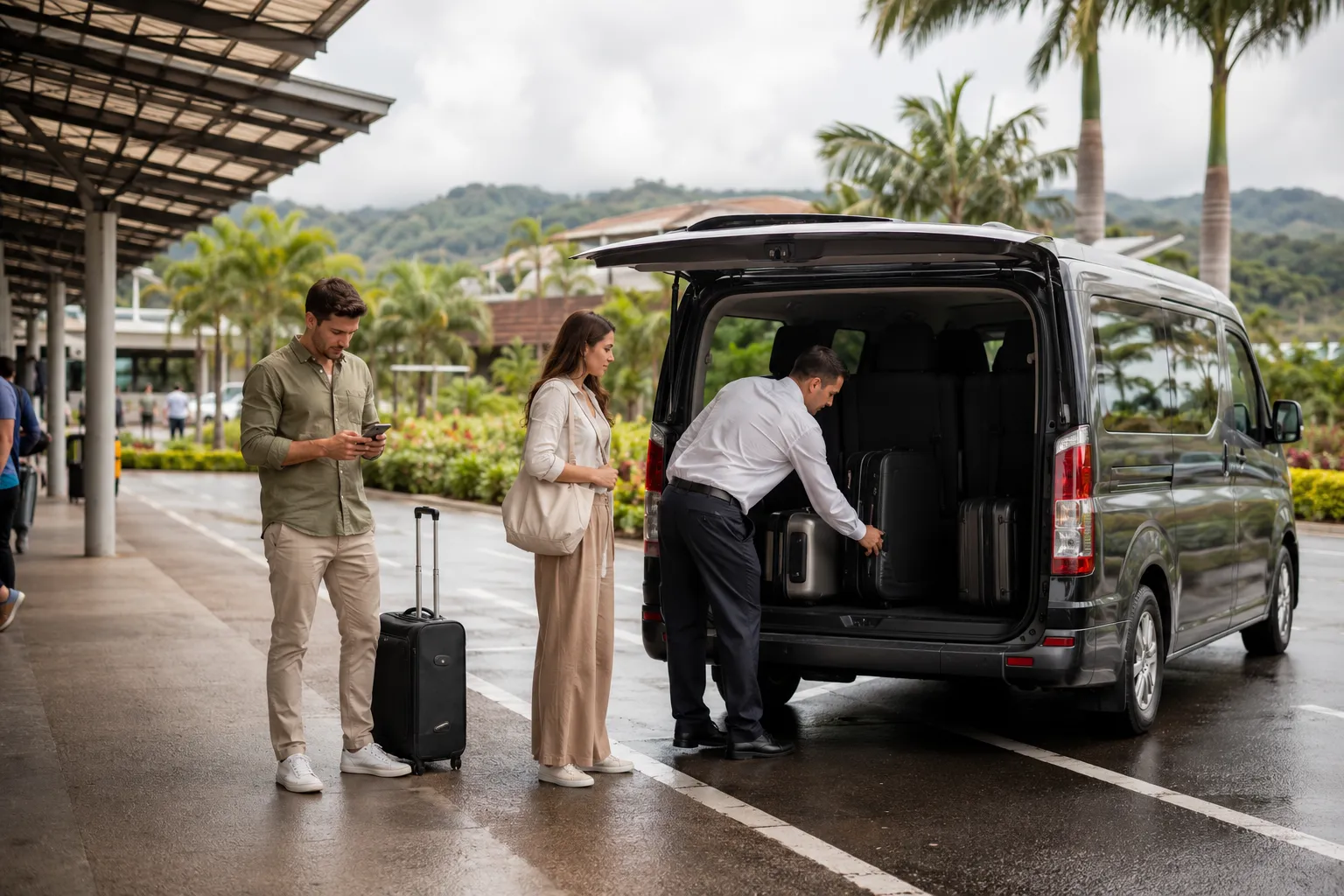
Pre-arranged transportation helps reduce stress because the route, pickup time, luggage space, and hotel drop-off can be planned before arrival. Costa Rica Shuttles offers private transfers, shared shuttles, and airport transfers for travelers who prefer organized ground transportation instead of making last-minute decisions after landing.
Private transportation is often useful for families, groups, late arrivals, long-distance routes, resort transfers, and travelers carrying surfboards, extra luggage, child seats, or special equipment. Shared shuttle service can be practical on popular tourism routes when the schedule fits the arrival time and destination.
Travelers should review Safety Standards before choosing a transportation provider. A reliable Costa Rica shuttle service should focus on clear communication, planned pickup details, suitable vehicles, professional drivers, and realistic route planning.
Airport Arrival Safety at SJO and LIR
Many visitors arrive through San Jose Airport, also known as Juan Santamaria International Airport, or Liberia Airport in Guanacaste. Airport arrival is usually straightforward, but it can feel busy after a long flight, especially for first-time visitors.
The safest approach is to have airport transfer details organized before landing. Travelers should know who is picking them up, where to meet, what name will be used for pickup, and how to contact the transportation provider if a flight is delayed.
For airport arrivals:
Keep luggage with you at all times.
Do not accept transportation from people who approach without a confirmed reservation.
Confirm the driver, vehicle, and destination before leaving the airport.
Keep passports, cash, and cards in a secure personal bag.
Avoid reorganizing luggage in crowded public areas.
Plan transportation around the real flight arrival time, immigration, and baggage claim.
Airport transfers are especially helpful for arrivals heading directly to La Fortuna, Manuel Antonio, Tamarindo, Monteverde, Jaco, Santa Teresa, Uvita, Samara, Nosara, Riu Guanacaste, and Guanacaste resorts. These routes can involve several hours of travel, so it is better to begin with a planned pickup instead of searching for options after landing.
Is It Safe to Drive in Costa Rica?
Driving in Costa Rica can be safe for travelers who are experienced, alert, and comfortable with local road conditions. However, it is not the right choice for everyone. Roads can include curves, hills, narrow bridges, rain, fog, construction, unpaved sections, limited lighting, and slow-moving traffic.
One of the biggest safety mistakes is driving tired after an international flight. Many travelers land in San Jose or Liberia and then try to drive several hours to a beach, mountain town, or remote hotel. Fatigue, unfamiliar roads, and nighttime conditions can make that first travel day harder than expected.
Travelers should be especially cautious about driving at night in rural areas, mountain routes, or places they do not know. Limited lighting, rain, pedestrians, animals, motorcycles, and road changes can make nighttime driving more demanding.
A private transfer can be a better option when travelers want a direct door-to-door arrival without handling the road after a flight. Shared shuttles can also work well when the route and schedule match the itinerary.
Private Transfers vs Shared Shuttles for Safety
Both private transfers and shared shuttles can be safe transportation options when booked with a reliable provider. The right choice depends on the route, arrival time, group size, luggage, comfort level, and schedule.
Private transfers are usually the clearest fit when travelers want direct service from an airport, hotel, resort, villa, or vacation rental. They are also practical for families, groups, late arrivals, long routes, remote hotels, and multi-destination itineraries. A private transfer allows the pickup time and route to be planned around the traveler instead of a fixed public schedule.
Shared shuttles are useful for common tourism corridors. They work best when travelers are flexible with departure times and are staying in areas served by scheduled routes. Shared shuttle service can be a good option for solo travelers, couples, and visitors moving between popular destinations.
For safety and comfort, travelers should choose transportation that matches the real itinerary. A late flight, long road day, remote hotel, or heavy luggage may be better suited to private transportation. A simple daytime transfer between popular towns may work well as a shared shuttle.
Luggage and Personal Belongings
Most visitor safety issues in Costa Rica involve avoidable theft or misplaced items. Luggage safety is important at airports, beaches, bus stops, parking areas, restaurants, and busy tourist towns.
Never leave valuables visible inside a vehicle. This applies to rental cars, private cars, and any situation where bags are left unattended. If traveling between destinations, keep passports, wallets, phones, medication, and essential documents in a small personal bag that stays with you.
At beaches and waterfalls, avoid leaving phones, wallets, cameras, and car keys unattended while swimming. In restaurants, keep bags near you instead of hanging them on the back of a chair. In hotel lobbies or shared spaces, keep luggage in sight until it is stored or loaded.
When using airport transfers, shared shuttles, or private transportation, label bags clearly and keep small valuables with you inside the vehicle.
Safety in Popular Tourist Destinations
Most major tourism areas in Costa Rica are used to international visitors, but each destination has its own travel style.
La Fortuna and Arenal are popular for hot springs, adventure tours, rainforest activities, and volcano views. Transportation should be planned carefully because travelers often connect from SJO, LIR, Monteverde, Tamarindo, or Manuel Antonio.
Monteverde is known for mountain roads, cloud forest conditions, and changing weather. Travelers should allow flexibility and avoid planning tight same-day connections after long routes.
Manuel Antonio and Quepos are popular for beaches, wildlife, and national park visits. Luggage awareness is important on travel days, especially when arriving before hotel check-in.
Tamarindo, Nosara, Samara, Santa Teresa, and Jaco are beach destinations where travelers should be careful with belongings, nightlife, surf equipment, and nighttime movement between hotels, restaurants, and rental homes.
Guanacaste resorts and Riu Guanacaste are often easier for airport logistics because Liberia Airport is commonly used for the region. Resort transfers should still be arranged before arrival, especially for families and groups.
Uvita and the Southern Pacific require more travel planning because routes can be longer and destinations are more spread out. Private transportation can be practical for travelers going beyond the Central Pacific.
Night Travel in Costa Rica
Night travel is not always dangerous, but it requires more caution. Roads may have limited lighting, rain can reduce visibility, and some rural areas are harder to navigate after dark. Travelers arriving late should think carefully before driving themselves to a distant hotel.
For late arrivals, a pre-arranged airport transfer is often the most comfortable choice. Another option is staying near San Jose Airport or Liberia Airport for the first night and continuing the route the next day.
Nightlife areas require normal city awareness. Use reliable transportation back to the hotel, avoid walking alone in unfamiliar areas late at night, and keep an eye on drinks, phones, wallets, and bags.
Family Travel Safety
Costa Rica can be a good destination for families when transportation and activities are planned realistically. Families should think about travel time, car seats, luggage space, bathroom stops, motion sickness, hotel access, and arrival times.
Private transportation is often useful for families because the service can be planned around children, luggage, and hotel location. It also helps avoid managing multiple bags while looking for transportation at the airport.
Families should also choose activities that match the age and comfort level of the group. Adventure tours, beaches, waterfalls, boats, and rainforest trails can be excellent, but they should be booked with reputable operators and realistic timing.
Health, Weather, and Road Awareness
Costa Rica has different climates by region. Rain, heat, humidity, mountain fog, and changing road conditions can affect travel days. The green season can bring heavy rain in some areas, while dry season can bring heat and dust in others.
Travelers should carry water, sunscreen, insect protection, light rain gear, and any personal medication. On longer routes, snacks and extra water are useful, especially for families or travelers with special health needs.
Weather can also affect transportation. Rain may slow mountain roads, traffic can be heavier near cities and beach towns, and ferry-related routes can require extra timing. Avoid building an itinerary with very tight connections between airports, hotels, tours, and long transfers.
Practical Safety Tips for Tours and Activities
Costa Rica is known for outdoor activities, including hiking, surfing, rafting, ziplining, wildlife tours, hot springs, boat tours, and waterfall visits. These experiences are a major reason travelers visit, but they should be approached with care.
Choose reputable tour operators, follow guide instructions, and avoid entering rivers, beaches, trails, or waterfalls in unsafe conditions. Ocean currents can be strong, and not every beach has lifeguards. In national parks and wildlife areas, keep distance from animals and do not feed them.
For tours that start early or finish late, confirm transportation in advance. Travelers staying outside town centers should not assume taxis or ride services will be available at every hour or in every location.
Route Planning and Safety
Many Costa Rica trips include more than one destination. Popular route combinations include San Jose Airport to La Fortuna, San Jose Airport to Manuel Antonio, San Jose Airport to Monteverde, Liberia Airport to Tamarindo, Liberia Airport to La Fortuna, Liberia Airport to Guanacaste resorts, La Fortuna to Monteverde, La Fortuna to Manuel Antonio, Monteverde to Tamarindo, Tamarindo to Nosara, Nosara to Santa Teresa, and Manuel Antonio to Uvita.
These routes can be safe and comfortable when planned correctly. The key is to avoid overloading the itinerary. A route that crosses mountains, coastal highways, or remote areas should not be squeezed between a morning tour and a late hotel check-in.
Travelers should plan transportation based on the full day, not just the distance on a map. Consider flight arrival, customs, baggage claim, hotel check-in, meal stops, weather, traffic, and whether the group will be tired.
For multi-stop itineraries, Costa Rica Shuttles can help organize private transportation, shared shuttles, airport transfers, and door-to-door transfers between major travel regions.
How Costa Rica Shuttles Helps Travelers Plan Safer Transportation
Costa Rica Shuttles focuses on ground transportation for travelers moving between airports, hotels, resorts, beaches, and major destinations. The goal is not just getting from one place to another. It is helping travelers avoid avoidable stress, missed pickups, confusing arrivals, and unrealistic travel days.
Pre-arranged transportation can help with:
Airport pickup at SJO or LIR.
Door-to-door private transfers.
Shared shuttle service on popular routes.
Hotel pickup and drop-off.
Resort transfers in Guanacaste and other regions.
Long-distance transportation between destinations.
Transportation planned around flight arrivals.
Route planning for families, groups, and first-time visitors.
Travelers who want to understand the company approach can review About Us and Safety Standards before choosing a service.
Frequently Asked Questions
Is Costa Rica safe for tourists?
Yes, Costa Rica is generally safe for tourists who use normal travel precautions. Travelers should protect valuables, use reliable transportation, avoid driving tired at night, and plan airport arrivals before landing.
Is Costa Rica safe for families?
Costa Rica can be a safe destination for families when travel days, transportation, hotels, and activities are planned carefully. Private transfers are often helpful for families because pickup times, luggage space, and hotel drop-off can be organized in advance.
Is it safe to drive from San Jose Airport after landing?
It depends on the arrival time, route, weather, and driver comfort level. Driving tired after a long flight is not recommended, especially at night or on unfamiliar roads. Many travelers prefer an airport transfer for the first travel day.
Are shared shuttles safe in Costa Rica?
Shared shuttles can be a safe and practical option on popular tourism routes when booked with a reliable provider and when the schedule fits the itinerary. They are best for travelers who can work with fixed pickup times and common destinations.
Are private transfers safer than rental cars?
Private transfers can reduce stress because travelers do not have to drive unfamiliar roads, navigate at night, manage parking, or handle long routes after a flight. Rental cars can work for some travelers, but private transportation is often easier for airport arrivals and long-distance routes.
Is San Jose safe for travelers?
San Jose is a major city, so travelers should use normal city precautions. Keep valuables secure, use reliable transportation, avoid unfamiliar areas at night, and choose hotels with practical access to the airport or planned activities.
Is Liberia Airport safe for arrivals?
Liberia Airport is a common arrival point for Guanacaste beaches and resorts. As with any airport, travelers should keep luggage secure and use confirmed transportation. Pre-arranged airport transfers are useful for resort arrivals and family travel.
Is Costa Rica safe at night?
Many areas are calm at night, but travelers should be more cautious after dark. Avoid walking alone in unfamiliar areas, use reliable transportation, and be careful with valuables, nightlife, and remote roads.
What is the safest way to get around Costa Rica?
The safest way depends on the route and traveler. Pre-arranged private transportation is often the most comfortable option for airport arrivals, families, late arrivals, and long-distance routes. Shared shuttles can work well for common tourism corridors.
Should I book transportation before arriving in Costa Rica?
Yes, it is recommended for most travelers, especially for airport pickups, late arrivals, resort transfers, family trips, and routes to destinations such as La Fortuna, Manuel Antonio, Monteverde, Tamarindo, Santa Teresa, Nosara, Samara, Uvita, and Guanacaste resorts.
Conclusion
Is Costa Rica safe? For most travelers, yes, Costa Rica is safe when the trip is planned with common sense. The country is well established for tourism, but visitors should still protect belongings, avoid risky nighttime decisions, choose reliable transportation, and respect road, weather, beach, and activity conditions.
Transportation planning is one of the easiest ways to improve safety and comfort. Whether travelers need airport transfers, private transfers, shared shuttles, resort transfers, or door-to-door transportation between destinations, arranging the route before arrival helps the trip begin with less stress and fewer surprises.