Golfito Wildlife Refuge
A practical guide to Golfito Wildlife Refuge covering rainforest, wildlife, hiking, access from Golfito, transportation, and planning a nature-focused visit.
Golfito Wildlife Refuge: What to See and How to Visit
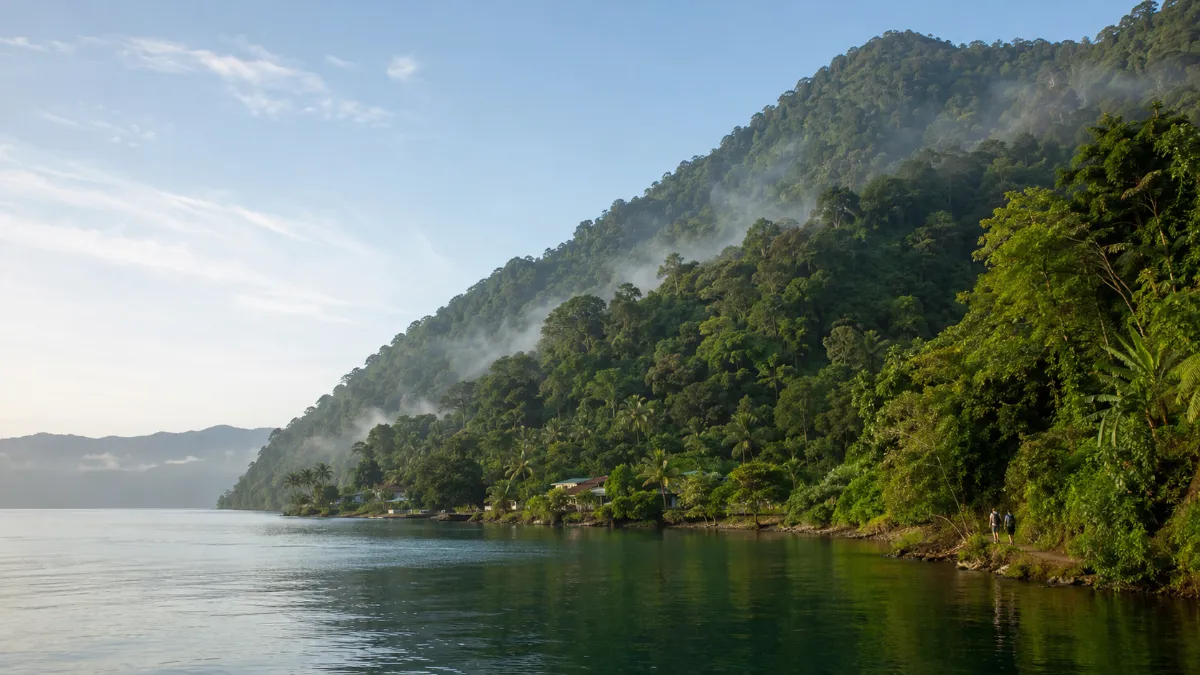
Golfito Wildlife Refuge is a protected rainforest area surrounding much of Golfito in southern Costa Rica. Its forested mountains rise directly behind the town, creating an unusual combination of rainforest, waterfront scenery, wildlife, and easy access from an established community on Golfo Dulce.
For travelers staying in Golfito, the refuge provides an opportunity to experience tropical forest without making Corcovado National Park the only focus of a southern Costa Rica itinerary. Hiking, birdwatching, wildlife observation, and views toward Golfo Dulce are among the main reasons to visit.
Golfito Wildlife Refuge can also fit naturally into a longer southern Pacific itinerary that includes Golfito, Puerto Jimenez, Golfo Dulce, Piedras Blancas, or other destinations in the region.
What Is Golfito Wildlife Refuge?
Golfito Wildlife Refuge is a protected natural area in the Golfito region of southern Costa Rica.
The refuge covers approximately 2,810 hectares and includes mountainous tropical forest immediately around Golfito. The protected landscape rises from near the coast into forested hills and helps form part of a larger conservation area around Golfo Dulce.
One of the interesting characteristics of the refuge is its relationship with the town. Golfito is not separated from the protected landscape by a long transportation route. Forested mountains are visible directly from town, and local access points connect Golfito with trails entering the refuge.
This makes the refuge particularly relevant for travelers who want to combine nature with a stay in Golfito rather than changing hotels for every wildlife experience.
Where Is Golfito Wildlife Refuge?
Golfito Wildlife Refuge is located around Golfito in the southern Pacific region of Costa Rica, next to Golfo Dulce.
The refuge nearly surrounds the town, with forested slopes extending behind Golfito. It is also located near Piedras Blancas National Park and forms part of an important connected conservation landscape in the Golfo Dulce region.
For travelers, this location means that visiting the refuge can be planned as part of a Golfito stay rather than necessarily requiring a separate overnight destination.
However, the exact trail or entrance you plan to use still matters. Travelers should confirm current access conditions before departing because different hiking routes can involve different starting points and levels of difficulty.
Why Visit Golfito Wildlife Refuge?
The main reason to visit Golfito Wildlife Refuge is the opportunity to experience rainforest and wildlife close to Golfito.
The refuge protects tropical forest that provides habitat for birds, monkeys, mammals, reptiles, butterflies, bats, and many other species. Its position beside Golfo Dulce also creates a landscape where mountains, forest, and coastal environments are closely connected.
Travelers may particularly enjoy the refuge if they prefer hiking and wildlife observation in a less complicated setting than a multi-day expedition into a remote area.
It can also complement a larger nature-focused itinerary. Visiting Golfito Wildlife Refuge does not have to replace Corcovado or Piedras Blancas. Each protected area offers a different experience, and travelers with enough time can include more than one.
Wildlife in Golfito Wildlife Refuge
Wildlife is one of the main attractions of Golfito Wildlife Refuge.
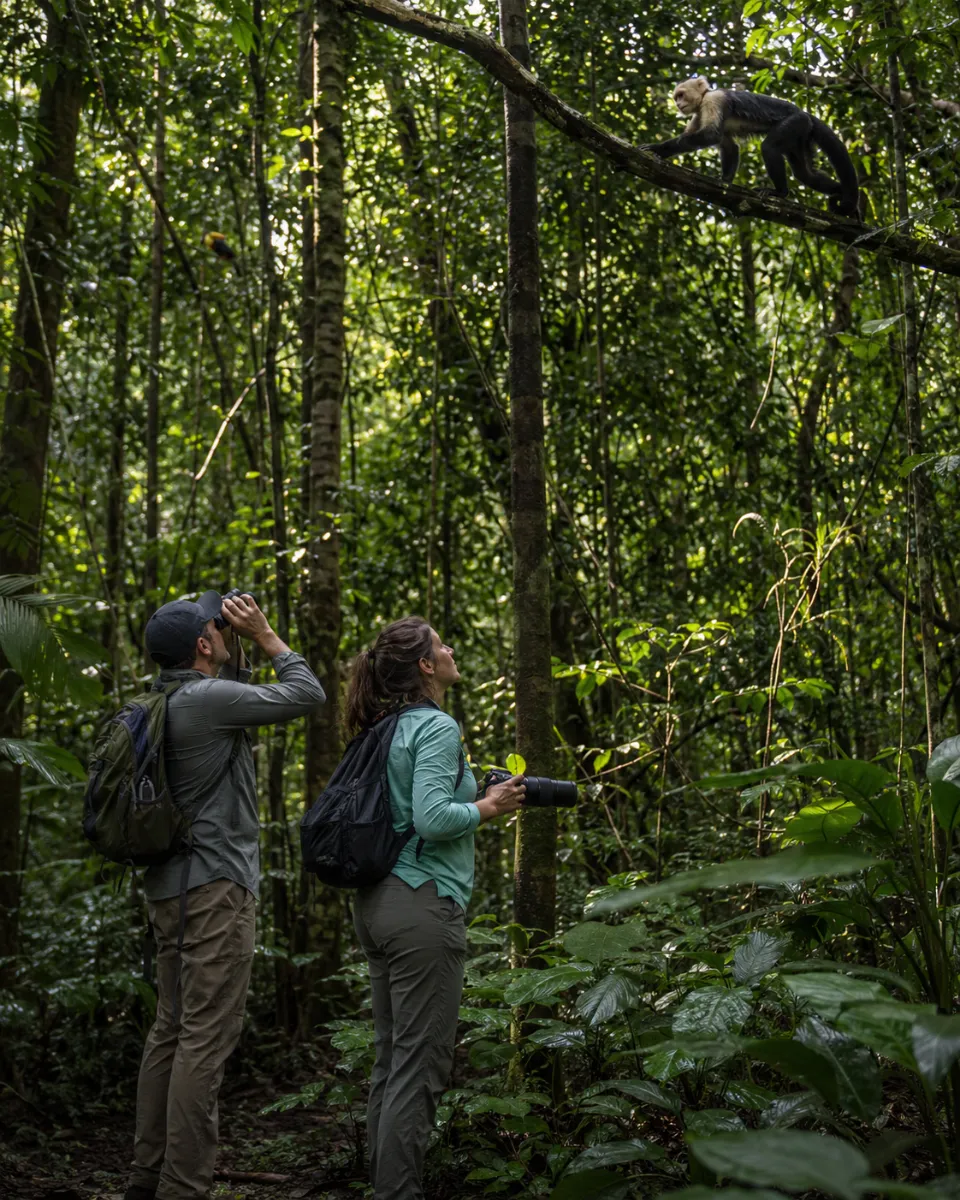
Around 146 bird species have been identified in the refuge, with recorded species including macaws, parrots, pelicans, ibises, herons, and owls. The forest also supports several mammal species.
White-faced capuchin monkeys and raccoons are among the mammals commonly reported in the area. Other wildlife associated with the refuge includes howler monkeys, spider monkeys, anteaters, agoutis, pacas, bats, butterflies, snakes, and additional forest species. Jaguars have also been detected in the protected area, although travelers should not expect to see one during a normal visit.
Wildlife sightings are never guaranteed. Time of day, weather, season, trail conditions, noise levels, and simple chance can all influence what visitors see.
Walking quietly and allowing enough time to observe the forest usually creates a better wildlife experience than treating the hike as a race to reach the end of a trail.
Birdwatching in Golfito
Golfito Wildlife Refuge can be particularly interesting for travelers who enjoy birdwatching.
The combination of tropical forest, coastal environments, Golfo Dulce, and surrounding protected areas creates varied habitat within the wider Golfito region. The refuge itself has recorded more than one hundred bird species.
Early activity can make morning excursions attractive for birdwatchers, although actual sightings depend on conditions.
Binoculars are useful, and travelers interested specifically in identifying species may benefit from visiting with a knowledgeable local guide.
Even visitors who are not dedicated birdwatchers should pay attention to movement and calls in the forest canopy. Some wildlife is much easier to hear before it becomes visible.
Hiking in Golfito Wildlife Refuge
Hiking is one of the main ways to experience the refuge.
Several trails provide access to different sections of the forest. Some are relatively short, while others require considerably more time and physical effort.
The Radio Tower Trail is one of the longer hiking options associated with the refuge. Costa Rica tourism information advises visitors to prepare for roughly a five-hour hike and to carry appropriate supplies and a change of clothing.
Another known route is the Playa Cacao trail, which provides views toward Golfo Dulce. Shorter trails are also available in sections of the forest for travelers who do not want to commit to one of the longer hikes.
Trail conditions can change because of rainfall, vegetation, maintenance, and other local factors. Visitors should confirm current conditions before choosing a route.
Is Golfito Wildlife Refuge Difficult to Hike?
The difficulty depends on the trail.
A short forest walk and a longer mountain hike should not be treated as the same experience. Heat, humidity, elevation changes, muddy conditions, rain, and uneven terrain can make hiking more demanding than the distance alone suggests.
Travelers should choose a trail based on their actual fitness level and available time.
Anyone planning one of the longer hikes should carry sufficient water, appropriate footwear, rain protection, and other basic hiking supplies. Starting with realistic expectations is especially important in southern Costa Rica, where tropical weather can change quickly.
What to Bring to Golfito Wildlife Refuge
Comfortable walking shoes with good traction are useful for rainforest trails. Lightweight clothing that handles heat and humidity well can also make the hike more comfortable.
Rain protection is worth carrying even when conditions look favorable at the beginning of the day.
Water is essential for longer trails. Travelers may also want insect repellent, sun protection for exposed areas, binoculars for wildlife observation, and a waterproof or protected place for phones and cameras.
Avoid carrying more than necessary, particularly on longer routes with elevation changes.
How to Get to Golfito Wildlife Refuge
The easiest way to plan a visit is usually to stay in Golfito and arrange access from there.
Because the refuge surrounds much of the town, travelers do not necessarily need a separate long-distance transportation day simply to visit the protected area. Several local trails connect parts of Golfito with the surrounding forest.
The more important transportation question is often how to reach Golfito itself.
Travelers arriving from San Jose, an airport, or another Costa Rica destination should organize the longer transfer before the trip. Once in Golfito, local transportation can be arranged according to the specific trail, accommodation, or activity.
Golfito Wildlife Refuge Without a Car
Visiting Golfito Wildlife Refuge without a rental car is possible.
Travelers can arrange private transportation or other available services to reach Golfito and then organize local access once they are staying in town.
This approach can work particularly well for travelers who prefer not to drive long distances through southern Costa Rica.
Private transportation provides flexibility for hotel pickup and can be coordinated around the larger itinerary. Travelers moving between several destinations can also arrange hotel-to-hotel transportation instead of renting a vehicle for the entire vacation.
For refuge access itself, confirm the exact trail starting point with your accommodation, guide, or local authority before arranging transportation.
Transportation to Golfito
Golfito is in southern Costa Rica, so transportation should be considered when building the itinerary rather than after accommodations have already been reserved.
Travelers coming from the San Jose area can consider long-distance private transportation when they prefer direct hotel-to-hotel service.
Regional air connections may also be relevant for some itineraries, but domestic flight schedules can change. Travelers should verify actual service for their travel dates before making hotel reservations dependent on a particular flight.
Costa Rica Shuttles can help organize private transportation, airport transfers, and hotel-to-hotel transfers for travelers including Golfito in a southern Costa Rica itinerary.
Airport Transportation for a Golfito Wildlife Refuge Trip
Most international travelers begin their Costa Rica trip through Juan Santamaria International Airport near San Jose or Guanacaste Airport near Liberia.
For a trip concentrated on Golfito and southern Costa Rica, the San Jose side of the country will often fit the route more naturally. However, the best airport depends on the complete itinerary and the destinations being visited before or after Golfito.
Travelers continuing by ground transportation should plan the arrival day carefully because Golfito is not a short airport transfer.
A private airport transfer can be useful for families, groups, travelers with luggage, or visitors who prefer direct transportation without renting a car.
Golfito Wildlife Refuge vs Corcovado
Golfito Wildlife Refuge and Corcovado National Park should not be viewed as interchangeable attractions.
Corcovado is closely associated with Osa Peninsula travel and is often a major destination in its own right. Golfito Wildlife Refuge provides a different type of experience centered directly around Golfito and the forested landscape beside Golfo Dulce.
Golfito Wildlife Refuge can be easier to incorporate into a Golfito stay because the protected forest is immediately adjacent to the town. Corcovado requires its own planning based on the sector, tour, accommodation, and access arrangements being used.
Travelers with a nature-focused southern Costa Rica itinerary may choose to experience both rather than selecting only one.
Golfito Wildlife Refuge and Piedras Blancas
Piedras Blancas National Park is another important protected area in the Golfito region.
Piedras Blancas lies next to the Golfito Wildlife Refuge, and the two protected areas contribute to a larger connected conservation landscape around Golfo Dulce.
For travelers interested in rainforest and wildlife, this concentration of protected land is one reason Golfito can work well as part of a nature-oriented southern Costa Rica itinerary.
Rather than trying to see several protected areas in a single day, consider allowing enough time for each location and organizing transportation according to confirmed access points.
Golfito Wildlife Refuge vs Puerto Jimenez
Golfito and Puerto Jimenez work differently as travel bases.
Golfito Wildlife Refuge is directly connected with a stay in Golfito. Travelers can explore the forest around the town while remaining on the Golfito side of Golfo Dulce.
Puerto Jimenez is on the Osa Peninsula and generally makes more sense for travelers whose main activities are concentrated around the peninsula and Corcovado area.
For longer vacations, Golfito and Puerto Jimenez can both fit into the same southern Costa Rica itinerary. The decision should depend on planned activities rather than treating one town simply as a substitute for the other.
Best Time to Visit Golfito Wildlife Refuge
Golfito is in Costa Rica's southern Pacific region, where tropical rainfall is an important part of the environment.
Conditions can vary throughout the year, and rain can influence trail surfaces, hiking difficulty, visibility, and transportation.
Travelers should prepare for humidity and possible rain even when visiting during generally drier periods.
The best time to visit ultimately depends on the type of experience you want. Wildlife observation, hiking conditions, rainfall, and overall itinerary timing should all be considered.
Checking current trail conditions shortly before visiting is more useful than assuming that every trail will be identical throughout the year.
Is Golfito Wildlife Refuge Worth Visiting?
Golfito Wildlife Refuge is worth considering for travelers already staying in Golfito or building a nature-focused trip through southern Costa Rica.
Its biggest advantage is the combination of accessibility and natural surroundings. The rainforest rises immediately behind Golfito, allowing travelers to experience protected tropical forest without necessarily adding another distant destination to the itinerary.
It is particularly suitable for visitors interested in hiking, birds, monkeys, rainforest environments, and views around Golfo Dulce.
Travelers expecting a highly developed attraction with predictable wildlife encounters should approach the refuge differently. This is a natural protected environment, and the experience depends on trail conditions and what the forest provides on the day of the visit.
Frequently Asked Questions About Golfito Wildlife Refuge
Where is Golfito Wildlife Refuge?
Golfito Wildlife Refuge is located around the town of Golfito in southern Costa Rica beside Golfo Dulce. Forested sections of the refuge surround much of the town.
What animals can you see in Golfito Wildlife Refuge?
Wildlife recorded in the refuge includes monkeys, raccoons, anteaters, agoutis, pacas, bats, snakes, butterflies, and many bird species. Wildlife sightings are never guaranteed.
Are there monkeys in Golfito Wildlife Refuge?
Yes. Several monkey species are associated with the refuge, including white-faced capuchins, howler monkeys, and spider monkeys.
Can you hike in Golfito Wildlife Refuge?
Yes. The refuge has hiking routes ranging from shorter forest trails to longer hikes. Trail conditions and access should be confirmed before visiting.
Is Golfito Wildlife Refuge good for birdwatching?
Yes. Around 146 bird species have been identified within the refuge, making birdwatching one of the activities that can be incorporated into a visit.
Do I need a car to visit Golfito Wildlife Refuge?
Not necessarily. Travelers can reach Golfito using private transportation or other available transportation services and then arrange local access to the appropriate trail.
Can I arrange private transportation to Golfito?
Yes. Private transportation can be organized for airport transfers and hotel-to-hotel travel to Golfito. This can be practical for travelers who do not want to rent a car.
Is Golfito Wildlife Refuge close to Golfito?
Yes. One of the distinctive characteristics of the refuge is that its forested mountains surround much of the town, with several local trails providing access to the protected area.
Is Golfito Wildlife Refuge the same as Corcovado National Park?
No. They are separate protected areas. Golfito Wildlife Refuge surrounds much of Golfito, while Corcovado National Park is associated with the Osa Peninsula and requires separate visit planning.
Can I combine Golfito Wildlife Refuge with Puerto Jimenez?
Yes. Travelers with enough time can include Golfito and Puerto Jimenez in the same southern Costa Rica itinerary. Transportation should be organized according to hotel locations and the order of planned destinations.
Conclusion
Golfito Wildlife Refuge gives travelers an opportunity to explore tropical rainforest, observe wildlife, hike through forested mountains, and experience the natural environment surrounding Golfo Dulce without leaving the Golfito area.
Its location directly beside the town makes it particularly useful for travelers who want to combine nature with a practical Golfito travel base. The refuge can also complement visits to Puerto Jimenez, Corcovado, Piedras Blancas, and other parts of southern Costa Rica.
For travelers planning Golfito Wildlife Refuge without a rental car, organizing the main transportation segments in advance can simplify the trip. Private transportation, airport transfers, and hotel-to-hotel service can connect Golfito with airports and other destinations while local transportation can be arranged around the specific refuge access point and hiking plans.