Drake Bay Beaches and Coastal Trail Guide
A practical guide to Drake Bay beaches and the coastal trail, including beach hopping, rainforest walking, wildlife, conditions and transportation planning.
Drake Bay Beaches and Coastal Trail Guide
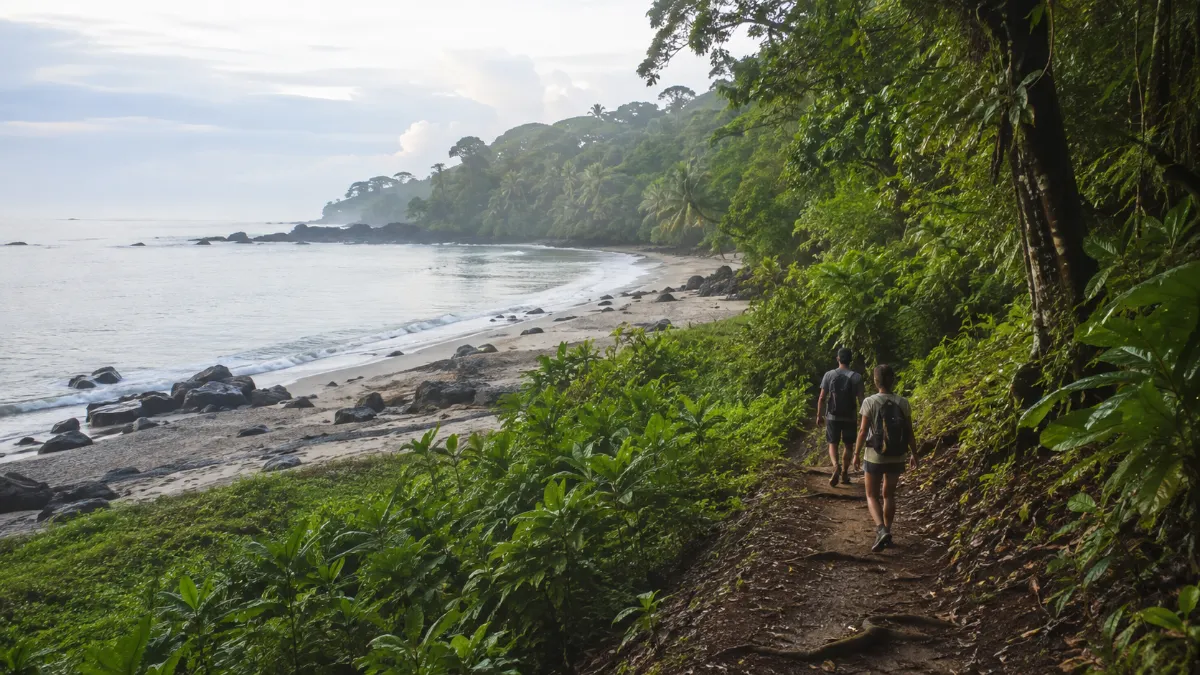
Drake Bay beaches and the coastal trail offer travelers a quieter way to experience the Osa Peninsula beyond organized trips to Corcovado National Park and Cano Island. The coastline around Drake Bay combines tropical forest, small beaches, rocky sections and walking routes where visitors can spend part of a day or build a longer coastal hike.
For travelers staying several nights in Drake Bay, exploring the coast is a useful addition to a nature-focused itinerary. A beach and coastal trail day can provide more flexibility than a scheduled boat excursion while still offering opportunities for wildlife observation, photography, swimming when conditions are appropriate and time in the rainforest.
Weather, trail conditions, tides and ocean conditions can change, so visitors should approach the Drake Bay coastal trail as an outdoor nature experience rather than a predictable paved walking route.
Drake Bay Beaches and Coastal Trail Overview
The coastline around Drake Bay is one of the reasons the destination feels different from larger Costa Rica beach towns.
Instead of a continuous developed beachfront, travelers encounter sections of forest, small bays, beaches and natural coastal terrain. Walking between areas can become part of the experience.
The coastal trail is particularly attractive for travelers who enjoy hiking but do not want every nature experience to require a full-day organized tour.
It can also work well between bigger activities. Travelers may dedicate one day to Corcovado, another to Cano Island and another to exploring beaches and coastal trails closer to Drake Bay.
Beaches Around Drake Bay
Drake Bay has several coastal areas that can be explored depending on where travelers are staying and how far they want to walk.
Some beaches are close to the main Drake Bay area, while others require a longer walk or additional transportation planning.
Conditions differ from one beach to another. Some areas may be better for relaxing and walking, while swimming conditions can depend on waves, tides and currents.
Travelers should follow local guidance before entering the water and should not assume that every quiet-looking beach is automatically safe for swimming.
Playa Cocalito
Playa Cocalito is one of the beaches travelers may encounter while exploring the coast near Drake Bay.
Its natural setting makes it a useful destination for visitors who want a relatively simple coastal outing without dedicating the entire day to a major excursion.
The walk itself can be as important as the beach. Tropical vegetation, coastal scenery and opportunities to observe birds or other wildlife can make the route enjoyable for travelers who move slowly.
Conditions can become muddy after rain, so footwear should be chosen for the trail rather than only for the beach.
Playa San Josecito
Playa San Josecito is another well-known beach associated with the Drake Bay coastline.
Travelers may include it as part of a longer coastal outing or visit it through an excursion depending on their itinerary.
The appeal is the combination of beach scenery and the journey through the coastal environment. Visitors planning to reach more distant beaches on foot should understand that tropical heat, humidity and changing trail conditions can make a coastal walk more demanding than it appears on a map.
Carry sufficient water and avoid starting a long hike too late in the day.
Exploring Smaller Beaches Along the Coast
One of the advantages of walking around Drake Bay is that the trip does not need to focus on reaching a single famous beach.
Smaller coastal areas and viewpoints can make the journey worthwhile even if travelers decide not to complete a longer route.
This is particularly useful for visitors who prefer flexible days. You can walk according to weather, energy level and trail conditions rather than committing to a fixed excursion schedule.
Travelers should remain aware of where they are, how much daylight remains and how they plan to return to their accommodation.
What Is the Drake Bay Coastal Trail?
The Drake Bay coastal trail is a walking route through sections of coastline and tropical forest around the Drake Bay area.
Rather than functioning like an urban promenade, the experience is closer to a natural hiking trail. Travelers should expect uneven terrain, roots, mud, vegetation, beach sections and potentially slippery conditions after rain.
The trail can be used for shorter walks or incorporated into a longer beach-hopping day depending on conditions and the traveler's fitness level.
Because access and trail conditions can change, visitors should ask their accommodation or a local guide about current conditions before attempting a longer walk.
Is the Drake Bay Coastal Trail Difficult?
Difficulty depends on how far you walk, recent weather and personal fitness.
A short coastal walk may be manageable for many travelers, while a longer route between beaches can become physically demanding because of heat, humidity, mud and uneven terrain.
The trail should not be evaluated only by distance. Walking several kilometers in tropical conditions can feel very different from covering the same distance on a paved road.
Travelers with limited hiking experience should start with a shorter section and extend the walk only if conditions are comfortable.
Can You Hike the Coastal Trail Without a Guide?
Some visitors explore sections of the Drake Bay coastline independently.
However, a guide can add value for travelers who are interested in wildlife, plants and the ecology of the Osa Peninsula rather than simply reaching another beach.
Guided walks can also help visitors understand current trail conditions and identify animals that would otherwise be easy to miss.
Independent travelers should still ask locally about conditions before leaving, particularly during wetter periods.
Wildlife Along the Drake Bay Coastal Trail
Wildlife observation is one of the reasons the coastal trail can be more interesting than a normal beach walk.
The forest surrounding Drake Bay supports a wide variety of tropical wildlife and birds. What travelers see depends on the time of day, season, weather and natural animal movement.
Wildlife sightings should never be treated as guaranteed.
Walking quietly, keeping an appropriate distance and avoiding feeding animals provides a better experience for both visitors and wildlife.
Binoculars can be useful even on a casual beach day.
Birdwatching Along the Coast
Birdwatching fits naturally into a Drake Bay coastal hike.
Forest edges, beach areas and tropical vegetation create opportunities to stop and observe birds throughout the walk.
Travelers primarily interested in birdwatching should consider starting earlier in the day and moving more slowly rather than trying to reach as many beaches as possible.
A specialized guide can also help travelers identify species and understand the habitats around the Osa Peninsula.
Swimming at Drake Bay Beaches
Swimming conditions around Drake Bay vary.
Some beaches may appear calm, while others can be affected by waves, currents, tides and changing weather.
Travelers should ask locally about swimming conditions before entering unfamiliar water.
A remote beach may not have lifeguards or the same facilities travelers expect at developed beach destinations, making personal judgment and local advice especially important.
Families with children should be particularly conservative when evaluating ocean conditions.
Snorkeling From Drake Bay Beaches
Travelers interested primarily in snorkeling often associate the Drake Bay region with organized marine excursions, particularly trips toward Cano Island.
Beach snorkeling conditions can vary considerably depending on location, waves, visibility and the time of year.
Visitors should not assume that every beach will provide good snorkeling conditions.
If snorkeling is one of the main priorities of the trip, an organized marine excursion may provide a more structured experience than relying exclusively on beaches reached by the coastal trail.
Best Time to Hike the Drake Bay Coastal Trail
The best time to hike the Drake Bay coastal trail depends on weather and recent rainfall.
Drier periods can provide easier walking conditions, although rain is still possible in the Osa Peninsula.
During the green season, trails may become muddier and more slippery. Rain can also make roots, rocks and steeper sections more difficult.
Starting earlier in the day is often practical because it provides more daylight and reduces the risk of completing a longer walk late in the afternoon.
Always consider the return journey before deciding how far to continue.
Hiking During the Green Season
The green season can be a beautiful time to explore Drake Bay because the surrounding vegetation is especially lush.
However, travelers should expect rain and potentially more difficult trail conditions.
Water-resistant footwear or hiking shoes with reliable traction can become particularly useful.
Rain protection for phones, cameras, documents and other important belongings is also recommended.
Travelers should remain flexible. If conditions are poor, a shorter walk may be more practical than trying to complete a planned long-distance coastal hike.
Hiking During the Drier Season
Drier months can make Drake Bay beach and coastal trail exploration easier to organize.
Trails may be less muddy, and visitors may have a better chance of spending extended periods outside without heavy rain.
However, tropical heat and humidity can still make hiking demanding.
Carry water, use sun protection and do not underestimate the physical effort required for a longer coastal walk.
What to Bring on the Drake Bay Coastal Trail
Pack for both hiking and beach conditions.
Comfortable walking shoes with useful traction are preferable to relying entirely on sandals for a longer trail.
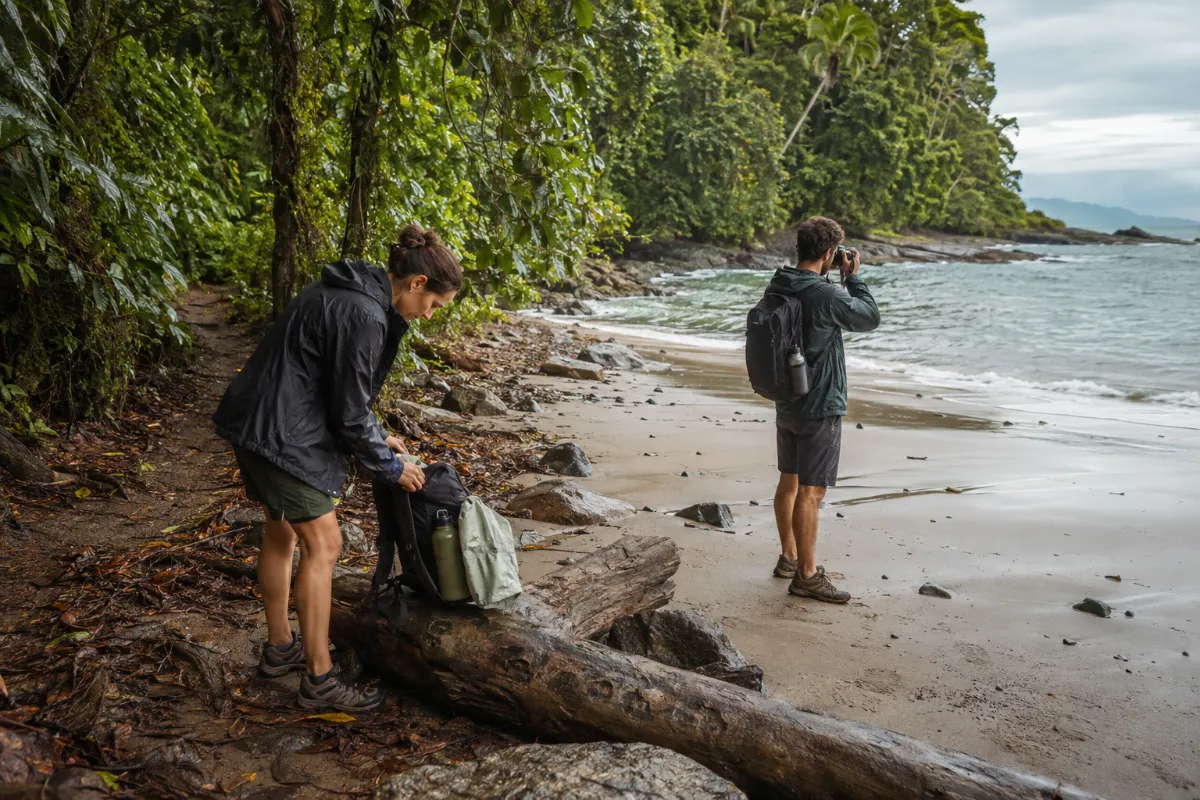
Travelers should also consider lightweight clothing, sun protection, insect protection, drinking water and rain protection.
A water-resistant bag or protective pouch can help protect electronics and important belongings.
If swimming is part of the plan, carry only what you are comfortable keeping secure while near the water.
Shoes for the Drake Bay Coastal Trail
Footwear can make a significant difference on the coastal trail.
Travelers planning only a short beach visit may have different needs from visitors completing a longer hike through forested terrain.
For longer walks, shoes with traction are usually more practical than basic beach sandals.
Conditions can include mud, wet roots, rocks and uneven ground, especially after rain.
Bringing lightweight sandals separately can still be useful for relaxing once you reach a beach.
Food and Water for a Coastal Hike
Travelers should carry enough drinking water for the planned walk.
Do not assume that food, water or other visitor services will be available along every section of a remote coastal route.
A small snack can also be practical for a longer outing.
Avoid leaving food waste or packaging behind. Travelers should carry everything out with them and help protect the natural environment they came to experience.
Beach Safety in Drake Bay
Beach safety should be part of every Drake Bay coastal itinerary.
Pay attention to ocean conditions, weather and daylight.
Avoid leaving important belongings unattended, especially when exploring remote areas.
If walking alone, make sure someone knows your general plan and expected return.
Travelers should also avoid approaching or feeding wildlife encountered along the trail.
The remoteness that makes Drake Bay attractive also means visitors should take more responsibility for planning than they might at a heavily developed resort beach.
Coastal Trail Tips for Families
Families can enjoy shorter sections of the Drake Bay coastline, but the appropriate route depends on children's ages and hiking experience.
Heat, humidity, mud and uneven terrain can make a seemingly simple walk tiring.
Parents should choose realistic distances and carry enough water.
Swimming conditions should also be evaluated carefully because not every beach is appropriate for young children.
A shorter nature walk followed by beach time may be more enjoyable than attempting a long coastal hike.
Coastal Trail Tips for Couples
The coastal trail can be a good activity for couples looking for an independent day between organized excursions.
A relaxed walk, beach stop and wildlife observation can balance more structured experiences such as Corcovado and Cano Island.
Couples attempting a longer hike should still plan the return route before leaving.
Do not rely on finding transportation from every remote beach unless arrangements have been confirmed in advance.
Coastal Trail Tips for Photographers
The combination of rainforest and Pacific coastline makes Drake Bay attractive for photography.
Travelers may encounter wildlife, tropical vegetation, beaches, rocky coastline and changing light throughout the day.
Moving slowly can create better photography opportunities than treating the trail simply as a route between two points.
Rain protection for camera equipment is particularly important.
A smaller photography setup may also be more comfortable than carrying heavy equipment through humid and uneven terrain.
Drake Bay Coastal Trail or Corcovado?
The coastal trail and Corcovado provide different experiences.
The Drake Bay coastal trail is generally more flexible and can be explored in shorter sections. It combines beaches, forest and independent outdoor time.
Corcovado is a major protected-area experience centered more strongly on rainforest ecosystems, guided exploration and wildlife.
Travelers staying long enough should not necessarily choose between them. A coastal trail day can complement a Corcovado excursion rather than replace it.
Drake Bay Beaches or Cano Island?
Drake Bay beaches and Cano Island also provide different types of coastal experiences.
Beach exploration is more flexible and can involve hiking, relaxing and spending time along the mainland coastline.
Cano Island is primarily a marine excursion involving boat transportation and activities such as snorkeling or diving.
Travelers who enjoy both hiking and marine activities can dedicate separate days to each experience.
Suggested Drake Bay Nature Itinerary
A well-balanced Drake Bay itinerary can combine major excursions with flexible coastal time.
After arriving, travelers can use the first day to settle into their accommodation and explore a nearby beach.
A full day can then be dedicated to Corcovado National Park.
Another day can focus on Cano Island and marine activities.
A separate day can be used for the Drake Bay coastal trail, beach exploration, birdwatching or a slower nature walk.
This structure also creates flexibility in case weather affects one of the scheduled boat excursions.
Getting to Drake Bay Beaches
How travelers reach individual Drake Bay beaches depends on their accommodation and the beach they want to visit.
Some coastal areas can be reached on foot, while more distant locations may require a longer hike, boat transportation or another local arrangement.
Ask your accommodation about current access before planning the day.
Travelers should not assume that roads or regular vehicle transportation connect every beach along this remote coastline.
Transportation for a Drake Bay Beach and Coastal Trail Trip
Transportation planning begins before travelers reach the Drake Bay coastal trail.
Drake Bay is a remote destination, and many visitors arrive after traveling through Costa Rica's Southern Pacific region. Depending on the itinerary, the journey may include private transportation, shared shuttle service and an onward boat or regional connection.
Travelers coming from SJO, San Jose, Manuel Antonio, Uvita or other destinations should consider how the entire journey fits together.
Private transportation can be practical when hotel pickup, luggage and connection times need to be coordinated. Families and groups may also prefer a private transfer because the schedule can be planned around their itinerary.
Shared shuttle service may work for portions of the journey when scheduled departures match the travel plan.
Once in Drake Bay, local beach access should be considered separately from long-distance transportation.
Combining Drake Bay Beaches With Uvita
Uvita can fit naturally into a Southern Pacific itinerary before or after Drake Bay.
The two destinations provide different experiences while allowing travelers to continue through the same general region.
Uvita can be used as another nature and coastal stop, while Drake Bay offers a more remote base for Corcovado, Cano Island and coastal hiking.
Planning transportation geographically can reduce unnecessary backtracking.
Combining Drake Bay With Manuel Antonio
Manuel Antonio can also be included in a longer Pacific Coast itinerary.
Travelers can combine the more developed tourism environment around Manuel Antonio with the remote nature experiences available around Drake Bay.
Because moving between destinations takes part of a travel day, avoid scheduling a long coastal hike immediately before an important hotel transfer.
Allow enough time for packing, transportation and onward connections.
Frequently Asked Questions
What are the best beaches in Drake Bay?
The Drake Bay coastline includes several beaches and smaller coastal areas that can be explored depending on current trail and access conditions. Playa Cocalito and Playa San Josecito are among the beaches commonly associated with coastal exploration around the area.
Is there a coastal trail in Drake Bay?
Yes. Travelers can explore sections of the Drake Bay coastline on foot through natural trails connecting forest and beach environments.
Can you walk between Drake Bay beaches?
Some beaches and coastal areas can be connected on foot. The difficulty depends on the section, weather, recent rainfall and how far travelers plan to walk.
Is the Drake Bay coastal trail difficult?
Difficulty varies. Short sections may be manageable for many visitors, while longer hikes can become demanding because of tropical heat, humidity, mud and uneven terrain.
Do I need hiking shoes in Drake Bay?
Good walking shoes with traction are useful for longer coastal hikes, particularly when trails are wet or muddy.
Can you swim at Drake Bay beaches?
Swimming may be possible at some beaches when conditions are appropriate, but waves, currents and tides vary. Travelers should ask locally about current swimming conditions.
Can you snorkel from Drake Bay beaches?
Conditions vary significantly by beach and day. Travelers primarily interested in snorkeling may prefer an organized marine excursion rather than depending only on shore conditions.
Can I hike the Drake Bay coastal trail without a guide?
Some travelers explore sections independently, but local advice about current conditions is valuable. A guide can also improve the wildlife and nature experience.
Is the coastal trail good for wildlife?
The surrounding rainforest environment can provide opportunities to observe birds and other wildlife, although specific sightings are never guaranteed.
What should I bring for a Drake Bay beach hike?
Bring water, suitable walking shoes, lightweight clothing, sun protection, insect protection and rain protection. Water-resistant protection for electronics and important belongings is also useful.
How many days should I stay in Drake Bay?
The ideal stay depends on your activities. Travelers who want Corcovado, Cano Island and time for Drake Bay beaches and the coastal trail should allow enough separate days to enjoy each without rushing.
How should I arrange transportation to Drake Bay?
Plan the complete journey before arrival. Depending on your starting point, the trip may combine private transportation or shared shuttle service with an onward boat or regional connection.
Conclusion
Drake Bay beaches and the coastal trail provide a different way to experience the Osa Peninsula beyond scheduled rainforest and marine excursions. Walking through tropical forest, stopping at beaches, observing wildlife and spending an unstructured day along the Pacific coastline can be an important part of a longer Drake Bay itinerary.
Conditions matter. Rain, mud, heat, tides and ocean conditions can affect both hiking and swimming, so travelers should ask locally about current conditions and choose a route appropriate for their experience.
Transportation should also be planned before arriving in this remote part of Costa Rica. Costa Rica Shuttles can help organize private transportation, shared shuttle service, airport transfers, hotel pickup and long-distance transportation for the ground portions of a Drake Bay itinerary, allowing travelers to coordinate their arrival with accommodation, boat connections and other Southern Pacific destinations.