
Costa Rica Money and Currency
A practical Costa Rica money and currency guide covering colones, US dollars, credit cards, cash, ATMs, tipping drivers and transportation payment tips.
Costa Rica Money and Currency Guide: Cash, Cards, Colones and Travel Tips
Overview of Costa Rica Money and Currency
Costa Rica money planning is an important part of a smooth trip, especially for airport arrivals, hotel transfers, tours, restaurants, tips, local purchases and transportation payments. The official Costa Rica currency is the Costa Rican colon, but many travelers will also see US dollars accepted in tourist areas.
This Costa Rica money and currency guide explains what currency Costa Rica uses, when travelers can pay in dollars, when cash is useful, how credit cards work, how to use ATMs, how tipping drivers works and how to plan transportation payments before arrival.
What Currency Does Costa Rica Use?
Costa Rica uses the Costa Rican colon as its official currency. Prices in local businesses, supermarkets, restaurants, taxis, national services and many smaller shops may be listed in colones.
Travelers should expect to use colones for small purchases, local meals, tips, snacks, parking, local transportation, rural stops and places that do not regularly handle foreign currency. In major tourism areas, some hotels, tour companies and transportation services may also quote prices in US dollars.
For most visitors, the best approach is to travel with a mix of payment options. Credit cards are useful for hotels and larger expenses, US dollars may be accepted in many tourism areas, and colones are helpful for smaller daily payments.
Can You Pay in Dollars in Costa Rica?
Yes, travelers can often pay in US dollars in Costa Rica, especially in hotels, tour offices, private transportation services, airport transfer services and popular tourism destinations. However, US dollars are not a replacement for local currency everywhere.
Small shops, local restaurants, roadside stops, markets, taxis and rural businesses may prefer or require colones. Even when dollars are accepted, change may be given in colones, and the exchange rate used by the business may not be the same as a bank rate.
Travelers should carry clean, undamaged US dollar bills if they plan to use dollars. Torn, marked or worn bills may be refused. Smaller bills are more practical than large bills for tips, snacks and small purchases.
Should Travelers Carry Cash in Costa Rica?
Yes. Travelers should carry some cash in Costa Rica, but not too much at one time. Cash is useful for tips, small restaurants, roadside stops, local shops, public restrooms, parking, small tour payments and places where card machines are not available or not working.
Colones are especially useful outside major resort areas and for smaller purchases. US dollars can be helpful for tourism services, but travelers should not assume every business will accept them.
A practical plan is to keep enough cash for the day and store the rest securely. Travelers should avoid carrying large amounts of cash during beach days, tours, nightlife or long travel days.
Credit Cards in Costa Rica
Credit cards are widely used in many hotels, restaurants, supermarkets, tour companies and tourism businesses in Costa Rica. Visa and Mastercard are usually the most practical options for travelers.
Even so, credit cards may not work everywhere. Smaller businesses, rural areas, beach towns, local taxis and some roadside stops may prefer cash. Card terminals can also be affected by connection issues, especially in more remote destinations.
Before traveling, tell your bank or card provider about the trip if needed. Travelers should also check foreign transaction fees, card limits and whether a backup card is available in case one card is blocked or lost.
Debit Cards and ATMs in Costa Rica
ATMs are available in many towns, airports, shopping areas and tourist destinations, but they may not be convenient in every beach or mountain location. Travelers should avoid waiting until they are in a remote area to get cash.
ATMs may offer withdrawals in colones, US dollars or both, depending on the bank and location. Colones are useful for daily local payments, while US dollars may be practical for tourism services that quote in dollars.
Use ATMs in secure, well-lit places such as banks, shopping centers, airports or busy commercial areas. Avoid using isolated machines late at night. Keep the receipt, protect your PIN and check for card fees before completing the withdrawal.
Airport Arrival Money Tips
Travelers arriving at San Jose Airport or Liberia Airport should have a basic money plan before leaving the airport. The first travel day often includes airport transportation, tips, snacks, hotel check-in, luggage help or a stop along the route.
It is useful to arrive with a small amount of US dollars in clean bills and withdraw or exchange some colones when convenient. Travelers should not depend on airport decisions alone, especially after a long flight or late arrival.
If private airport transportation or a shared shuttle has been arranged in advance, confirm payment details before landing. This avoids confusion at pickup and helps make the first travel day easier.
Paying for Transportation in Costa Rica
Paying for transportation in Costa Rica depends on the type of service. Private transportation, shared shuttle service, airport transfers and hotel transfers may have different payment rules, so travelers should confirm details before the travel day.
Some transportation services may accept online payment, credit card, bank transfer, cash or a combination of methods. Others may require advance payment or a deposit. Travelers should not assume the driver can process every type of payment at pickup.
For private transfers and airport transportation, it is best to confirm the price, currency, payment method, pickup time, passenger count, luggage details and drop-off location before arrival. This is especially important for late flights, long-distance transfers, resort arrivals and routes to beach towns or remote hotels.
Tipping Drivers in Costa Rica
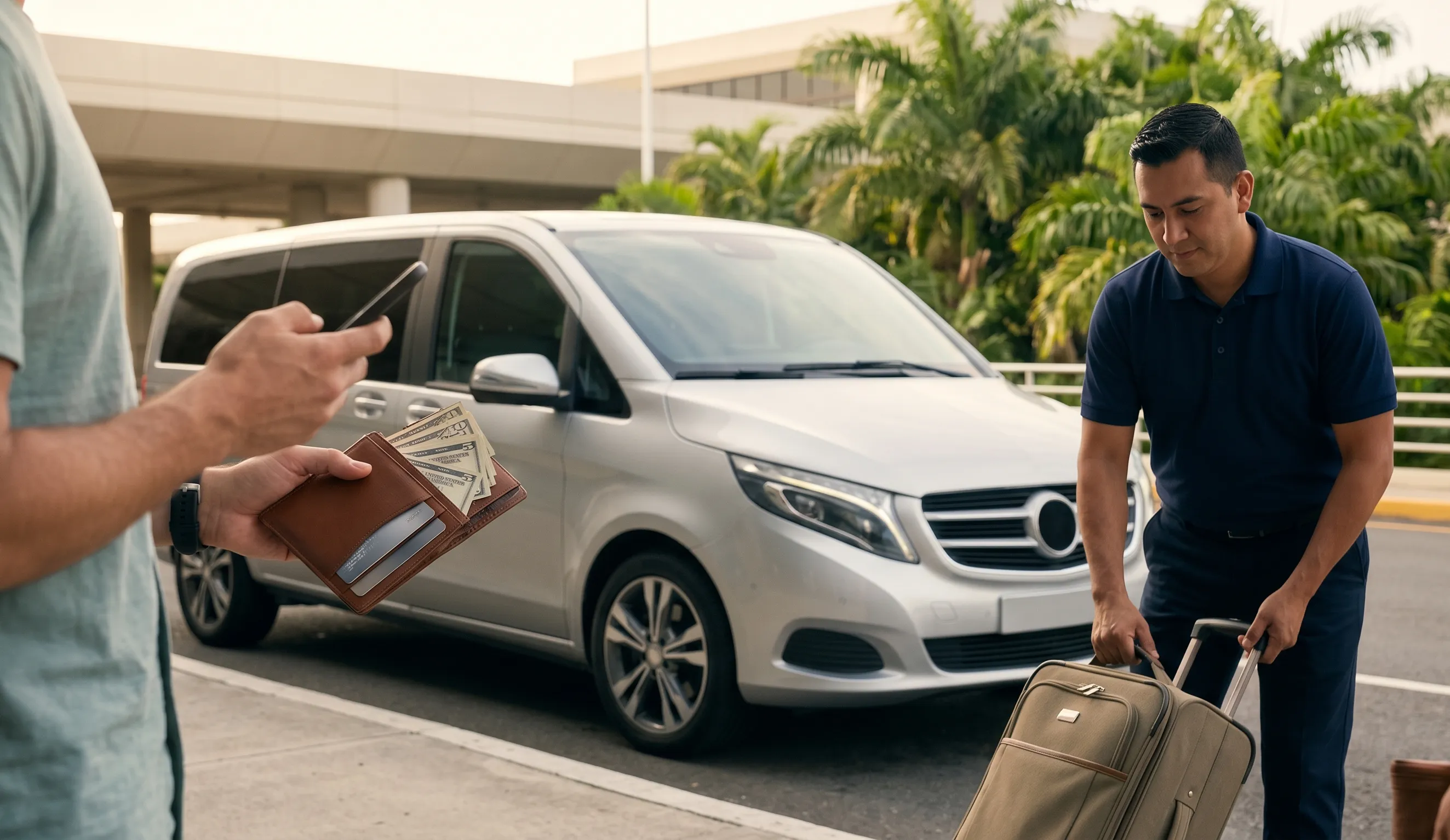
Tipping drivers in Costa Rica is appreciated when the service is helpful, professional and safe. It is common for travelers to tip private transportation drivers, airport transfer drivers, shuttle drivers and tour drivers, especially when they help with luggage, make a comfort stop, provide useful local information or manage a long route.
Tips can usually be given in colones or US dollars. Small bills are helpful because drivers may not always have change. The amount depends on the length of the route, group size, luggage assistance and the quality of service.
Tipping is not a replacement for paying the transportation fare. Travelers should confirm the transportation payment separately and treat the tip as an optional thank-you for good service.
Cash vs Cards for Hotels, Tours and Restaurants
Hotels and larger restaurants in tourism areas usually accept credit cards. Many tour companies also accept cards or advance online payments. However, smaller restaurants, beach cafes, local sodas, roadside fruit stands and rural shops may prefer cash.
Travelers should keep both options available. Cards are convenient for larger payments, but cash is often better for quick purchases, tips and small local expenses.
For tours, confirm whether payment is due before the tour, at hotel pickup, at the office or after the activity. This matters when the pickup is early in the morning or when the tour starts far from town.
Using Colones vs US Dollars
Colones are usually best for local purchases and smaller daily expenses. US dollars are often useful for tourism services, airport transfers, some hotels and private transportation when prices are quoted in dollars.
When paying in dollars, travelers may receive change in colones. This is normal, but the exchange rate can vary by business. For small payments, using colones can make the transaction simpler.
Travelers should avoid paying small local purchases with large US dollar bills. Smaller bills are easier for restaurants, drivers and local vendors to accept.
Money Tips for Beach Towns and Remote Destinations
Beach towns and remote destinations may have fewer banks, fewer ATMs and more businesses that rely on cash. This is especially important when traveling to smaller beach areas, mountain lodges, rainforest hotels or destinations where transportation services need to be planned in advance.
Before leaving San Jose, Liberia, La Fortuna, Manuel Antonio, Tamarindo or another larger town, make sure you have enough cash for tips, meals, small purchases and local movement. Do not assume an ATM will be easy to find near every hotel or beach.
Travelers staying in vacation rentals should be especially prepared. Some rentals are outside town centers, and reaching an ATM may require a taxi or planned transportation.
Money Safety Tips for Travelers
Costa Rica is a popular travel destination, but money safety still matters. Travelers should use common sense with cash, cards and valuables.
Avoid carrying all cash and cards in one place. Keep a backup card separate from the main wallet. Use hotel safes when available, and take only what you need for the day.
At beaches, waterfalls, restaurants and tour stops, do not leave wallets, cards or cash unattended. During transportation days, keep important documents and payment cards in a small personal bag rather than inside checked luggage.
Common Money Mistakes to Avoid
One common mistake is arriving with only large US dollar bills. Smaller bills are much more useful for tips, snacks, stops and local payments.
Another mistake is assuming credit cards work everywhere. Cards are common in many tourism areas, but cash is still important for small purchases and remote destinations.
Travelers should also avoid waiting until the last minute to find an ATM before a long route, early morning tour or airport transfer. It is better to prepare cash before the travel day begins.
Frequently Asked Questions About Costa Rica Money and Currency
What currency does Costa Rica use?
Costa Rica uses the Costa Rican colon as its official currency. Many tourism businesses may also accept US dollars.
Can you pay in US dollars in Costa Rica?
Yes. US dollars are accepted in many tourism areas, hotels, tours and transportation services, but colones are better for small local purchases and rural businesses.
Should I bring cash to Costa Rica?
Yes. Travelers should carry some cash for tips, small restaurants, local shops, roadside stops, taxis and places where cards are not accepted.
Are credit cards accepted in Costa Rica?
Yes. Credit cards are accepted in many hotels, restaurants, supermarkets, tour companies and tourism businesses, but travelers should still carry cash for smaller payments.
Are ATMs easy to find in Costa Rica?
ATMs are available in many towns and tourism areas, but they may be limited in remote beach, rainforest or mountain destinations. It is better to withdraw cash before going to isolated areas.
Should I use colones or dollars in Costa Rica?
Use colones for small local purchases and US dollars when a tourism service quotes prices in dollars. Keeping both options available is practical.
Can I tip drivers in US dollars?
Yes. Drivers can usually be tipped in US dollars or colones. Small bills are best because drivers may not always have change.
Do transportation services accept credit cards?
Some private transportation, shared shuttle and airport transfer services accept credit cards or online payment, while others may require cash or advance payment. Confirm before the travel day.
Should I exchange money at the airport?
You can exchange or withdraw some money at the airport if needed, but travelers should compare convenience, fees and timing. Having a small amount of cash before leaving the airport is useful.
How much cash should I carry each day?
Carry enough cash for tips, small purchases, meals, local taxis and unexpected stops, but avoid carrying large amounts. Keep extra cash stored securely.
Conclusion
Costa Rica money planning is easier when travelers understand how to use colones, US dollars, credit cards, ATMs and cash together. The Costa Rica currency is the colon, but US dollars are widely used in many tourism services, especially hotels, tours and transportation.
For a smoother trip, travelers should carry some cash, keep small bills available, use credit cards for larger expenses, and confirm payment details before airport transfers, private transportation or shared shuttle service. Paying for transportation is simplest when the price, currency, pickup time, luggage details and payment method are arranged before arrival.