Cabuya Travel Guide
Explore Cabuya, Costa Rica, including Cabo Blanco Reserve, the island cemetery, rocky beaches, wildlife, activities, Cóbano Airport, ferry access, weather, and travel tips.
Cabuya Costa Rica Travel Guide
Overview
Cabuya, Costa Rica is a small coastal community at the southern end of the Nicoya Peninsula, known for its rocky shoreline, wildlife, relaxed atmosphere, island cemetery, and direct access to Cabo Blanco Absolute Natural Reserve.
Located near Montezuma but noticeably quieter, Cabuya works especially well for travelers interested in nature, hiking, birdwatching, wellness, and a slower rural coastal experience.
The village has fewer restaurants, shops, and tourism services than Santa Teresa or Montezuma, which is part of its appeal for visitors who prefer less-developed destinations.
Quick Answer
Cabuya is best known for:
Cabuya Island Cemetery
Cabo Blanco Absolute Natural Reserve
Rocky Pacific coastline
Wildlife and birdwatching
Tide pools
Quiet rural accommodations
Fishing-community atmosphere
Easy access to Montezuma
Cabuya is not primarily a swimming-beach destination. Costa Rica's official tourism information describes Playa Cabuya as rocky, exposed to open ocean, and affected by strong waves.
Travelers seeking broader sandy-beach options can combine Cabuya with nearby Montezuma or other southern Nicoya Peninsula beaches.
Where Is Cabuya?
Cabuya is located in the Cóbano district of Puntarenas Province, near the southern tip of the Nicoya Peninsula.
It lies between Montezuma and Cabo Blanco Absolute Natural Reserve, with Montezuma roughly a short drive away. Costa Rica's official tourism information describes Cabuya as a fishing community between Cabo Blanco and Montezuma.
Nearby destinations include:
Montezuma
Cabo Blanco
Cóbano
Mal País
Santa Teresa
Tambor
Visitors planning to explore Montezuma during their stay can also review the Montezuma Costa Rica Travel Guide.
Cabuya Island Cemetery
The Cabuya Island Cemetery is the village's most unusual cultural landmark.
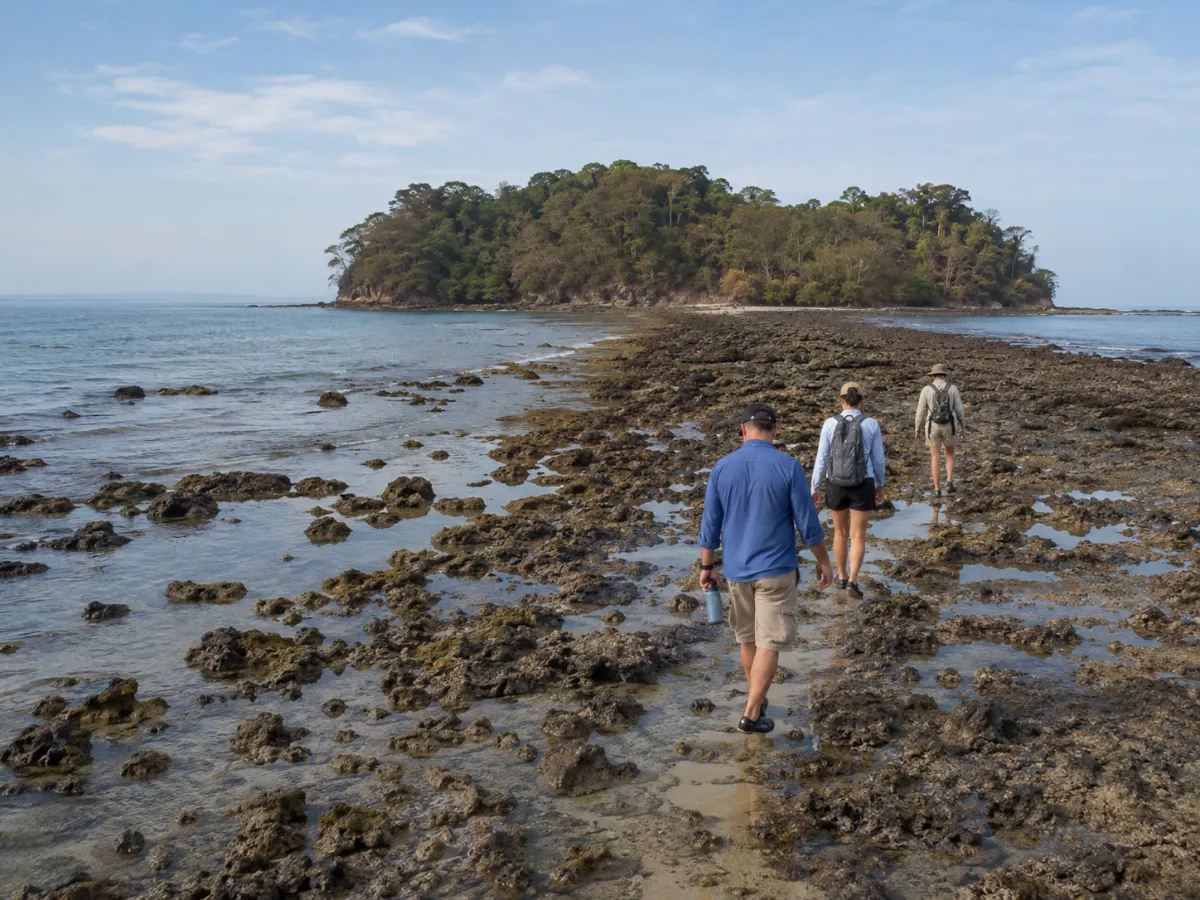
A small island sits just offshore and continues to be used as a local cemetery.
During sufficiently low tide, visitors can walk across the exposed rocky tidal area toward the island. Costa Rica's tourism authority describes a crossing of approximately 400 meters, with some water potentially remaining around knee level even at low tide.
The island should be visited respectfully because it is an active burial site rather than simply a sightseeing attraction.
Visitors should:
Check the tide before starting
Allow enough time to return before the tide rises
Wear footwear suitable for rocks
Avoid disturbing graves or memorials
Carry all trash back to the mainland
Avoid crossing when sea conditions look unsafe
Do not rely only on the approximate time of “low tide.” Actual water levels and wave conditions matter.
Playa Cabuya
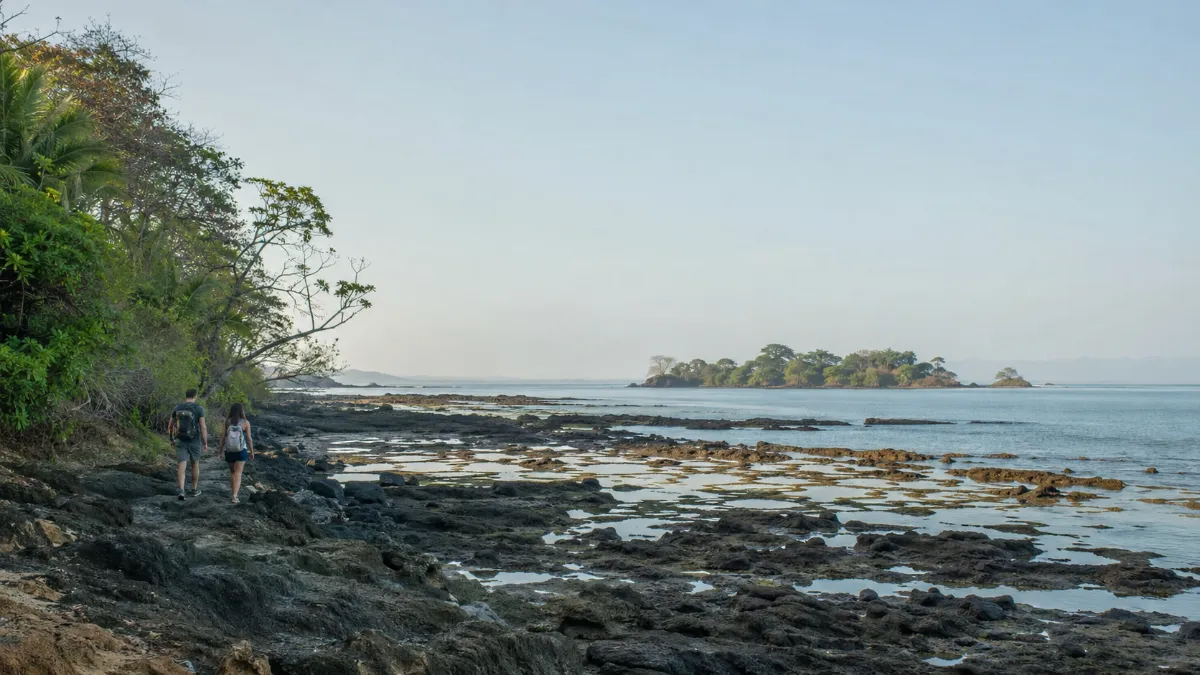
Playa Cabuya has a rugged coastal character rather than the broad sandy appearance of many Guanacaste beaches.
The coastline includes:
Rocks
Coastal vegetation
Tide pools
Open-ocean views
Island scenery
Wildlife habitat
Official tourism information specifically notes strong surf and an open ocean environment.
For that reason, Playa Cabuya is generally better for:
Walking
Photography
Tide-pool exploration
Nature observation
Visiting the island cemetery
than for assuming calm swimming conditions.
Always evaluate the ocean before entering the water.
Cabo Blanco Absolute Natural Reserve
One of Cabuya's greatest advantages is its proximity to Cabo Blanco Absolute Natural Reserve.
Created in 1963 through the conservation work associated with Nicolás Wessberg and Karen Mogensen, Cabo Blanco became Costa Rica's first protected wild area and helped inspire the country's later national conservation system.
The visitor entrance is on the Cabuya side.
The reserve protects:
Tropical forest
Coastal habitat
Wildlife
Marine ecosystems
Seabird habitat
Remote coastline
Visitors may encounter monkeys, deer, coatis, birds, reptiles, and other wildlife, although sightings are never guaranteed.
Hiking in Cabo Blanco
Two well-known trails include:
Sendero Danés – an approximately 2.3-kilometer forest circuit.
Sendero Sueco – approximately 4.2 kilometers toward Playa Cabo Blanco.
The longer hike requires substantially more time because the listed distance is one way.
Heat, humidity, elevation changes, mud, and the return distance should be considered before choosing a trail.
Current opening days, entry procedures, trail access times, and conditions should be confirmed with SINAC before visiting because operational information can change.
Wildlife
The Cabuya–Cabo Blanco area supports diverse wildlife because forest reaches close to the coastline.
Possible sightings include:
Howler monkeys
White-faced capuchin monkeys
Coatis
Iguanas
Tropical birds
Butterflies
Other small mammals and reptiles
Early mornings often provide better conditions for birdwatching and wildlife observation.
Visitors should never feed monkeys or other animals.
Things to Do in Cabuya
Explore the Rocky Coast
Low tide exposes additional rocks and tide pools along sections of the coast.
Look without removing shells, animals, or other marine life.
Birdwatching
Cabuya is well suited to casual birdwatching because forest, gardens, coastline, and protected habitat are close together.
Fishing
Fishing remains part of the local coastal culture, and fishing excursions may be available depending on weather and local operators.
Yoga and Wellness
The quiet environment around Cabuya has attracted small retreats and wellness-oriented accommodations.
Availability varies, so classes and sessions should be arranged directly with the provider.
Visit Montezuma
Montezuma provides restaurants, beaches, waterfalls, and a more active tourism atmosphere within easy reach of Cabuya.
This makes it possible to stay somewhere quieter while still visiting one of the southern peninsula's best-known beach towns.
Snorkeling and Swimming
Snorkeling may be possible around sections of the rocky coastline when the ocean is exceptionally calm.
However, Cabuya should not be promoted as a consistently calm snorkeling destination.
Visibility and safety depend on:
Waves
Tides
Wind
Rainfall
Currents
Sediment
For swimming, choose locations based on current local conditions rather than assuming every part of the Cabuya shoreline is suitable.
Best Time to Visit
December to April
The dry season generally provides:
Less rainfall
More predictable road conditions
Easier hiking
More sunshine
The landscape becomes noticeably drier toward the later months of the season.
May to November
The green season brings:
Lush vegetation
More rainfall
Greener forest
Muddy hiking conditions
More variable rural roads
Cabo Blanco identifies December through April as the general dry season and May through November as the wetter period.
Cabuya can be visited year-round, but travelers should allow additional flexibility during heavy rain.
How to Get to Cabuya
From San Jose and SJO Airport
A common overland route is:
San Jose Airport → Route 27 → Puntarenas → Paquera Ferry → Cóbano → Cabuya
The Puntarenas–Paquera ferry is the principal Gulf of Nicoya crossing for travelers heading toward Cabuya and other southern peninsula destinations.
Before traveling, review the Costa Rica Ferry Guide: Puntarenas to Paquera.
Ferry schedules and operating conditions can change, so the entire journey should be planned around the current crossing rather than driving time alone.
From Cóbano Airport
Cóbano Airport (ACO) is the closest regional airport for Cabuya.
Travelers arriving on a domestic flight can continue directly by road without using a ferry.
Current transportation information estimates approximately 45 to 60 minutes from the airport to Cabuya depending on roads, weather, and the exact property.
Travelers can arrange Cóbano Airport to Cabuya Private Transportation.
From Liberia and Guanacaste
Travelers coming from Guanacaste Airport or northern Nicoya normally remain on the peninsula and travel south overland.
A Puntarenas ferry is generally unnecessary for this direction.
Do You Need a Rental Car?
A vehicle is useful but not essential for every Cabuya stay.
Travelers staying mainly at one retreat or lodge may use arranged transportation.
A rental car becomes more valuable for independent trips to:
Montezuma
Cóbano
Mal País
Santa Teresa
Other beaches and rural areas
Travelers can reach the peninsula first and then collect a vehicle through Car Rental in Cóbano.
A 4x4 is not automatically required, but some accommodations use smaller, uneven, steep, or rain-affected access roads. Confirm the final road with the property before selecting a vehicle.
How Long Should You Stay?
Two or three nights works well for travelers who primarily want:
Cabo Blanco
Island Cemetery
Wildlife
Quiet coastal time
Three to five nights provides a more relaxed pace and enough time to include Montezuma or other peninsula excursions.
Travelers seeking restaurants, nightlife, shopping, or extensive tourism infrastructure may prefer using Cabuya as part of a wider itinerary rather than their only destination.
Visitor Tips
For a smoother stay:
Check tides before visiting the cemetery
Confirm Cabo Blanco conditions before hiking
Carry water
Wear closed shoes for forest trails
Bring insect repellent
Use sun protection
Keep backup cash for smaller businesses
Avoid assuming the rocky coast is safe for swimming
Allow additional road time during heavy rain
Confirm the exact location of rural accommodations
Respect the cemetery as an active cultural site
Frequently Asked Questions
What is Cabuya known for?
Cabuya is best known for the island cemetery, Cabo Blanco Absolute Natural Reserve, rocky coastline, wildlife, and quiet rural atmosphere.
Can you walk to Cabuya Island Cemetery?
Yes, during sufficiently low tide. The crossing is approximately 400 meters and may still involve shallow water. Check the tide carefully and return before water levels rise.
Can you swim at Playa Cabuya?
Conditions vary. Playa Cabuya is rocky and exposed to strong ocean conditions, so it should not be treated as a consistently calm swimming beach.
Is Cabo Blanco close to Cabuya?
Yes. The visitor sector of Cabo Blanco Absolute Natural Reserve is located beside the Cabuya area.
Is Cabuya near Montezuma?
Yes. Cabuya and Montezuma are neighboring destinations on the southern Nicoya Peninsula and can easily be combined in the same stay.
What is the closest airport to Cabuya?
Cóbano Airport (ACO) is the closest regional air gateway. The road transfer usually takes approximately 45 to 60 minutes depending on conditions.
Do you need a car in Cabuya?
Not necessarily, but a vehicle provides more flexibility for travelers exploring several southern Nicoya destinations.
Is Cabuya good for families?
It can be, particularly for families who enjoy nature and quieter environments. Families should pay special attention to ocean conditions, tides, heat, and hiking distances.
Conclusion
Cabuya, Costa Rica offers a quieter and more nature-focused experience than many of the Nicoya Peninsula's better-known beach towns.
Its highlights are not resorts or nightlife, but Cabo Blanco Absolute Natural Reserve, the Cabuya Island Cemetery, forest wildlife, rugged coastline, and proximity to Montezuma.
The village is particularly suited to travelers who appreciate hiking, birdwatching, simple accommodations, and slower travel.
Planning around tides, Cabo Blanco access, rural roads, and transportation is important, but those same characteristics help Cabuya retain the peaceful atmosphere that makes it distinctive.