
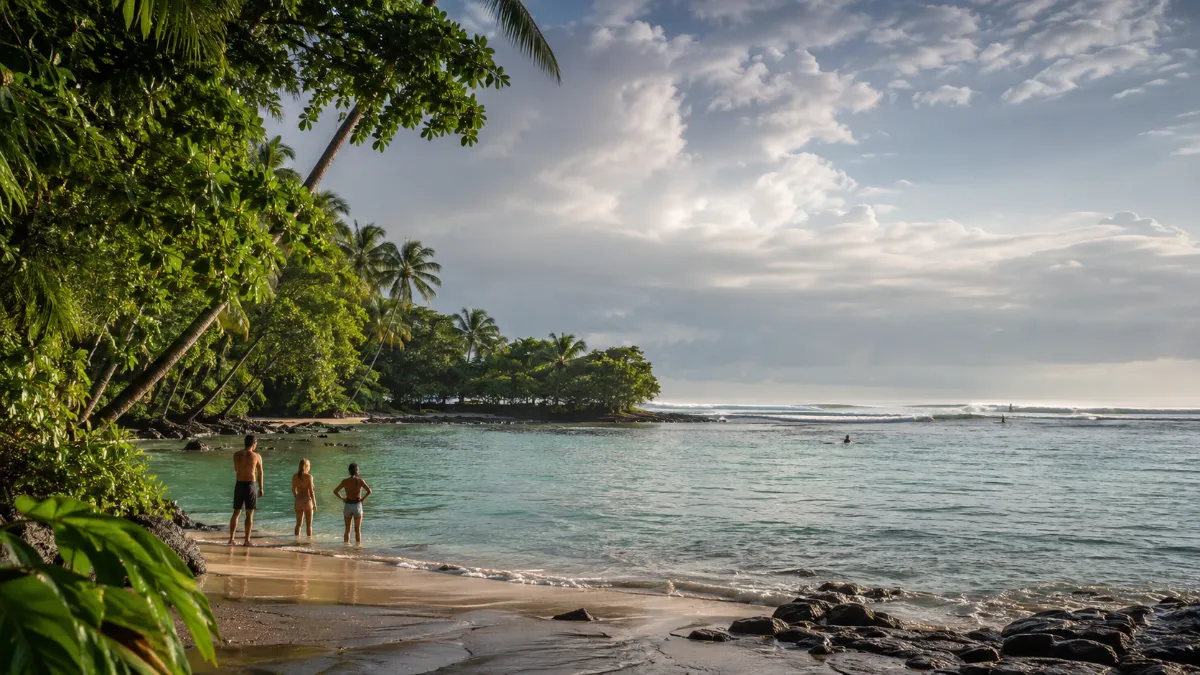
Best Time to Visit Puerto Viejo: Weather, Sea Conditions and Seasons
A practical seasonal guide to Puerto Viejo weather, Caribbean sea conditions, rainfall, beach activities, and travel planning.
Best Time to Visit Puerto Viejo: Weather, Sea Conditions and Seasons
The best time to visit Puerto Viejo depends on whether you want calmer sea conditions, surfing waves, fewer rainy periods, wildlife activities, or a quieter Caribbean coast experience. Unlike many Pacific destinations in Costa Rica, Puerto Viejo follows a Caribbean weather pattern and does not have one clearly defined dry season.
Warm temperatures are common throughout the year, but rainfall, sunshine, waves, and visibility can change from one week to another. February and March often provide a useful combination of sunshine and manageable sea conditions. September and October can also bring calmer periods, making them popular months for swimming, snorkeling, and relaxed beach days.
These seasonal patterns are helpful for Costa Rica travel planning, but they are not guarantees. Puerto Viejo can receive rain during traditionally favorable months and enjoy clear weather during wetter periods. Travelers should choose dates based on their preferred activities and keep some flexibility in the itinerary.
What Is the Best Time to Visit Puerto Viejo?
For many travelers, the best time to visit Puerto Viejo is during February and March or September and October. These periods can offer calmer Caribbean water, useful beach weather, and favorable conditions for exploring Playa Cocles, Playa Chiquita, Punta Uva, Manzanillo, and Cahuita.
February and March are practical for travelers combining Puerto Viejo with other parts of Costa Rica because they overlap with the drier season in many Pacific and Central Valley destinations.
September and October are especially interesting for travelers focusing on the Caribbean coast. While these months can be rainy in other parts of Costa Rica, Puerto Viejo may experience periods of sunshine and calmer water.
Travelers interested mainly in surfing may prefer months with stronger swells. Visitors focused on swimming, snorkeling, kayaking, or family beach days should prioritize calmer sea conditions rather than choosing dates based only on rainfall.
Understanding Puerto Viejo Weather
Puerto Viejo is located on Costa Rica's southern Caribbean coast. Its weather is influenced by warm tropical air, moisture from the Caribbean Sea, and changing regional wind patterns.
Rain can occur during any month. Some showers are brief and followed by sunshine, while other systems can bring longer periods of rain. It is also possible to experience sunshine in one beach area and rain farther along the coast.
The temperature usually feels warm throughout the year. Humidity is also common, particularly after rain or during periods with limited wind. Even cloudy days can feel hot, so travelers should prepare for sun exposure, hydration needs, and warm conditions.
Weather forecasts can help with general planning, but they do not always describe the conditions at every Puerto Viejo beach. Local conditions may change quickly, especially between Puerto Viejo town, Punta Uva, Manzanillo, and Cahuita.
Puerto Viejo Seasons Are Different from the Pacific Coast
Many travelers plan Costa Rica trips around the Pacific dry season and green season. That system does not apply to Puerto Viejo in exactly the same way.
The Pacific side often experiences a more noticeable dry period during the northern winter months and a rainier period during the middle of the year. The Caribbean coast has its own rainfall patterns, with rain possible throughout the calendar.
This difference is important when building a multi-region itinerary. A month that is rainy in Guanacaste or the Central Pacific may still provide good beach days in Puerto Viejo. The opposite can also happen.
Travelers should avoid assuming that the weather will be identical in San Jose, La Fortuna, Manuel Antonio, and Puerto Viejo. Each region can have different rainfall, cloud cover, road conditions, and sea conditions on the same day.
Puerto Viejo in January
January can bring a mixture of sunshine, clouds, and rain to Puerto Viejo. Conditions often vary from day to day, so travelers should plan flexible outdoor activities.
The sea may be active during parts of the month, which can create useful surfing conditions but may limit swimming and snorkeling. Playa Cocles can attract surfers when the waves are favorable, while calmer beach activities depend on the daily conditions.
January is also part of a busy travel period in Costa Rica. Travelers should arrange accommodations and transportation before arrival, especially when visiting around holiday dates.
Pre-arranged airport transportation can be useful for January arrivals because flight schedules, hotel demand, and long-distance travel from San Jose may reduce last-minute flexibility.
Puerto Viejo in February
February is often considered one of the better months to visit Puerto Viejo. Travelers may experience useful periods of sunshine, warm beach weather, and more favorable sea conditions.
Calmer days can create opportunities for swimming at Punta Uva or Playa Chiquita, although visitors should always evaluate the water before entering. Snorkeling may also be possible when visibility and waves cooperate.
February works well for multi-region travel because many other parts of Costa Rica also experience favorable weather. This makes it easier to combine Puerto Viejo with destinations such as La Fortuna, San Jose, or the Pacific coast.
Demand can be high, so hotels and transportation should be planned in advance.
Puerto Viejo in March
March is another popular time to visit Puerto Viejo. Warm temperatures, periods of sunshine, and potentially calmer Caribbean water can support beach-focused itineraries.
Travelers can divide their time between Puerto Viejo town, Playa Cocles, Playa Chiquita, Punta Uva, Manzanillo, and Cahuita. Keeping the schedule flexible allows visitors to choose each day's beach based on the weather and sea conditions.
March can feel hot and humid, particularly during the middle of the day. Early morning beach visits and shaded afternoon activities may be more comfortable.
Transportation demand may increase around major travel periods. Airport transfers, shared shuttle schedules, and hotel pickup arrangements should be confirmed before arrival.
Puerto Viejo in April
April is a transition month that can bring mixed weather. Some days may be sunny and suitable for beach activities, while other periods may include heavier showers.
Conditions can also change around holiday travel periods, when accommodations and transportation may be busier. Travelers visiting during these dates should organize airport transfers and long-distance transportation early.
The sea may vary between calm and active conditions. Visitors interested in snorkeling or swimming should check locally rather than assuming the water will remain calm throughout the trip.
April can still be a good month for Puerto Viejo when travelers accept that some activities may need to move between mornings and afternoons.
Puerto Viejo in May
May can bring regular rain, humid conditions, and changing beach weather. Rain does not necessarily continue all day, and travelers may still experience sunny mornings or clear periods between showers.
The landscape can appear especially green during wetter periods. Wildlife activity and forest scenery may also appeal to travelers who want more than a traditional beach vacation.
Sea conditions remain variable. Some days may be appropriate for swimming, while other days may be better for surfing or land-based activities.
Travelers should bring quick-drying clothing and protect phones, passports, cameras, and other important items from moisture.
Puerto Viejo in June
June can include rain, sunshine, and active Caribbean weather. Conditions may be suitable for travelers who do not need completely dry days and are comfortable adjusting plans.
A typical flexible itinerary might include a beach visit when the morning is clear, followed by restaurants, cultural activities, or forest exploration during rainier periods.
Road conditions should be considered when traveling between Puerto Viejo and other Costa Rica destinations. Heavy rain can affect visibility, traffic, and total travel time.
Private transportation can be useful during wetter periods because pickup time, luggage handling, and hotel drop-off can be planned in advance.
Puerto Viejo in July
July can bring changing weather, with periods of rain followed by sunshine. The exact pattern varies, and travelers should avoid relying on a single long-range forecast.
Surfing conditions may be attractive during active sea periods. Swimming and snorkeling depend on the local waves and currents.
July is also a common vacation period for families. Travelers should reserve accommodations and Costa Rica shuttle service ahead of time, particularly when arriving through Juan Santamaria International Airport.
Families should choose beaches based on same-day conditions. Punta Uva may work well during calm periods, while Playa Cocles is generally more appropriate for surfing than casual swimming when waves are strong.
Puerto Viejo in August
August can be warm, humid, and variable. Travelers may experience rain, partial sunshine, and changing ocean conditions within the same trip.
The month can work well for visitors interested in a combination of beaches, rainforest, wildlife, food, and local culture rather than uninterrupted sunbathing.
Transportation planning remains important. Rain during a long travel day can affect visibility and road speed, especially when connecting Puerto Viejo with San Jose Airport or a destination in another region.
Travelers should allow enough time between a hotel pickup and a departing international flight.
Puerto Viejo in September
September is often one of the most appealing months for a Caribbean coast trip. Puerto Viejo may experience calmer sea conditions and useful periods of sunshine even when other parts of Costa Rica are receiving more rain.
Calmer water can improve the possibility of swimming, snorkeling, kayaking, and relaxed family beach days. Punta Uva and the Manzanillo area may be particularly attractive when the sea is settled.
September can also feel quieter than the main international travel season. This can appeal to travelers who prefer fewer crowds and a slower atmosphere.
Weather remains unpredictable, so visitors should still prepare for rain. A waterproof bag and flexible daily schedule are useful throughout the year.
Puerto Viejo in October
October can also offer favorable Caribbean coast conditions. While October is associated with substantial rainfall in many Pacific destinations, Puerto Viejo may experience sunnier periods and calmer water.
This seasonal difference makes October a useful option for travelers whose itinerary is focused on Puerto Viejo, Cahuita, Punta Uva, and Manzanillo.
Swimming and snorkeling may be possible when the water is calm, but conditions should be evaluated each day. Heavy rain can still occur, and no travel date guarantees clear skies.
Travelers combining Puerto Viejo with the Pacific coast should prepare for different weather conditions in each region.
Puerto Viejo in November
November is another transition period. Rainfall and sea conditions can vary as regional weather patterns change.
Some travelers may enjoy clear beach periods, while others may experience regular rain. A trip with several nights in Puerto Viejo provides more flexibility than a short one-night stop.
Long-distance transportation should be arranged carefully, especially when road conditions are wet. Travelers connecting with flights should avoid building an itinerary with limited time between arrival at the airport and departure.
November can be a practical month for travelers who value flexibility and do not require predictable beach weather every day.
Puerto Viejo in December
December can bring a mixture of rain, sun, active sea conditions, and high travel demand. The holiday period is one of the busiest times for accommodations and transportation in Costa Rica.
Travelers should reserve hotels, private transfers, and shared shuttle service early. Last-minute options may be limited around Christmas and New Year travel dates.
The sea may be rough during some periods, which can support experienced surfing but make swimming less appropriate. Visitors should check conditions locally before entering the water.
December remains appealing for travelers who want a warm Caribbean destination and are comfortable with changing tropical weather.
Best Time to Visit Puerto Viejo for Swimming
The best time to visit Puerto Viejo for swimming is usually during a period of calm Caribbean water. February, March, September, and October can provide useful swimming conditions, but daily conditions remain more important than the calendar.
Punta Uva and some sections of Playa Chiquita are commonly considered for swimming when the sea is calm. Playa Negra may also be suitable on favorable days.
Playa Cocles is more exposed and is better known for surfing. It should not be treated as a consistently calm swimming beach.
Travelers should ask hotel staff, local residents, surf instructors, or an on-duty lifeguard about current conditions. Most beaches do not have continuous lifeguard coverage.
Best Time to Visit Puerto Viejo for Surfing
Surf conditions in Puerto Viejo depend on swell direction, wind, tide, and the surfer's experience level.
Playa Cocles is a practical option for visitors interested in surf lessons. Waves can vary significantly, so beginners should use a professional instructor who can evaluate the conditions.
Salsa Brava is an advanced reef break near Puerto Viejo town. It is not appropriate for beginner surfers or casual swimmers.
Stronger sea conditions can occur during different parts of the year. Experienced surfers should seek current local information rather than selecting travel dates based only on general seasonal patterns.
Best Time to Visit Puerto Viejo for Snorkeling
Snorkeling is most practical when the Caribbean Sea is calm and visibility is clear. February, March, September, and October may provide opportunities, but snorkeling cannot be guaranteed during any specific month.
Punta Uva and Manzanillo may offer suitable conditions on calm days. Travelers can also consider the Cahuita area as part of a broader Caribbean coast itinerary.
Rain, waves, currents, and sediment can reduce visibility. Visitors should check the conditions locally before entering and avoid snorkeling near rocks or reef areas during active seas.
Best Time to Visit Puerto Viejo for Families
Families often prefer periods with calmer water and a lower chance of extended rain. February and March can be practical because the weather may also support travel in other Costa Rica regions.
September and October can work well for families focusing mainly on the Caribbean coast. These months may provide quieter beaches and favorable sea conditions.
Families should still build flexibility into the itinerary. A beach day can be moved to the morning, while wildlife activities, restaurants, or short excursions can be planned around changing weather.
Private transportation may be convenient for families because pickup time, child equipment, luggage, and hotel location can be considered before departure.
Best Time to Visit Puerto Viejo for Wildlife
Puerto Viejo and the southern Caribbean coast provide wildlife experiences throughout the year. Travelers may see monkeys, sloths, birds, reptiles, and other animals in forested areas.
Wildlife activity does not depend only on sunshine. Cloudy mornings and periods after rain can still offer useful opportunities for nature observation.
Travelers interested in wildlife should consider combining Puerto Viejo with Cahuita or the Gandoca-Manzanillo area. Guided experiences can help visitors observe animals without disturbing them.
Wildlife-related seasonal activities may follow specific dates and access rules, so travelers should confirm current information before planning the trip around one species or event.
Puerto Viejo Rain: Does It Rain All Day?
Rain in Puerto Viejo does not always last all day. Some showers are brief, while other weather systems can produce extended rainfall.
A rainy forecast does not necessarily mean every beach activity will be canceled. Travelers may experience rain in the early morning, sunshine in the afternoon, or several changing periods during the day.
It is useful to avoid planning every outdoor activity for one specific hour. A flexible schedule allows travelers to respond to local conditions.
Rain gear should be light and easy to carry. Quick-drying shoes, a waterproof bag, and protection for electronics are useful even during months considered favorable.
Puerto Viejo Sea Conditions
Sea conditions are just as important as rainfall when choosing the best time to visit Puerto Viejo. A sunny day can still have strong waves, currents, or poor snorkeling visibility.
Conditions also differ between beaches. Playa Cocles may have active surf while a more protected section near Punta Uva appears calmer. This does not mean every part of Punta Uva is safe on the same day.
Travelers should observe the water before entering. Strong shore break, irregular wave patterns, floating debris, or warnings from local residents are reasons to remain out of the sea.
Swimming after dark is not recommended. Visitors should also avoid entering unfamiliar water alone.
How Weather Affects Transportation to Puerto Viejo
Weather can affect transportation between Puerto Viejo, San Jose, Juan Santamaria International Airport, and other Costa Rica destinations.
Heavy rain may reduce visibility, slow traffic, and increase the total travel time. Travelers should avoid planning a tight connection between Puerto Viejo and an international flight.
A private transfer can be useful when the pickup time needs to be planned around a flight, hotel checkout, family group, or substantial luggage. Door-to-door transportation also reduces the need to move bags between several meeting points during wet weather.
Shared shuttle service can be practical when the scheduled departure matches the travel itinerary. Travelers should confirm the pickup location, luggage rules, and arrival area before the travel date.
For airport departures, it is better to allow additional time than to depend on ideal road and weather conditions.
What to Pack for Puerto Viejo Weather
Travelers should pack for heat, humidity, sunshine, and rain during every month of the year.
Lightweight clothing and quick-drying materials are useful for beach days and sudden showers. A light rain jacket or compact umbrella can help during short walks between accommodations, restaurants, and transportation pickup points.
Shoes should be selected based on planned activities. Sandals may be suitable for town and beach use, while closed shoes can be more practical for forest walks and wet trails.
A waterproof bag can protect passports, phones, cameras, and travel documents during beach visits or rainy transportation days.
Planning a Multi-Region Costa Rica Itinerary
Puerto Viejo weather may be different from the weather in Guanacaste, Manuel Antonio, Monteverde, La Fortuna, or San Jose.
Travelers visiting several regions should pack for changing conditions and avoid using one forecast for the entire country. Puerto Viejo may be sunny while the Pacific coast is rainy, or the Caribbean may receive rain while another region is dry.
Route planning should also consider travel distance and hotel location. Combining Puerto Viejo with La Fortuna, the Central Valley, or a Pacific destination requires a long-distance transportation day.
Private transportation can simplify a multi-stop itinerary because pickup and drop-off can be arranged directly between hotels. Shared shuttles may also connect popular tourism corridors when schedules match the itinerary.
Frequently Asked Questions
What is the best month to visit Puerto Viejo?
February, March, September, and October are often practical months for visiting Puerto Viejo. They may provide calmer sea conditions and useful periods of sunshine, although rain is possible throughout the year.
Does Puerto Viejo have a dry season?
Puerto Viejo does not have the same clearly defined dry season as Costa Rica's Pacific coast. Rain can occur during every month, with some periods providing more favorable beach conditions than others.
Is September a good time to visit Puerto Viejo?
September can be a good time to visit Puerto Viejo. The Caribbean coast may experience calmer water and sunny periods even when other parts of Costa Rica are receiving heavier rain.
Is October a good time to visit Puerto Viejo?
October can be a useful month for a Caribbean-focused itinerary. Puerto Viejo may have favorable sea conditions and periods of sunshine, but travelers should still prepare for rain.
What is the rainiest month in Puerto Viejo?
Rainfall varies from year to year, and Puerto Viejo can receive substantial rain during several different periods. Travelers should not choose or reject a month based on rainfall alone.
Can you swim in Puerto Viejo year-round?
Swimming may be possible throughout the year, but it depends on daily sea conditions. Waves and currents can make some beaches unsuitable even during sunny weather.
When is the sea calmest in Puerto Viejo?
Calmer periods are often associated with February, March, September, and October. Daily conditions should always be checked locally before swimming or snorkeling.
What is the best time to surf in Puerto Viejo?
The best time depends on the surfer's ability and the type of waves expected. Playa Cocles can be suitable for lessons under appropriate conditions, while Salsa Brava is intended for experienced surfers.
Is Puerto Viejo worth visiting during the rainy season?
Yes. Rainy periods can still include sunshine, beach time, wildlife activities, and quieter travel conditions. A flexible itinerary is important.
What airport should I use for Puerto Viejo?
Juan Santamaria International Airport near San Jose is a common international arrival point for travelers continuing to Puerto Viejo by ground transportation.
How do I get from San Jose Airport to Puerto Viejo?
Travelers can use private transportation, shared shuttle service, public transportation, or a rental vehicle. The best option depends on the flight arrival, group size, luggage, hotel location, and preferred schedule.
Should I book Puerto Viejo transportation in advance?
Advance planning is recommended, especially during holiday periods and busy travel months. Pre-arranged transportation helps coordinate airport arrivals, hotel pickup, luggage, and long-distance travel.
Choosing the Best Time to Visit Puerto Viejo
The best time to visit Puerto Viejo depends on the experience you want. February and March are practical for combining Caribbean beaches with other Costa Rica regions. September and October can offer appealing sea conditions and a quieter Caribbean coast atmosphere.
Surfers should follow current swell information, while swimmers and families should prioritize calm daily conditions. Travelers interested in wildlife and rainforest scenery can enjoy Puerto Viejo throughout the year if they are prepared for tropical rain.
Weather, sea conditions, road conditions, and transportation should be planned together. Once the travel dates, flight arrival, and accommodation are confirmed, Costa Rica Shuttles can help organize a private transfer, shared shuttle service where available, airport transfer, or door-to-door transportation to Puerto Viejo.