Best Beaches in Puerto Viejo: Which Beach Is Right for You?
A practical guide to Playa Negra, Cocles, Chiquita, Punta Uva, Manzanillo, and other beaches near Puerto Viejo.
Best Beaches in Puerto Viejo: Which Beach Is Right for You?
The best beaches in Puerto Viejo offer very different experiences along the southern Caribbean coast of Costa Rica. Some beaches are better suited to surfing, while others are more appealing for families, quiet afternoons, nature, or easy access to restaurants and accommodations.
Playa Cocles is a practical choice for surfing and an active beach day. Punta Uva is known for natural scenery, shade, and calmer-looking water when conditions are favorable. Playa Chiquita feels smaller and quieter, while Playa Negra offers dark sand close to Puerto Viejo town. Farther south, Manzanillo combines beach time with access to a protected natural area.
There is no single beach that is right for every traveler. The best choice depends on where you are staying, the activities you want to enjoy, and the ocean conditions on the day of your visit.
How to Choose Among the Best Beaches in Puerto Viejo
Travelers who want surfing, beach activity, and convenient access to nearby accommodations often choose Playa Cocles. Visitors looking for attractive scenery, natural shade, and a relaxed beach environment may prefer Punta Uva.
Playa Chiquita works well for travelers who want a smaller and less active setting. Playa Negra is convenient for visitors staying near downtown Puerto Viejo, especially those who want to combine beach time with restaurants, shopping, and nightlife.
Manzanillo is a better match for travelers who want to combine the coast with forest, wildlife, and nature walks. Salsa Brava is associated with powerful surfing conditions and is not a casual swimming beach.
Ocean conditions can change quickly throughout the Puerto Viejo area. A beach that appears calm in the morning may have stronger waves or currents later in the day. Travelers should always evaluate the conditions before entering the water.
Playa Negra: Best for Black Sand and Access from Town
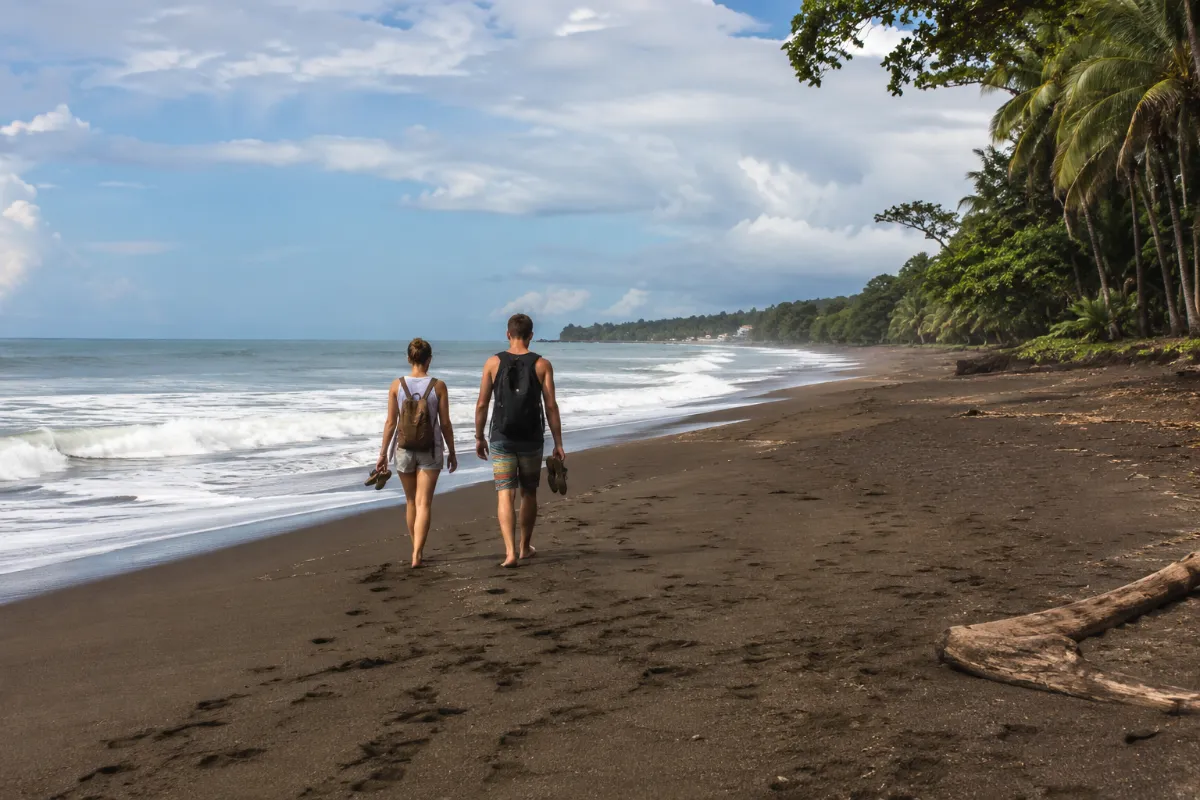
Playa Negra extends along the northern side of Puerto Viejo and is recognized for its dark volcanic-looking sand. It is one of the easiest beaches to reach for travelers staying in or near the center of town.
The long shoreline is suitable for walking, relaxing, and watching the Caribbean coast. Its appearance is very different from the lighter sand found at Punta Uva and other beaches farther south.
Playa Negra is a good choice for travelers who value convenience and want to avoid traveling far from Puerto Viejo. It is also practical for visitors who want to spend part of the day at the beach and the rest exploring restaurants, cafes, and shops in town.
Water conditions can vary. The beach may look calm on some days and experience stronger waves on others. Travelers should check the water carefully before swimming and avoid assuming that every section is suitable for entering the sea.
Playa Negra may not be the right beach for visitors specifically searching for light sand, protected swimming areas, or a secluded setting.
Playa Cocles: Best for Surfing and an Active Beach Day
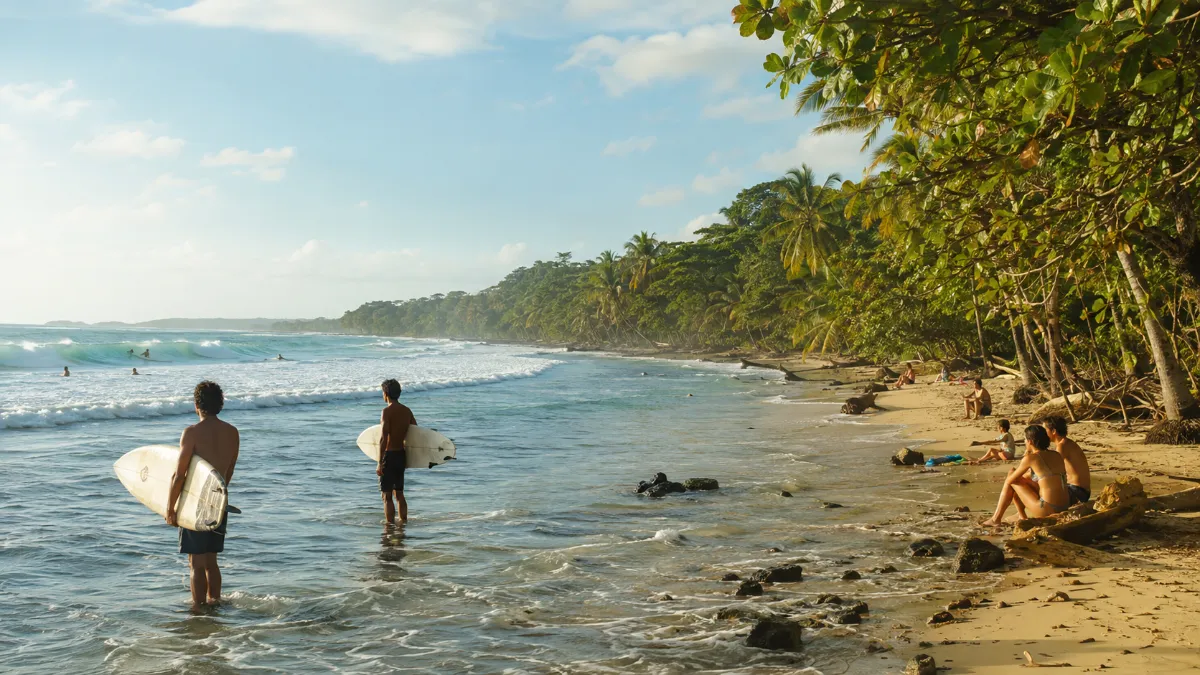
Playa Cocles is one of the most recognized beaches near Puerto Viejo. Its open shoreline, consistent beach activity, and surfing culture make it popular with visitors who want more than a quiet afternoon beside the water.
The beach is commonly used for surfing and surf lessons. Beginners should arrange instruction rather than entering unfamiliar waves alone. A local instructor can help choose the appropriate part of the beach based on the swell, tide, and experience level.
Cocles generally feels more active than Playa Chiquita or Punta Uva. Travelers may see surfers, people walking along the shore, and visitors spending several hours near the beach.
This area can be a good place to stay for travelers who want beach access without being directly in downtown Puerto Viejo. Accommodations, restaurants, and services are spread along the road between Puerto Viejo and Cocles.
Swimming conditions should be evaluated carefully. Cocles is exposed to waves and should not be treated as a permanently calm swimming beach. Even when lifeguard services are available, travelers remain responsible for checking local conditions and following posted warnings.
Playa Cocles is right for surfers, active travelers, and visitors who want a broad beach near Puerto Viejo. It may be less suitable for families specifically searching for shallow or consistently gentle water.
Playa Chiquita: Best for a Smaller and Quieter Setting
Playa Chiquita is smaller and more enclosed than Playa Cocles. Trees, vegetation, and rocky sections divide the shoreline into compact beach areas that can feel more private.
The atmosphere is generally quieter, which makes Playa Chiquita appealing to couples, independent travelers, and visitors who prefer a slower beach day. Natural shade is available in some areas, although the amount of shade changes throughout the day.
Small pools or calmer-looking sections may appear between rocks when the tide and water conditions allow. However, travelers should not assume that these areas are always safe for swimming. Waves, currents, and changing tides can affect even the more protected-looking sections.
Playa Chiquita is a good option for visitors staying nearby who want to avoid the more active environment of Cocles. Restaurants and accommodations are available in the surrounding area, but services are more spread out than in central Puerto Viejo.
Families may enjoy the smaller setting, but children should remain under close supervision near the water. Rocky sections can also become slippery.
Punta Uva: Best for Scenery and Relaxed Beach Time
Punta Uva is one of the most scenic beaches in the Puerto Viejo area. It is known for light sand, thick coastal vegetation, natural shade, and sections of clear-looking Caribbean water.
The name Punta Uva is often used for more than one nearby beach area. The experience can vary depending on the access point. Some sections feel open and spacious, while others are bordered by rocks, trees, and denser vegetation.
Punta Uva is a strong choice for travelers who prioritize scenery, shade, and a relaxed beach atmosphere. It can also be suitable for families when the sea is calm, although adults should always evaluate the water before allowing children to enter.
Swimming may be possible during favorable conditions. The beach should not be described as permanently calm, since Caribbean weather and ocean conditions can change throughout the day.
Snorkeling may also be possible when visibility is good and the water is calm. Travelers should avoid snorkeling near rocks or exposed sections when waves are present.
Punta Uva is farther from central Puerto Viejo than Playa Negra or Cocles. Visitors staying in town should plan how they will reach the beach and return to their accommodation, particularly if they intend to stay until late afternoon.
Manzanillo: Best for Nature and a Full-Day Excursion
Manzanillo is located farther south along the coastal road from Puerto Viejo. The village and beach are closely connected to the Gandoca-Manzanillo Wildlife Refuge, making this area suitable for travelers who want to combine beach time with forest, wildlife, and nature activities.
The village beach provides a convenient starting point for exploring the area. Travelers can relax near the shoreline or plan a longer visit that includes walking in the protected area.
Some beaches and viewpoints beyond the village require additional walking. Visitors should use appropriate footwear, carry water, and consider trail and weather conditions before entering less developed sections.
Manzanillo is a good choice for travelers who prefer nature and a quieter coastal environment. It is less convenient for visitors who want to remain close to the restaurants and nightlife of Puerto Viejo.
Snorkeling may be possible when the sea is calm, but visibility and safety depend on daily conditions. Travelers should seek local guidance before entering unfamiliar reef areas.
Visitors should follow all posted protected-area regulations and avoid removing shells, plants, rocks, or other natural materials.
Playa Chino and the Downtown Shoreline: Best for Convenience
Playa Chino and the small sections of shoreline around central Puerto Viejo are convenient for travelers who want to stay close to restaurants, shops, and town activity.
These areas are useful for a short walk, a sunset stop, or a flexible afternoon without arranging additional transportation. They can also be practical for visitors who have limited time before checking into a hotel or departing for another destination.
The downtown shoreline is not usually the first choice for travelers seeking a long beach day. Visitors who want a broader stretch of sand often continue toward Playa Negra, Cocles, Playa Chiquita, or Punta Uva.
Staying near Playa Chino can still be a good decision for travelers who prioritize dining, nightlife, and easy access to local services over having one large beach directly beside their accommodation.
Salsa Brava: Best for Experienced Surfers
Salsa Brava is the well-known reef break near downtown Puerto Viejo. It is associated with strong waves, reef conditions, and advanced surfing.
This is not the right location for beginner surf practice, casual swimming, or a family beach day. Surfers need experience, local knowledge, and an understanding of reef breaks before entering the water.
Travelers who are learning to surf should consider professional instruction at a more appropriate section of Playa Cocles. Surf conditions can change, so even experienced surfers should check the break and speak with local professionals before entering.
Visitors who do not surf can still observe the activity from a safe position on shore.
Which Puerto Viejo Beach Is Best for Swimming?
Punta Uva and parts of Playa Chiquita are commonly considered for swimming when the sea is calm. Playa Negra may also be suitable under favorable conditions.
Playa Cocles is more exposed and is better known for waves and surfing. It should not be selected as a swimming beach without first checking the conditions.
No Puerto Viejo beach is calm every day. The safest decision should be based on the water conditions present at the time of the visit. Travelers can ask hotel staff, local residents, surf instructors, or an on-duty lifeguard for current guidance.
Most beaches in the area do not have continuous lifeguard coverage. Visitors should avoid swimming alone, entering the sea after dark, or going into water that appears rough or unfamiliar.
Which Puerto Viejo Beach Is Best for Families?
Punta Uva is often a practical family choice when the water is calm. It offers natural shade, attractive scenery, and sections where families can spend several hours.
Playa Chiquita may also work well for families who prefer a smaller and quieter beach. However, rocky areas and changing tides require careful supervision.
Playa Cocles can be suitable for older children interested in surf lessons. Families should arrange instruction with a qualified local provider rather than allowing inexperienced swimmers to enter the waves alone.
Playa Negra offers convenient access from town, but families should check the surf before swimming.
No beach should be considered completely safe at all times. Adults should remain close to children whenever they are near the water.
Which Puerto Viejo Beach Is Best for Surfing?
Playa Cocles is the most practical beach for many travelers interested in surfing or taking lessons. Its active surf environment makes it easier to find instruction and observe local conditions before entering.
Salsa Brava is intended for experienced surfers. Beginners should not attempt to surf there.
Other beaches may receive surf depending on weather and swell direction, but suitability changes frequently. Travelers should speak with local surf professionals before choosing where to surf.
Which Puerto Viejo Beach Is Best for Snorkeling?
Punta Uva and Manzanillo may offer snorkeling opportunities when the Caribbean Sea is calm and visibility is good.
Snorkeling conditions are not guaranteed. Rain, waves, currents, and sediment can reduce visibility or make the water unsafe. Travelers should check conditions on the same day and avoid entering near rocks or reef areas when waves are present.
Visitors whose main priority is snorkeling may also consider planning a separate excursion to the Cahuita area. Conditions, access rules, and tour arrangements should be reviewed before departure.
Where to Stay for the Puerto Viejo Beaches
Staying in central Puerto Viejo or near Playa Negra is convenient for travelers focused on restaurants, nightlife, and easy access to town. This location also makes it easier to arrange taxis or transportation to beaches farther south.
The Cocles area offers a balance between beach access and proximity to Puerto Viejo. It works particularly well for travelers interested in surfing or spending several days near a broad and active beach.
Playa Chiquita and Punta Uva are better suited to travelers seeking a quieter environment. Accommodations and restaurants are more spread out, so the exact hotel location should be reviewed before booking.
Manzanillo provides greater separation from central Puerto Viejo. It is appropriate for travelers focused on nature, walking, and a slower schedule rather than frequent trips into town.
Travelers should not choose an accommodation based only on the general area name. Some hotels and vacation rentals are located away from the main road or beach access, making transportation planning more important.
Best Time to Visit the Beaches in Puerto Viejo
Puerto Viejo has a Caribbean weather pattern that differs from many Pacific coast destinations in Costa Rica. Rain can occur throughout the year, and weather conditions may change within the same day.
Some periods may bring calmer water and more favorable swimming conditions, but no month guarantees dry weather or a calm sea.
Travelers should keep their beach plans flexible. A flexible schedule makes it easier to visit Punta Uva on a calm morning, choose Cocles when surfing conditions are appropriate, or plan a nature day when beach conditions are less favorable.
Weather can also affect road conditions, visibility, outdoor activities, and transportation between Puerto Viejo and other Costa Rica destinations.
Transportation to the Best Beaches in Puerto Viejo
Transportation is an important part of visiting the best beaches in Puerto Viejo because the main beach areas extend along the coastal road from Playa Negra to Manzanillo.
Juan Santamaria International Airport near San Jose is a common international arrival point for travelers continuing to Puerto Viejo and the southern Caribbean coast. From the airport or San Jose area, travelers can continue by public bus, shared shuttle service, rental vehicle, or private transportation.
A private transfer can be practical for families, groups, travelers carrying substantial luggage, and passengers who want transportation planned around flight arrivals. Door-to-door transportation also allows the exact hotel location to be included in the route.
A shared shuttle may be suitable when the scheduled departure matches the flight arrival and accommodation location. Travelers should confirm whether the service includes direct hotel pickup or uses a central meeting point.
Once in Puerto Viejo, bicycles, taxis, local transportation, and pre-arranged private transportation can be used to move between beach areas. Cycling is common along parts of the coastal corridor, but travelers should consider heat, rain, road conditions, darkness, and the distance between beaches.
Travelers staying near Playa Chiquita, Punta Uva, or Manzanillo should plan evening transportation carefully. Walking or cycling after dark may not be appropriate on every section of the road.
Costa Rica Shuttles can help organize private transportation, shared shuttle service where available, airport transfers, and hotel transfers for travelers visiting Puerto Viejo. Transportation should be arranged around the arrival airport, hotel location, luggage, group size, and planned beach activities.
Puerto Viejo Beach Safety Tips
Travelers should not judge water safety only by the appearance of the surface. Currents may be present even when the water looks manageable.
Ask locally about current conditions before swimming, surfing, or snorkeling. Enter the water with another person and avoid swimming after dark.
Lifeguard coverage should never be assumed. Pay attention to warning signs, flags, waves, and advice from people familiar with the beach.
Do not leave phones, wallets, bags, or vehicle keys unattended on the sand. Travelers changing hotels should complete their hotel transfer before visiting the beach instead of leaving luggage inside a parked vehicle.
Sun exposure can also be strong even on cloudy days. Carry drinking water and use appropriate sun protection, especially when spending several hours at Cocles, Punta Uva, or Manzanillo.
Nearby Destinations for a Caribbean Coast Itinerary
Cahuita is one of the main nearby destinations north of Puerto Viejo. It combines a coastal town with beaches, forest trails, and protected natural areas.
Manzanillo is located south of Puerto Viejo and provides access to a quieter village environment and the Gandoca-Manzanillo Wildlife Refuge.
Cahuita, Puerto Viejo, Playa Cocles, Punta Uva, and Manzanillo can be combined in a southern Caribbean itinerary without changing hotels every day. The most practical base depends on whether the traveler prioritizes restaurants, surfing, quiet beaches, or nature.
Travelers continuing to another Costa Rica destination should review route information before selecting a hotel checkout time. Long-distance transportation may require an early departure, especially when connecting Puerto Viejo with San Jose Airport or a destination in another region.
Frequently Asked Questions
What is the best beach in Puerto Viejo?
Punta Uva is a strong choice for scenery and relaxed beach time when the sea is calm. Playa Cocles is better for surfing and a more active atmosphere. The right beach depends on the activities and environment you prefer.
What is the best beach in Puerto Viejo for swimming?
Punta Uva and parts of Playa Chiquita are often considered for swimming during calm conditions. Always check the water locally because waves and currents can change quickly.
Which Puerto Viejo beach has black sand?
Playa Negra is the main dark-sand beach near Puerto Viejo. It is located along the northern side of town and is convenient for visitors staying nearby.
Is Playa Cocles good for beginner surfers?
Playa Cocles is commonly used for surf lessons. Beginners should work with an instructor who can evaluate the waves and choose the correct section of beach.
Is Punta Uva suitable for families?
Punta Uva can be suitable for families when the sea is calm. It offers natural shade and a relaxed setting, but children still require close supervision near the water.
Can you snorkel at the beaches in Puerto Viejo?
Snorkeling may be possible around Punta Uva and Manzanillo when the sea is calm and visibility is suitable. Travelers should check local conditions before entering.
Do you need a rental car in Puerto Viejo?
A rental car is not essential when accommodations and transportation are planned carefully. Travelers can use bicycles, taxis, shared shuttles, private transfers, and other local transportation options.
What is the best airport for Puerto Viejo?
Juan Santamaria International Airport near San Jose is a common international airport for travelers continuing overland to Puerto Viejo. Pre-arranged airport transportation can simplify the connection to a hotel on the Caribbean coast.
How do you travel between the beaches in Puerto Viejo?
Travelers can use bicycles, taxis, private transportation, or other local services to move between Playa Negra, Cocles, Playa Chiquita, Punta Uva, and Manzanillo. The best option depends on the distance, weather, time of day, and group size.
Is private transportation available from Puerto Viejo?
Yes. Private transportation can be arranged for airport transfers, hotel-to-hotel travel, long-distance transportation, and connections between Puerto Viejo and other Costa Rica destinations.
Choosing the Right Puerto Viejo Beach
The best beaches in Puerto Viejo provide options for different travel styles. Choose Playa Negra for dark sand and easy access to town, Playa Cocles for surfing, Playa Chiquita for a smaller and quieter setting, Punta Uva for scenery and calm-day swimming, or Manzanillo for nature and a full-day coastal experience.
Your accommodation location, daily water conditions, and transportation plan should guide the final decision. Once the airport, hotel, and preferred beach area are confirmed, Costa Rica Shuttles can help arrange a private transfer, shared shuttle service where available, airport transfer, or door-to-door transportation for a more organized Caribbean coast itinerary.