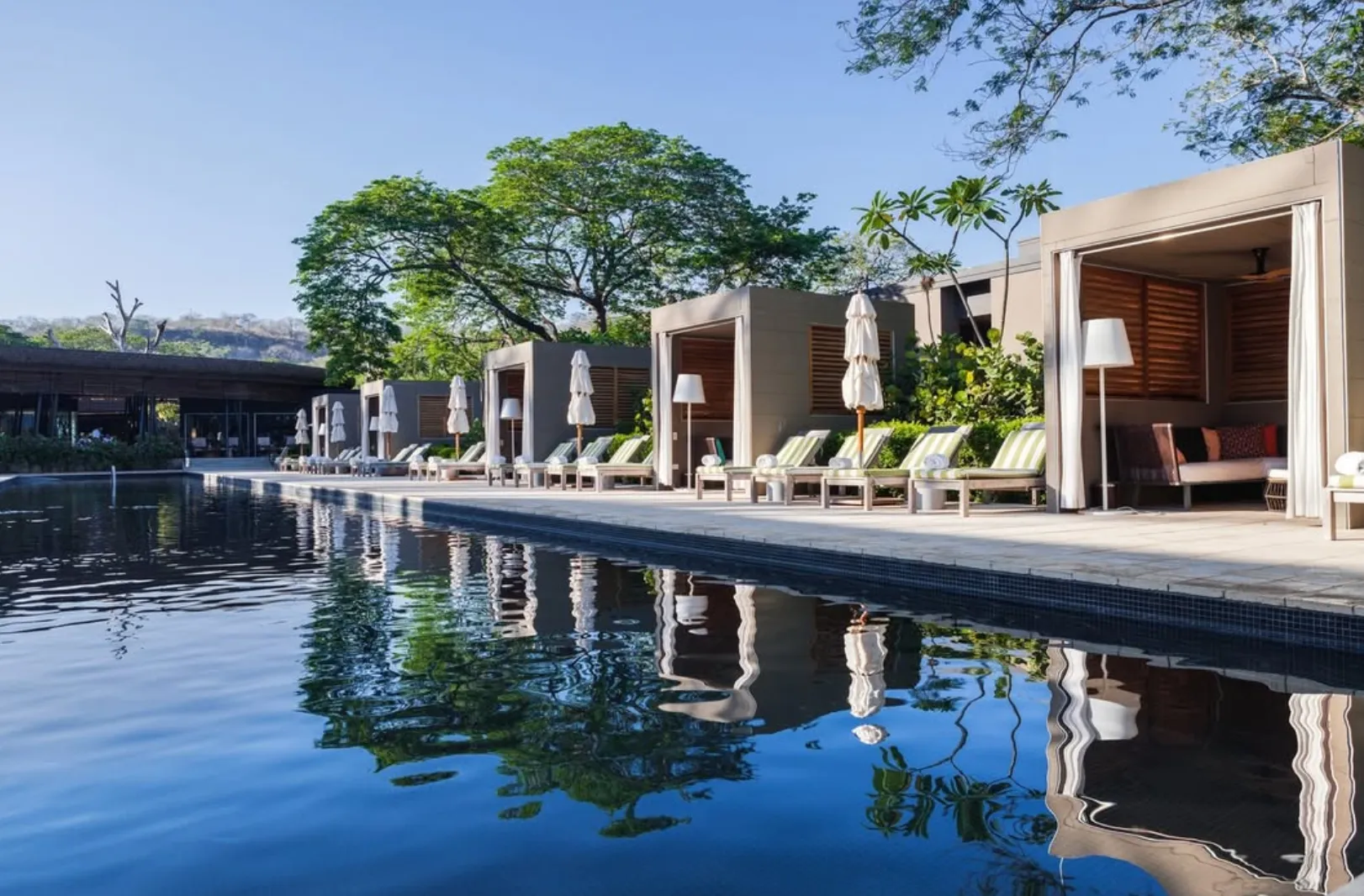

Costa Rica’s luxury hospitality
Costa Rica’s luxury hospitality sector is entering a new expansion cycle, with Guanacaste and the Papagayo Peninsula at the center of a wave of new hotels Costa Rica developers have been advancing over the past 12 months. The country’s sustained international arrival growth, strengthened airlift from North America and Europe, and rising average daily rates have created favorable conditions for high-end investment, particularly in coastal regions anchored by Liberia Airport (LIR).
Recent data indicates that Costa Rica tourism continues to outperform several regional competitors in terms of post-pandemic recovery and premium segment growth. Increased direct routes from major U.S. hubs into Guanacaste, combined with strong demand for experiential and eco-luxury accommodations, are driving the next generation of luxury resort Costa Rica projects. Developers are not only expanding inventory but repositioning the country as a high-value destination that balances environmental stewardship with upscale travel demand.
Project or Development Overview
Multiple new luxury hotel projects are either under construction or in advanced planning phases across Guanacaste, particularly in Papagayo, Tamarindo, and the broader Gulf of Papagayo corridor. These developments range from internationally branded five-star resorts to boutique luxury properties targeting high-spending North American travelers.
The Papagayo Peninsula remains a flagship zone for investment. Master-planned growth within this area continues to attract global hospitality brands seeking to expand their footprint in Costa Rica. Several properties are adding new villa phases, branded residences, and wellness-focused expansions, while additional luxury flags are expected to enter the market in the coming development cycle.
In Tamarindo and nearby coastal enclaves, new boutique luxury properties are capitalizing on strong occupancy rates and a growing remote-work demographic. Developers are prioritizing low-density design, sustainability certifications, and integrated transportation planning to meet evolving traveler preferences.
Pipeline data suggests that Guanacaste represents the highest concentration of new upscale room inventory in Costa Rica. This concentration reflects investor confidence in the province’s accessibility via Liberia Airport (LIR), established tourism infrastructure, and proven demand from the U.S., Canada, and increasingly Europe.
In parallel, select luxury developments are emerging in the Central Pacific and Southern Zone, but Guanacaste continues to dominate in terms of scale and brand presence. The emphasis is on mixed-use resort communities that integrate hospitality, real estate, marina infrastructure, and curated guest mobility solutions.
Location and Tourism Impact
Guanacaste’s rise as Costa Rica’s luxury growth engine is closely tied to international arrival trends. Liberia Airport (LIR) has experienced sustained increases in seat capacity from key feeder markets such as Dallas, Houston, Atlanta, New York, Toronto, and Los Angeles. Seasonal European routes have further diversified the visitor base.
The accessibility of Guanacaste has shortened travel time to beach destinations compared to routing through San Jose Airport (SJO), making the province particularly attractive to luxury travelers seeking seamless arrivals. As a result, occupancy levels in high-end properties have remained resilient, with strong forward bookings during peak dry-season months.
The development surge is also influencing land values, workforce migration, and regional infrastructure investment. Road improvements along Route 21 and expanded service capacity around Liberia have strengthened the province’s ability to absorb additional tourism growth. Municipal authorities are increasingly aligning infrastructure planning with hospitality expansion to avoid bottlenecks during peak arrival windows.
Papagayo, in particular, is evolving into a luxury cluster that competes regionally with high-end destinations in Mexico and the Caribbean. The combination of branded residences, marina facilities, and premium resort inventory positions it as a strategic anchor for Costa Rica tourism in the ultra-luxury segment.
This expansion directly impacts transportation services. As luxury room inventory grows, so does demand for reliable private transportation Costa Rica operators, high-end airport transfer Costa Rica services, and coordinated shuttle service Costa Rica networks that connect airports with resort zones. Transportation providers are scaling fleets, upgrading vehicle categories, and implementing digital booking systems to meet the expectations of affluent travelers who prioritize pre-arranged, direct transfers.
H2: How to Get There
The primary gateway for Guanacaste and Papagayo is Liberia Airport (LIR), officially Daniel Oduber Quirós International Airport. Located approximately 30 kilometers (18 miles) from the Papagayo Peninsula, driving time typically ranges from 30 to 45 minutes depending on the specific resort and traffic conditions.
Liberia Airport (LIR) offers direct international connections from major cities across the United States, Canada, and select European markets. For travelers staying in Tamarindo, the distance from LIR is approximately 65 kilometers (40 miles), with an average driving time of 1 to 1.5 hours via Route 21 and connecting coastal roads.
San Jose Airport (SJO), located near the capital in the Central Valley, serves as an alternative entry point. The drive from SJO to Papagayo is approximately 220 kilometers (137 miles) and typically requires 4 to 5 hours by road, depending on traffic and weather conditions. While SJO handles a higher volume of total international arrivals, travelers targeting Guanacaste’s luxury resorts increasingly prefer LIR due to proximity.
Road access to Papagayo and surrounding beach communities has improved significantly in recent years. Paved highways connect Liberia to major resort corridors, though final access roads into certain hillside or peninsula developments may include gated entries or private resort-managed infrastructure.
Given the distances and the premium positioning of many new luxury hotels Costa Rica developers are delivering, private transportation Costa Rica services have become a standard component of the arrival experience. Pre-arranged airport transfer Costa Rica providers offer direct, non-stop transfers from Liberia Airport (LIR) to resorts, minimizing wait times and coordinating seamlessly with flight arrivals.
Shared shuttle service Costa Rica options remain available, particularly for Tamarindo and other high-demand zones, but many luxury travelers opt for private transfers to maintain schedule flexibility and privacy. As room inventory expands, Guanacaste transportation operators are reporting higher demand for premium SUV and executive-class vehicles, reflecting the evolving demographic profile of visitors.
What This Means for Travelers
The expansion of luxury inventory in Guanacaste and Papagayo signals a structural shift in Costa Rica tourism toward higher-spending segments. For travelers, this translates into greater brand diversity, expanded villa and residential-style offerings, and enhanced integration between accommodations and transportation logistics.
The concentration of new luxury resort Costa Rica projects in one region also improves service efficiency. Airport transfer Costa Rica providers can optimize routing due to clustering of high-end properties, which in turn supports faster turnaround times and more predictable arrival experiences.
From a market perspective, the influx of upscale properties is likely to sustain upward pressure on average daily rates, particularly during high season. However, increased inventory may moderate extreme peak pricing over time as supply gradually aligns with demand.
Airlines are responding to consistent load factors into Liberia Airport (LIR) by maintaining or expanding seasonal capacity. This trend reinforces Guanacaste’s position as a primary entry point for travel to Costa Rica’s Pacific coast. As more direct flights are introduced, travelers benefit from reduced transit times and simplified logistics.
The growth cycle also intensifies the need for infrastructure coordination. Road capacity, airport terminal services, and regional utilities must scale in parallel with hospitality expansion. Transportation services, including shuttle service Costa Rica operators and private transfer companies, play a critical operational role in absorbing peak-day arrival surges and preventing congestion around resort corridors.
For international visitors, the development surge confirms Costa Rica’s ability to compete at the luxury tier without sacrificing its core sustainability identity. Developers are increasingly incorporating renewable energy systems, water conservation measures, and low-impact design standards, aligning with global ESG expectations.
Conclusion
The surge of new luxury hotels Costa Rica is witnessing in Guanacaste and Papagayo reflects sustained international demand, expanding airline connectivity, and investor confidence in the country’s high-end tourism trajectory. Liberia Airport (LIR) continues to anchor this growth, positioning the northern Pacific coast as a primary gateway for affluent travelers.
As room inventory rises, so does the importance of efficient airport transfer Costa Rica systems, private transportation Costa Rica services, and coordinated Guanacaste transportation logistics. The integration of hospitality development and mobility planning will determine how effectively the region manages its next phase of expansion.
Costa Rica tourism is entering a mature luxury cycle characterized by brand diversification, infrastructure scaling, and strategic regional clustering. For travelers and industry stakeholders alike, Guanacaste’s development pipeline signals a decisive shift toward premium growth that is reshaping the national tourism landscape.