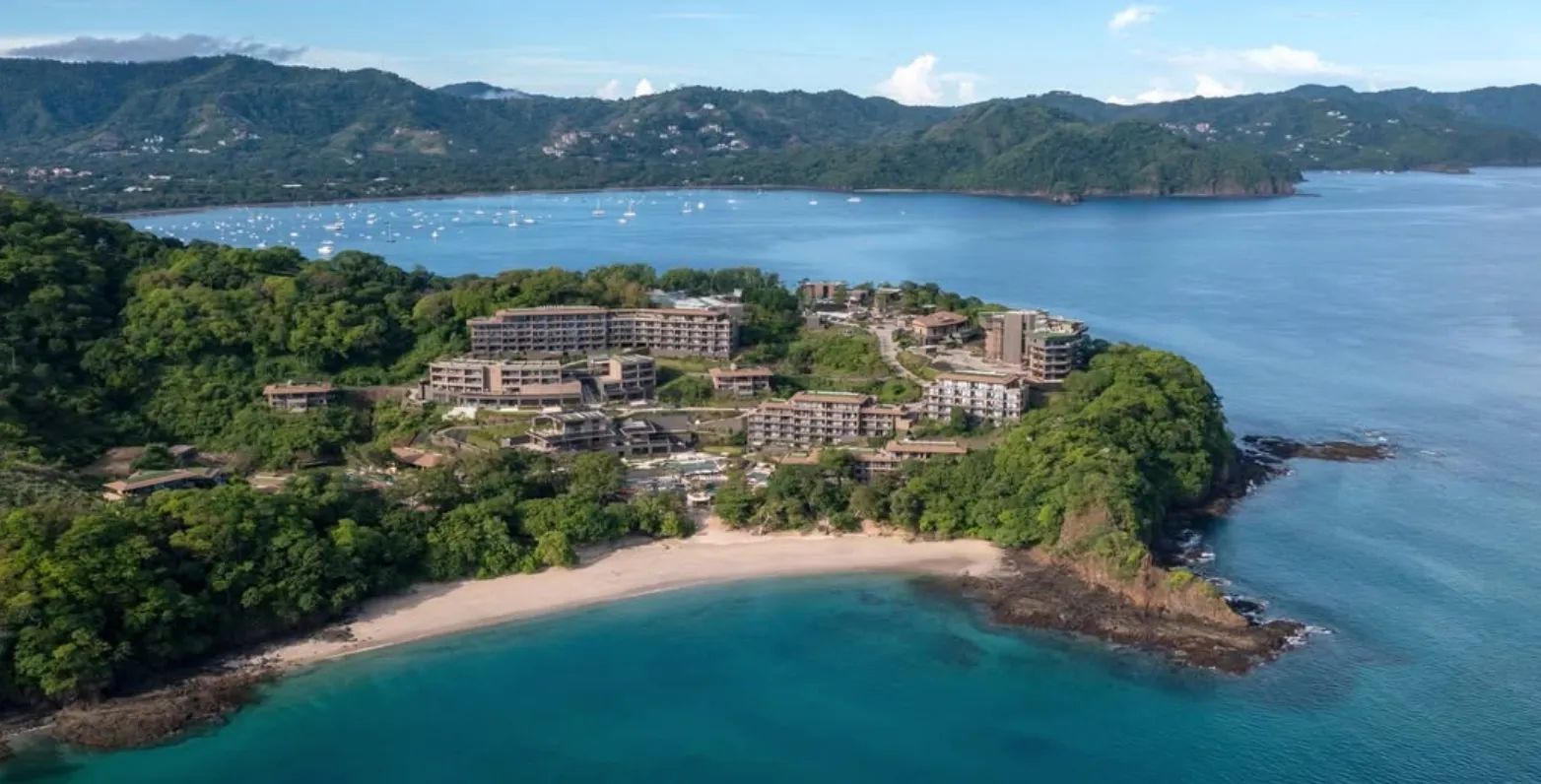
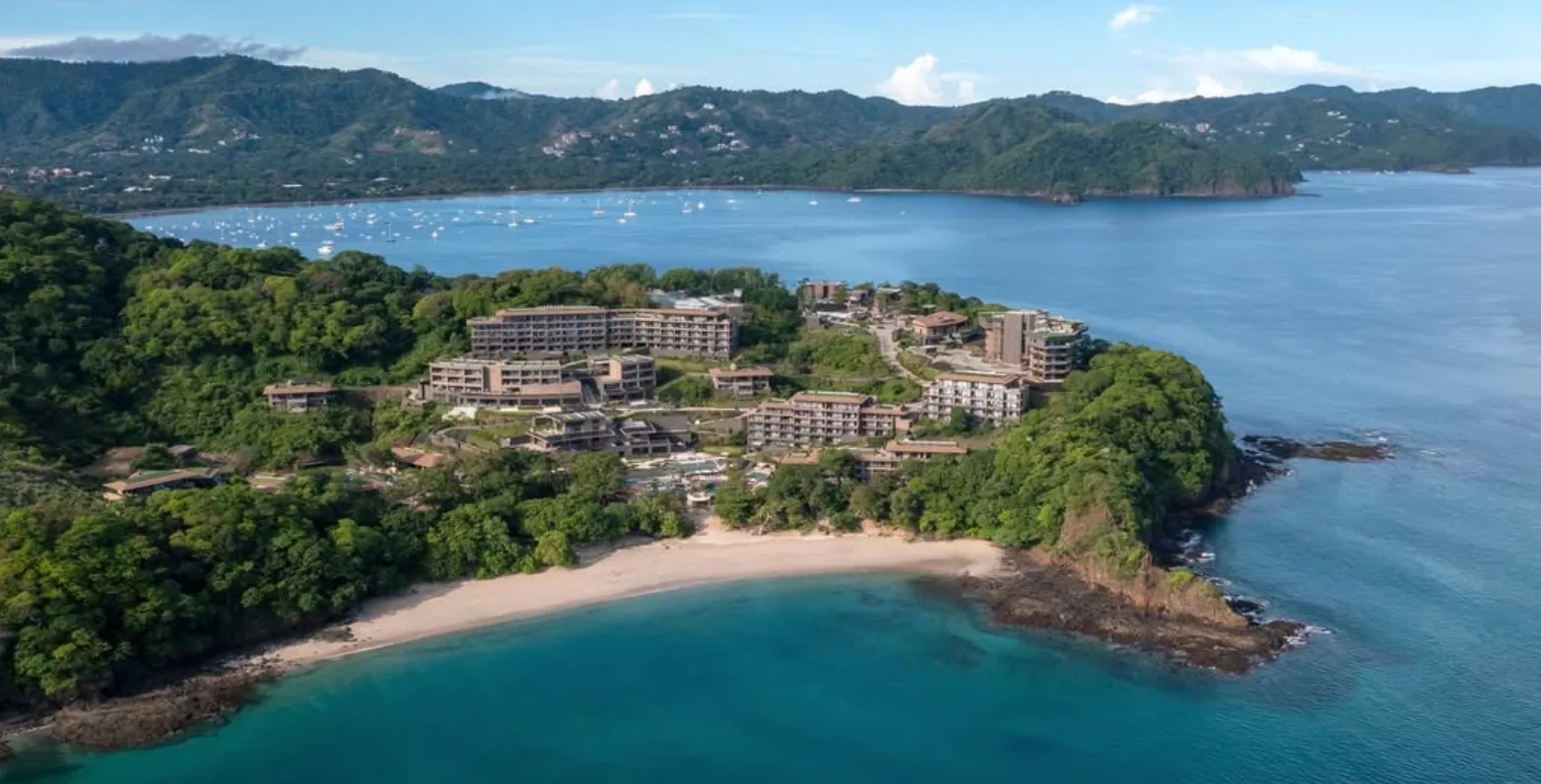
Waldorf Astoria Punta Cacique Set to Redefine High-End Tourism
Waldorf Astoria Punta Cacique and Guanacaste’s Luxury Tourism Growth
Waldorf Astoria Punta Cacique represents an important addition to Guanacaste’s growing luxury hospitality sector. Located on Costa Rica’s northern Pacific coast near Playa Hermosa, Playas del Coco and the Gulf of Papagayo region, the development combines a luxury resort with branded residences in a coastal setting overlooking the Pacific Ocean.
Its location also places transportation and airport access at the center of the travel experience. Liberia Airport (LIR) provides the most direct international gateway to Punta Cacique, while private transportation connects the property with San José Airport and major destinations such as La Fortuna, Monteverde, Tamarindo and Manuel Antonio.
Quick Answer
Waldorf Astoria Punta Cacique is a luxury resort and branded residential development in Guanacaste, Costa Rica. The project forms part of the larger Punta Cacique development and is positioned on an elevated Pacific coastal site between the Playas del Coco and Playa Hermosa areas.
Liberia Airport is approximately 25 kilometers from Punta Cacique, with an estimated road journey of about 30 to 40 minutes depending on traffic conditions. Private transportation is also available between Waldorf Astoria Punta Cacique and other major destinations in Costa Rica.
Travelers researching the property can also review the dedicated Waldorf Astoria Costa Rica Punta Cacique hotel and transportation information.
Waldorf Astoria Punta Cacique Development Overview
Waldorf Astoria Punta Cacique is being developed as a combination of resort accommodations and branded residences within the broader Punta Cacique master-planned coastal development.
The project reflects a hospitality model increasingly associated with international luxury destinations: hotel accommodations combined with privately owned branded residences and professionally managed guest services.
Within Guanacaste, the arrival of another internationally recognized hospitality brand strengthens a tourism corridor that already attracts travelers seeking coastal accommodations, privacy, nature-oriented experiences and convenient access from an international airport.
The development also extends beyond the resort itself. Construction and infrastructure associated with Punta Cacique support activity in engineering, hospitality, utilities and related services, while creating additional demand for transportation, excursions and other tourism services throughout the region.
Where Is Waldorf Astoria Punta Cacique?
Punta Cacique is located on Costa Rica’s northern Pacific coast in Guanacaste, between the Playas del Coco and Playa Hermosa areas and near the broader Gulf of Papagayo tourism zone.
This position gives travelers access to an established coastal region while remaining relatively close to Liberia Airport.
Guanacaste has developed into one of Costa Rica’s principal international beach destinations, supported by resort development, residential tourism and international air access through Liberia.
The elevated terrain around Punta Cacique also provides broad views across the Pacific coastline, a geographic characteristic that has influenced the development of resorts and residential properties throughout this section of Guanacaste.
Liberia Airport to Waldorf Astoria Punta Cacique
Liberia Airport, officially Daniel Oduber Quirós International Airport, is the closest major international airport to Waldorf Astoria Punta Cacique.
The resort area is approximately 25 kilometers, or about 15 miles, from the airport. Estimated driving time is approximately 30 to 40 minutes depending on traffic conditions.
Travelers who want transportation arranged before arrival can use private transportation from Liberia Airport to Waldorf Astoria Punta Cacique.
Rate: US$130 from 1 up to 4 passengers.
For departure travel, private transportation from Waldorf Astoria to Liberia Airport is also available.
Rate: US$130 from 1 up to 4 passengers.
The relatively short distance between Liberia Airport and Punta Cacique makes LIR particularly practical for international travelers whose Costa Rica itinerary is centered on Guanacaste.
San José Airport to Punta Cacique
Travelers arriving through Juan Santamaría International Airport near San José can also reach Punta Cacique by road.
The supplied route information places the journey at approximately 220 kilometers, or about 137 miles, with an estimated driving time of four to five hours depending on road, weather and traffic conditions.
For travelers beginning their vacation in the Central Valley, private transportation from San José Airport to Waldorf Astoria Punta Cacique is available.
Rate: US$430 from 1 up to 4 passengers.
For the return journey, travelers can review private transportation from Waldorf Astoria Punta Cacique to San José Airport.
Rate: US$430 from 1 up to 4 passengers.
Connecting Punta Cacique With Other Costa Rica Destinations
Waldorf Astoria Punta Cacique can also be incorporated into a multi-destination Costa Rica itinerary.
La Fortuna and Arenal
Travelers combining Guanacaste with the Arenal region can arrange private transportation from La Fortuna to Waldorf Astoria Punta Cacique.
Rate: US$350 from 1 up to 4 passengers.
A separate Arenal to Waldorf Astoria Punta Cacique private transportation option is also available at US$350 from 1 up to 4 passengers.
Travelers continuing toward the Arenal region can use Waldorf Astoria Punta Cacique to La Fortuna transportation, also listed at US$350 from 1 up to 4 passengers.
Monteverde
For travelers including Costa Rica’s mountain region in their itinerary, private transportation from Monteverde to Waldorf Astoria Punta Cacique is available.
Rate: US$350 from 1 up to 4 passengers.
The corresponding Waldorf Astoria Punta Cacique to Monteverde transportation is listed at the same rate.
Tamarindo
Travelers moving between two Guanacaste destinations can review private transportation from Tamarindo to Waldorf Astoria Punta Cacique.
Rate: US$250 from 1 up to 4 passengers.
For travel in the opposite direction, Waldorf Astoria Punta Cacique to Tamarindo private transportation is available at US$250 from 1 up to 4 passengers.
Manuel Antonio
Punta Cacique can also be combined with Costa Rica’s Central Pacific region.
Private transportation from Manuel Antonio to Waldorf Astoria Punta Cacique is listed at US$490 from 1 up to 4 passengers.
The reverse Waldorf Astoria Punta Cacique to Manuel Antonio transportation is available at the same listed rate.
Why Punta Cacique Matters for Guanacaste Tourism
Waldorf Astoria Punta Cacique forms part of a broader pattern of high-end hospitality and residential development along Guanacaste’s Pacific coast.
The region combines international airport access, coastal resort areas, residential projects and established tourism services. This concentration helps explain why Guanacaste continues to attract international hospitality brands and travelers seeking premium beach vacations.
Developments of this type can also influence businesses beyond the hotel itself. Visitors staying at upscale properties generate demand for ground transportation, private excursions, restaurants, wellness services and other travel experiences throughout the destination.
For transportation providers, the continued expansion of Guanacaste’s resort market creates demand not only for airport transfers but also for longer point-to-point routes connecting coastal hotels with destinations elsewhere in Costa Rica.
What the Development Means for Travelers
For travelers, Waldorf Astoria Punta Cacique adds another accommodation option within one of Costa Rica’s most established Pacific tourism regions.
Its proximity to Liberia Airport can simplify arrival and departure planning for travelers flying directly into Guanacaste. At the same time, road transportation connects Punta Cacique with destinations in the Northern Plains, Central Valley, mountains and Central Pacific.
This makes the property relevant both to travelers planning a primarily Guanacaste-based vacation and to visitors building a broader Costa Rica itinerary that combines several regions.
Pre-arranging transportation can be particularly useful when the hotel stay is only one part of a multi-destination trip, since the next transfer can be coordinated around the traveler’s planned route rather than requiring a return to an airport between destinations.
Frequently Asked Questions
Where is Waldorf Astoria Punta Cacique located?
Waldorf Astoria Punta Cacique is located on Costa Rica’s northern Pacific coast in Guanacaste, between the Playas del Coco and Playa Hermosa areas and near the Gulf of Papagayo tourism region.
What is the closest international airport to Waldorf Astoria Punta Cacique?
Liberia Airport (LIR), officially Daniel Oduber Quirós International Airport, is the closest major international airport. The supplied information places Punta Cacique approximately 25 kilometers from the airport.
How long does it take to travel from Liberia Airport to Punta Cacique?
The estimated road journey is approximately 30 to 40 minutes depending on traffic conditions.
How much is private transportation from Liberia Airport to Waldorf Astoria Punta Cacique?
The listed rate is US$130 from 1 up to 4 passengers.
Can I travel directly from San José Airport to Waldorf Astoria Punta Cacique?
Yes. A private transportation route is available between San José Airport and Waldorf Astoria Punta Cacique. The listed rate is US$430 from 1 up to 4 passengers.
Can Waldorf Astoria Punta Cacique be combined with La Fortuna or Monteverde?
Yes. Private transportation routes are available between Punta Cacique and both La Fortuna/Arenal and Monteverde. The listed rate for these routes is US$350 from 1 up to 4 passengers.
Is transportation available between Tamarindo and Waldorf Astoria Punta Cacique?
Yes. Private transportation is available in both directions between Tamarindo and Waldorf Astoria Punta Cacique. The listed rate is US$250 from 1 up to 4 passengers.
Planning Transportation for a Punta Cacique Stay
Waldorf Astoria Punta Cacique’s location near Liberia Airport makes Guanacaste the most direct arrival region for many international visitors, while private road transportation allows the property to be incorporated into a larger Costa Rica itinerary.
Travelers can review the Waldorf Astoria Costa Rica Punta Cacique information page and select the transportation route that matches their arrival airport, previous destination or next stop in Costa Rica.
When planning a multi-destination journey, confirming the exact origin, destination, travel date and number of passengers in advance helps identify the appropriate transportation option for each stage of the trip.